

International Assessment: $71.4 Billion Cost for Recovery and Reconstruction in Gaza
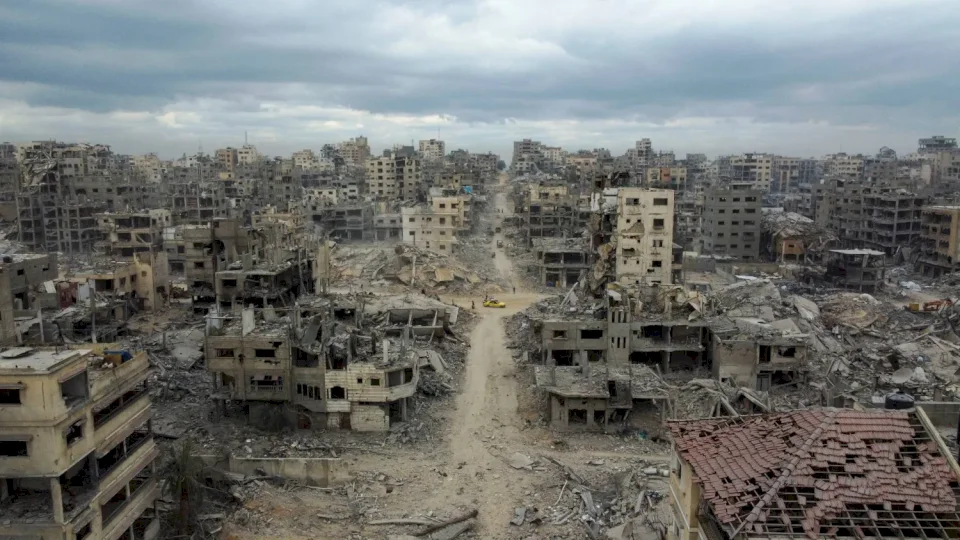
SadaNews - The European Union and the United Nations today issued the final rapid assessment of damages and needs in Gaza, conducted in cooperation with the World Bank, to evaluate the damages and economic losses and the recovery and reconstruction needs in Gaza after 24 months of conflict. According to the assessment, the recovery and reconstruction needs in Gaza are estimated at approximately $71.4 billion over the next decade, including $26.3 billion required in the first eighteen months to restore essential services, rebuild critical infrastructure, and support economic recovery. The physical damage to infrastructure is estimated at about $35.2 billion, while economic and social losses amount to $22.7 billion. The report indicates that the most affected sectors include housing, health, education, trade, and agriculture, with more than 371,888 housing units destroyed or damaged, over 50% of hospitals out of service, and almost all schools destroyed or damaged, while the economy contracted by 84% in Gaza. The report highlights the catastrophic impact on human development in Gaza, which is estimated to have regressed by 77 years. Approximately 1.9 million people have been displaced, often multiple times, and over 60% of the population has lost their homes. The report also notes that women, children, persons with disabilities, and the most vulnerable groups bear the greatest burden. The Rapid needs and reconstruction assessment report provides the analytical foundation for early planning for recovery and reconstruction, in line with United Nations Security Council resolutions, including Resolution 2803. Given the enormity of the needs, recovery efforts must run parallel to humanitarian action to ensure an effective and organized transition from emergency relief to large-scale reconstruction, encompassing both the Gaza Strip and the West Bank. The European Union and the United Nations emphasize the necessity for recovery and reconstruction efforts to be Palestinian-led, including an approach to rebuild better and build a better future, actively supporting the transition of governance to the Palestinian Authority in accordance with UN Security Council Resolution 2803 and the comprehensive plan, as well as promoting a lasting political settlement based on a two-state solution. Planning and implementation should be inclusive, transparent, and accountable, with particular attention paid to the needs of women, children, the elderly, and persons with disabilities. The European Union and the United Nations also acknowledge the need for a set of enabling conditions to effectively implement UN Security Council Resolution 2803 on the ground. Without these conditions, neither recovery nor reconstruction can succeed. A sustainable ceasefire and sufficient security are minimal prerequisites. Recovery must facilitate access to humanitarian aid and the immediate restoration of essential services without hindrance. The freedom of movement of individuals, goods, and reconstruction materials, both within and between the Gaza Strip and the West Bank, as well as the existence of an effective and transparent financial system, is critically important. Clear and accountable governance, including defining mandates and setting necessary conditions for transitional administrative bodies under UN Security Council Resolution 2803 to enable them to perform their role in coordination with the Palestinian Authority, and setting a reliable path for future Palestinian governance throughout the occupied Palestinian territories, including Gaza, the West Bank, and East Jerusalem, is crucial. Debris removal, management of unexploded ordnance, and resolution of housing, land, and property issues are fundamental prerequisites for reconstruction. The international community must mobilize resources in a purposeful, sequenced, and coordinated manner, and remove all obstacles to swiftly deploying expertise and equipment. The European Union and the United Nations firmly stress that progress made in revitalizing and reconstructing Gaza, implementing UN Security Council Resolution 2803, and achieving a two-state solution are not parallel paths, but are closely interlinked. The European Union and the United Nations assert that UN Security Council Resolution 2803 cannot be implemented, and the comprehensive plan cannot succeed fully, without two things: physically and institutionally rebuilding Gaza, and establishing a clear path towards a Palestinian state throughout the occupied Palestinian territories. The Palestinians deserve a future based on dignity and the realization of their right to self-determination, which the international community must bear responsibility for, and the European Union and the United Nations are committed to supporting the Palestinian people and achieving a just and lasting peace in the region.
 Follow the latest Sada News via Google News
High-level sources reveal to SadaNews: Washington seeks to hold a Gaza Reconstruction Conf...

France Studies Imposing Sanctions on Settlers Involved in Violence Against Palestinians

Sources to "SadaNews": The New Revolutionary Council of Fatah Will Hold Its First Meeting...

85 Members of Congress Urge Trump to Intervene to Halt Colonial Project East of Jerusalem

CNN: Israeli Secret Units Operated from Azerbaijan Against Iran

Sources to 'SadaNews': A Hamas delegation arrives in Cairo on Friday to begin new negotiat...

New Poll Shows Likud Decline and Smotrich's Party Surpassing the Threshold
