
Analysis: "OPEC+" Holds a Meeting That Seems Symbolic Amid Continuing Hormuz Crisis.. But It's Not
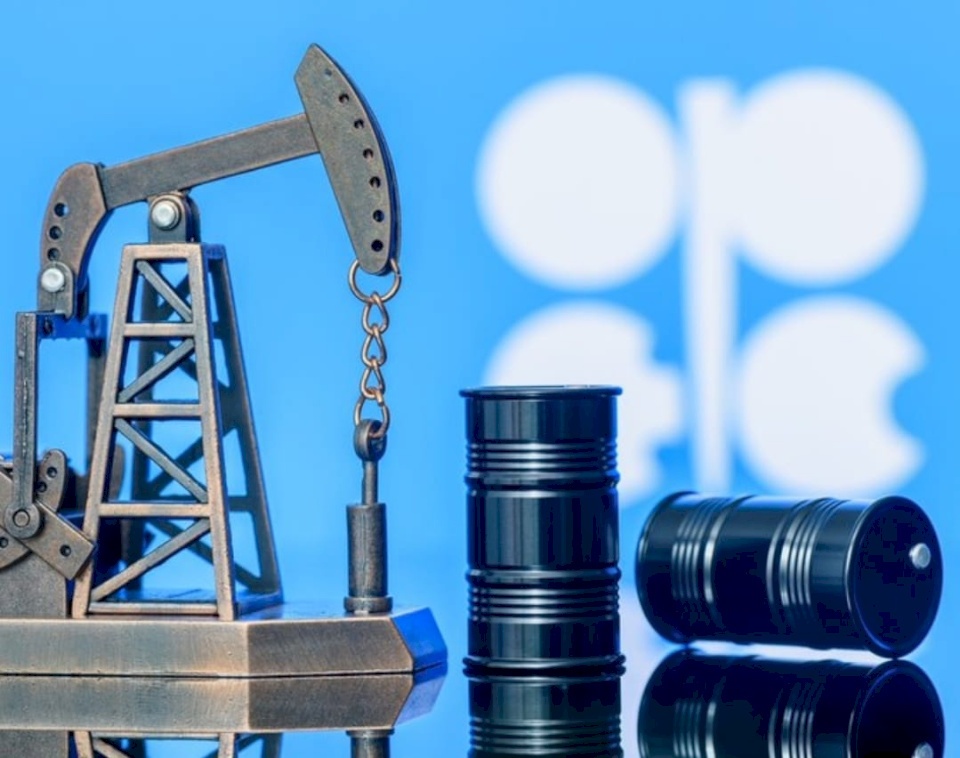
SadaNews - On Sunday, the "OPEC+" group of producers is set to meet, with analysts predicting that the alliance will decide on an additional increase in its production target for July, as the world is experiencing the largest disruption in energy supply, with reduced exports from the Gulf states and Iran, and declining Russian production due to the Ukrainian attacks.
The decision that will come from the meeting may seem symbolic, as the group will not be able to pump additional barrels into the market as long as navigation through the Strait of Hormuz is disrupted due to the ongoing conflict between the United States and Iran. Thus, announcing a higher production target does not mean much when some producers like Kuwait and Iraq are incapable of exporting at all through the strait.
Amna Bakr, head of Middle East Energy Affairs at "Kepler," a company specializing in the analysis of global energy and commodity data, expects that the group "will continue to backtrack on voluntary cuts, but on paper only, as no real increase will occur given the current situation in Hormuz."
Importance of the "OPEC+" Meeting
However, the meeting gains significance for two reasons: it is the second meeting of the member states after the UAE's exit from OPEC and the "OPEC+" alliance in May, which means a reexamination of the quota distribution, bringing the issue of restoring production levels prevalent before the voluntary cuts announced in 2023 back to the table for discussion.
The seven countries (Saudi Arabia, Russia, Iraq, Kuwait, Kazakhstan, Algeria, and Oman) had already begun to gradually increase their theoretical production ceilings since last April.
Bill Farren-Price, a senior researcher at the Oxford Institute for Energy Studies, states that "OPEC's ability to manage the market is constrained by the closure of the Strait of Hormuz. However, that does not mean it cannot plan to resume production, whether partially or fully."
Pumping Oil After Navigation Resumes in Hormuz
When navigation in the Gulf returns to normal, Iraq and Kuwait will have a clear interest in pumping at maximum to compensate for lost revenues during the crisis, as they do not have the option of exporting via pipelines that bypass the strait as is the case with Saudi Arabia. As for Iran, it is essentially exempt from the quota system due to the Western trade sanctions imposed on it, and thus it will not be part of calculating the increases.
Farren-Price notes that "a policy of unrestricted unleashed production will push prices down, thus market participants will analyze to determine the supply level needed for refineries, as well as to replenish global commercial and strategic inventories."
Expectation of Demand Growth
It is noteworthy that Haitham Al-Ghais, the Secretary-General of OPEC, confirmed at the St. Petersburg International Economic Forum on Thursday that the organization still expects growth in oil demand post-war, calling for increased investment in the sector.
The two key members of "OPEC+" are expected to enter the Sunday meeting after prior coordination. Saudi Energy Minister Prince Abdulaziz bin Salman and Russian Deputy Prime Minister Alexander Novak met on the sidelines of the St. Petersburg International Economic Forum on Thursday, where Saudi Arabia was the guest of honor. The Saudi minister called for stabilization in the energy sector, emphasizing that the current crisis confirms that "the world needs every molecule of energy," while Novak acknowledged that Russian production has indeed declined.
Additional "OPEC+" barrels may be theoretical at this time; however, preparations for an organized return to the market have begun.
 Follow the latest Sada News via Google News
The World Bank Warns: "The Worst-Case Scenario" for Global Growth is Approaching

Trump Prepares to Impose New Tariffs on Dozens of Economies

Gold Surpasses $4,100 as Selling Pressure Eases

Oil Rises for the Fourth Day as Supply Risks Escalate

An Additional $8 Billion.. A New Account from the Pentagon on the Cost of the War with Ira...

London Stock Exchange Enters the Era of 24/7 Trading

Shamaran Petroleum: Suspension of Oil Production in Duhok Fields in the Kurdistan Region o...
