

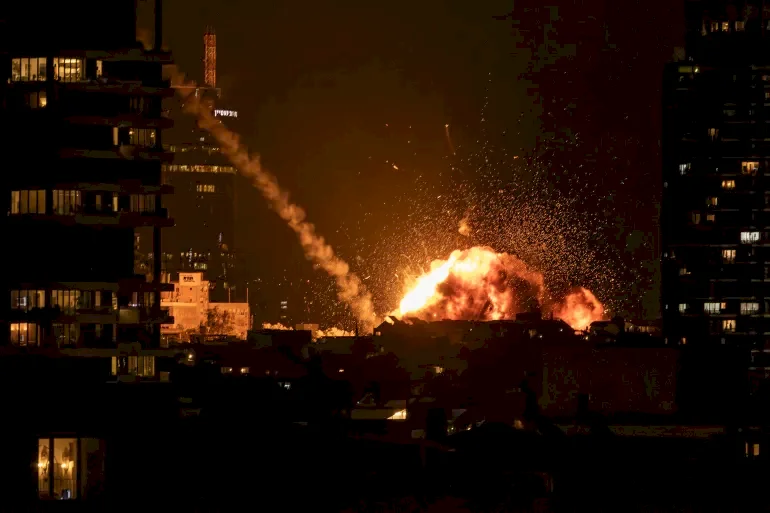
100 Days That Shook the World: Why Did America Fail to Defeat Iran?
SadaNews - If there is a number that can explain the current Iranian war and its repercussions better than any battlefield map filled with many squares and triangles, it is undoubtedly the difference between the cost of an Iranian drone and an American interceptor missile. The cost of manufacturing the Iranian "Shahed-136" offensive drone is about $35,000, while the cost of the American "Patriot" interceptor missiles, which are often used to shoot it down, is around $4 million. This ratio - which exceeds one hundred to one - is one of the fundamental drivers of the current war.
For two decades, the armies of the United States and Israel trained for a specific type of warfare, one that involves short, lightning-fast conflicts, through precision strikes to target the air defenses of adversaries, followed by complete air dominance, leading to rapid and extensive destruction of command centers. In contrast, Iran spent the same two decades preparing to engage in an entirely opposite war, a long and multi-faceted conflict like a vast web, and at a low cost for it, while being extremely costly for the other side.
When the two military doctrines finally clashed in open and continuous fighting, the result was a living testament that many of the rules everyone had embraced had become outdated and needed reconsideration. What we now generally refer to as "the Iranian war" is, in fact, a series of events that began in April 2024, then again in October of the same year, escalating to the twelve-day war in June 2025, which ended with American airstrikes on Iranian nuclear sites. On February 28, 2026, the United States and Israel launched a broader campaign, to which Iran responded with unprecedented strikes in terms of intensity and scope.
The Economics of Drones and Deterrence Principles
For example, throughout most of the short era of drones, these aircraft were viewed as auxiliary elements, monitoring the battlefield, gathering intelligence, and perhaps launching strikes on single, high-value targets. However, in the hands of Tehran, and previously by the Ukrainians and Russians, the cheap, one-way suicide drone became a primary weapon of attrition.
Iran produced the "Shahed-136" drone in large quantities, the same long-range ammunition it supplied to Russia for its war in Ukraine. They learned to launch them in swarms that coincided with a barrage of missiles. The essence of using drone swarms lies in the simple calculations that include signs like "plus" and "minus," those we learned in school as kids, not in accuracy. Even if defenders managed to intercept most of them, they were paying a steep price for the interceptions that far exceeded what the attacker paid for the threat.
There is no complete official tally of every interceptor missile fired against Iranian drones, but estimates from the Jewish Institute for National Security of America (JINSA) for the twelve-day war indicate that defending Israel against ballistic missiles consumed approximately 21 "Arrow-2" missiles, 80 "Arrow-3" missiles, and 92 THAAD missiles. This means we are talking about around 193 high-cost interceptors to defend Israel alone during a war much shorter than the current one.
Financially, the institute estimated the cost of American and Israeli interceptions combined between $1.48 billion to $1.58 billion, of which approximately $202 million to $303 million were consumed by Israel's "Arrow" missiles, and about $1.279 billion for American interceptions, mostly from THAAD missiles.
Western analysts describe this as a radical shift in the economics of war, and a study from the Center for European Policy Analysis (CEPA) concluded that the proliferation of low-cost, scalable autonomous systems has radically changed the economics of warfare, even for the world's strongest armies, because launching cheap drones on a large scale forces a response from expensive interceptor aircraft and missiles, which is an unsustainable exchange in the long run.
However, what has been stated is only one part of the Iranian strategy; the complementary part relates to ballistic missiles. For years, these missiles were treated as tools of military deterrence only, rather than as military pieces for actual war due to their lack of accuracy. However, the Iranian war ended this belief. While previous crises were limited to symbolic launches, Iran fired over 500 ballistic missiles at Israel during the twelve-day war, and in 2026, it launched continuous bombardments that were the equivalent of intense artillery, used to saturate an area and weaken its defenses.
Independent assessments have concluded that the old stereotype about the inaccuracy of Iranian missiles is no longer valid. From 2024 to 2026, the narrative changed drastically with improved guidance, and some warheads began effectively hitting their targets with destructive capabilities even against the strongest air defenses ever.
This shift reminds us of the logic that has shaped Iranian thinking since the 1980s. The shock of the "City War" during the Iran-Iraq conflict, when Iraqi missiles rained on Iranian urban centers, cemented the status of ballistic missiles as a core pillar of Iranian doctrine and as a means for a state with weak air power to strike deep into adversaries' territories without the need for aircraft. What has changed is that the missiles have become sophisticated and dense enough to be used as precise weapons in military campaigns, not just for deterrence.
"Countries like Iran do not need a gold medal in military technology to be effective and ready for confrontation; most of the time, a bronze medal is more than sufficient."
Alongside drones and ballistic missiles, Iran employs hypersonic missiles and cruise missiles to achieve several objectives, the first is to overwhelm air defenses with as many projectiles as possible, and the second is to distract air defenses based on the nature of the attacking piece, as drones require air defense systems to employ different methods compared to ballistic missiles, which differ from hypersonic missiles.
This aligns with what was stated in an article published in 1994 - a time during which many developments occurred in Iran's military arsenal - by nuclear physics professor Peter Zimmerman, in which he confirmed that countries like Iran do not need a "gold medal" in military technology to be effective and ready for confrontation; but often a "bronze medal" is more than sufficient. What Zimmerman meant is that military technology can be adapted so that less accurate weapons become more effective.
Air Defense War
Since the beginning of the last war (mid-2025), it was clear that Iran was not entirely devoid of air defenses. Reuters reported that air defenses in Tehran were activated to intercept new Israeli strikes a day after the attack began. In the current war, Tehran spoke of shooting down and hitting American aircraft, and the United States confirmed some of these hits.
Therefore, it is difficult to describe Iranian performance as a complete collapse, as the American-Israeli narrative attempted to promote at the start of the war. However, it also does not reach the level of defensive success in a strategic sense. The real test of air defense is not to fire but to prevent the adversary from turning the skies into an open road to decision-making centers and sensitive infrastructure. Israel and the U.S. have indeed been able to dominate the Iranian skies, especially since the Iranian air force suffers from severe weakness, but that did not come without losses.
The most painful blow to Iran was that Israel targeted dozens of radars and ground-to-air missile platforms, but Tehran, in turn, spread out missile launch platforms over a wide area, complicating the Israeli air force's tasks and keeping Iranian missiles operational until the last moment, albeit at lower rates, but the aforementioned accuracy compensated for some of the issue.
"Tehran focused more on the missile project as a strong deterrent tool, while its air defense capabilities remained below required levels to confront stealth threats."
Iran had built its air defense through a mix of Russian systems like "S-200" and "S-300," and local systems like "Bavar-373" and "Khordad" and "Ra'ad" and "Sayyad." But it seems that it focused more on the missile project as a strong deterrent tool, while air defense capabilities remained below the needed levels to confront stealth threats; of course, part of the reason for this relates to Western restrictions and sanctions.
However, overall, this war has shown that air defense is an indispensable foundation for any military power today, and in any battle, because even in the context of advanced Israeli air defense systems, coordinated Iranian strikes succeeded remarkably. What happened in Iran is an extension of the air defense problem that emerged in Ukraine and the impact of Houthi attacks in the Red Sea; all of these demonstrated that the demand for air and missile defense has become greater than the capacity of factories and storage to compensate.
The British newspaper "The Guardian" published a report in June regarding a global shortage of Patriot interceptor missiles, noting that the overlap of wars in Ukraine and the Middle East created a "window of vulnerability" for countries dependent on these systems, and that the production rate of some interceptor missiles does not keep pace with consumption in prolonged wars.
Thus, the problem is no longer specific to Iran alone, as many countries today face a wide spectrum of threats, from cheap drones to loitering munitions to cruise missiles to ballistic missiles to stealth aircraft to advanced electronic warfare to cyber attacks, and all these threats cannot be defeated by one costly system. Therefore, the world is currently moving towards air defense systems that are continuous networks, with a multi-layered defense that starts from early warning and passive radar, going through electronic warfare, jamming and deception, then artillery, lasers, interceptor drones, short-range systems, culminating in medium and long-range missiles against aircraft and ballistic missiles.
Any other country facing these new dangers, if it wants to bridge the gap, has to think of air defense as a comprehensive state system and not just a military system, including protecting radars, diversifying command centers, distributing batteries, camouflaging platforms, building short-range layers against drones and loitering munitions, producing cheap interceptor munitions in large quantities, strengthening electronic warfare, and enhancing the capability to restart the network after the first strike.
War of Stockpiles
Ultimately, the last Iranian war indicates that air defense has become a prerequisite for the existence of military power itself, not just an auxiliary weapon, and that merely having it is no longer sufficient. Another problem arises: it is a "consumable resource" that requires a continuous supply of munitions, and thus the critical military question shifts from discussing only the strongest weapon to focusing on the largest stockpile of projectiles and interceptor missiles.
This "war of stockpiles" manifests in everything, as Iran has built its strategy around the capacity of its ammunition stockpiles, ensuring that there is a sufficient quantity of missiles to saturate Israeli defenses for an extended period of time. If you reflect a moment, you will find that current attempts to reach a final agreement were partially due to Israel’s failure to fully neutralize the depth of Iranian stockpiles, which continued to launch until the last moment, though with noticeable decline.
"The United States will receive only 172 Patriot missiles in the fiscal year 2026, while it fired more than 1,000 missiles in the war with Iran."
In reality, air defense forces specifically are facing their own replenishment crisis, as the United States is set to receive only 172 Patriot missiles in the fiscal year 2026, while it fired more than 1,000 missiles in the war with Iran. Forecasts indicate that some of these missile stockpiles will not be rebuilt until around 2029.
The Pentagon has tried to press contractors to significantly increase production, raising the planned annual production of the THAAD system from 96 to 400 interceptor missiles, and the Patriot PAC-3 system from 600 to 2,000 missiles, after realizing that the upcoming war might not be short and decisive as America’s military generals have always assumed, but long and bitter, as demonstrated by the Iranian war.
The war has shattered the belief that modern warfare can be won quickly through a "knockout" strike that destroys the opponent’s structures and command networks in the initial hours. In this context, the powers that will face the U.S. in the future might learn from "decentralized mosaic defense," a strategy developed by Iranian planning leaders after witnessing the U.S. overthrow centralized armies in Afghanistan in 2001 and Iraq in 2003, where the destruction of hierarchical leadership led to a rapid collapse of the state.
In this context, Iran’s response was to reject the existence of a single centralized system that could be destroyed; it reorganized its forces into 31 independent regional commands, each acting as a mini-army with its own stockpiles of weapons, intelligence, and supplies, authorized to plan and fight without referring back to leadership, and there was even an official succession protocol in the event of any commander’s death where his appointed successor automatically takes command, with a readiness list of orders.
The 2026 war tested this design under maximum pressure; when the United States and Israel began the war by assassinating senior Iranian leaders, the gamble was on the system’s collapse. But as analysts noted, Tehran had spent two decades building a framework to confront this exact scenario. Leadership was distributed across multiple levels and contingency plans were in place to appoint successors, and Iranian missile forces continued to fire.
The strategic consequences were severe, as the conflict transformed from decisive opening strikes to a prolonged war of attrition, which allowed Iran to maneuver politically with strength, especially since it brought back to the military world an old concept—blockade of straits—which proved to be more effective than ever in a globalized economy, where the tool was the Strait of Hormuz, the narrow waterway through which nearly one-fifth of the world’s oil trade passes.
The Blockade Returns to the Heart of War
On March 4, 2026, Iranian forces declared the closure of the Strait of Hormuz, supporting this announcement by launching attacks on vessels attempting to cross and threats to lay naval mines. However, what made this step extremely effective, as noted by the Stimson Center focused on international security issues and defense policies, is that Iran did not actually need to close the waterway; it only needed to render it commercially unusable. Given the risks of drones, missiles, electronic jamming, congestion, and increased insurance costs, many shipowners stopped sailing without Tehran actually closing the strait.
This transformation is important because it changes the definition of maritime blockade; the classical blockade required warships to prevent ingress and egress, while the modern blockade can be a mix of threats, jamming, drones, coastal missiles, potential mines, high insurance, and disruption of navigation systems, creating "uncertainty," thus turning the strait into a battlefield even without a decisive naval battle.
The economic shock was immediate and global; the price of Brent crude rose by about 10% after the initial strikes and ultimately surpassed $120 per barrel, as the closure of the Strait of Hormuz contributed to what the International Energy Agency described as the biggest supply disruption in oil market history.
Oil production from the region dropped by about 10 million barrels per day within weeks, and a state of force majeure was declared on exports, with Federal Reserve models warning that prolonged closure could lead to a decline in global GDP growth by about three percentage points. Economists at Bloomberg predicted that if prices rose to $170, the result would be a stagflation shock capable of reshaping central bank policies and election outcomes worldwide.
Here, the idea becomes clear, as one regional power threatening one waterway managed to impact consumers' pockets and government accounts on all continents, turning economic interconnection itself into a weapon. Thus, the deeper lesson was not only about the Strait of Hormuz but about the very idea of straits, which means, in military understanding, a concentrated pressure space, a place where ships are forced to pass through limited paths, making movement detectable, vulnerable, and disruptable.
This idea has been present in ancient history, from the Dardanelles and Bosphorus to Gibraltar and the Suez Canal and Bab-el-Mandeb, but it has acquired a more dire meaning in modern wars; because a ship that used to carry local or regional goods is now part of a global supply chain, and because a delay in a single shipment can disrupt an entire trade route and hike fuel and food prices in countries with no direct connection to the battlefield.
From here comes the importance of viewing the Taiwan Strait as the most dangerous version of the Hormuz equation, as it sits at the intersection of the global digital economy with Chinese military power and American and Japanese security. In the case of Taiwan, a blockade looks more complex than the Hormuz model, as China may not theoretically require an outright invasion of the island to strangle it.
Instead, it could use large-scale military exercises around it, temporary no-fly zones, maritime inspections in the name of law enforcement, coast guard ships, civilian maritime militias, anti-ship missiles, aircraft, and drones, and electronic warfare to confuse the movement of ships and planes without being drawn into a full-scale war; this is the danger of the "gray zone" where blockade becomes a deniable, gradual process that starts as training, inspection, or a maritime crisis, and then creates a stifling economic reality.
Signs of this scenario have appeared in Chinese maneuvers around Taiwan in recent years. In October 2024, Reuters reported that Chinese exercises included simulating the closure of major ports and areas around Taiwan, while subsequent reports discussed Taiwanese preparations for wartime food plans in anticipation of a Chinese blockade. In December 2025, the "Guardian" published a report on live-fire Chinese maneuvers around Taiwan that simulated a blockade of major ports, involving the navy, air force, missile force, and coast guard.
Here, perhaps, the lesson of Hormuz meets the lesson of Taiwan, allowing military generals worldwide to learn once more that globalization did everything, but it did not erase geography; instead, it made it more sensitive.
Cities as a Battlefield
Perhaps the most prominent waves of change caused by the Iranian war is the collapse of the oldest spatial logic of war, which is the distinction between the front line, where soldiers fight, and the rear line, where society lives and supports the war effort. This can be seen clearly in target lists all over the battlefield; combatants have targeted power stations, oil refineries, gas fields, ports, airports, hospitals, communication centers, and civilian residences.
Even the assassinations carried out by Israel and the United States at the beginning of the war, which Israel has continued for quite a while, deviate from the realm of "modern" warfare in its traditional concepts. The scientist, engineer, AI expert, or radar designer is no longer necessarily far from the battlefield, even if they work in a university or laboratory or civilian company. As reliance on advanced sciences expands in producing missiles, air defenses, drones, algorithms, and jamming systems, the human mind itself becomes part of the military structure.
The issue does not stop at assassination; every civilian structure with a dual function has become a candidate to turn into a target or pressure tool. The electricity network, for example, is not just lighting up homes but powers hospitals, water stations, communications, factories, civil defense systems, and refrigerators that keep food and medicine.
The war has revealed that the cities themselves are no longer outside military calculations; the modern city is a fragile being, living on a constant flow, whether it is the flow of electricity from the grid, or water from the stations, or food from the trucks, or communications from towers and digital networks. Major cities do not have a long-term stock of survival if these flows are cut off, and when civil structure becomes part of the target bank, civilians become the very center of pressure.
For this reason, perhaps one of the major outcomes of the Iranian war is the rise of the concept of "strategic civil defense," where defending the state no longer means just buying fighters, tanks, and missiles, but also protecting electricity, water, communications, hospitals, ports networks, and building backup alternatives capable of functioning after the first strike. In this context, states will need decentralized electricity networks, alternative water stations, abundant fuel, food, and medicine supplies, real shelters, evacuation plans, rapid repair capabilities, and alternative communications that do not collapse when the internet is cut off or towers are struck.
 Follow the latest Sada News via Google News
The 5,000 Plan: What Are the 'Temple' Groups Planning for Al-Aqsa?

The US Army Completes Latest Round of Strikes on Iran

Weather: Very Hot Conditions and New Rise in Temperatures

Currency Exchange Rates Against the Shekel on Thursday (July 23)

Washington Investigates Possible Russian Role in Iranian Attacks on Its Sites

Mossad Chief Visited Washington to Discuss Iran and Its Nuclear Program

Report: Washington Informed Israel It Is Preparing to Intensify Attacks on Iran and Use St...
