

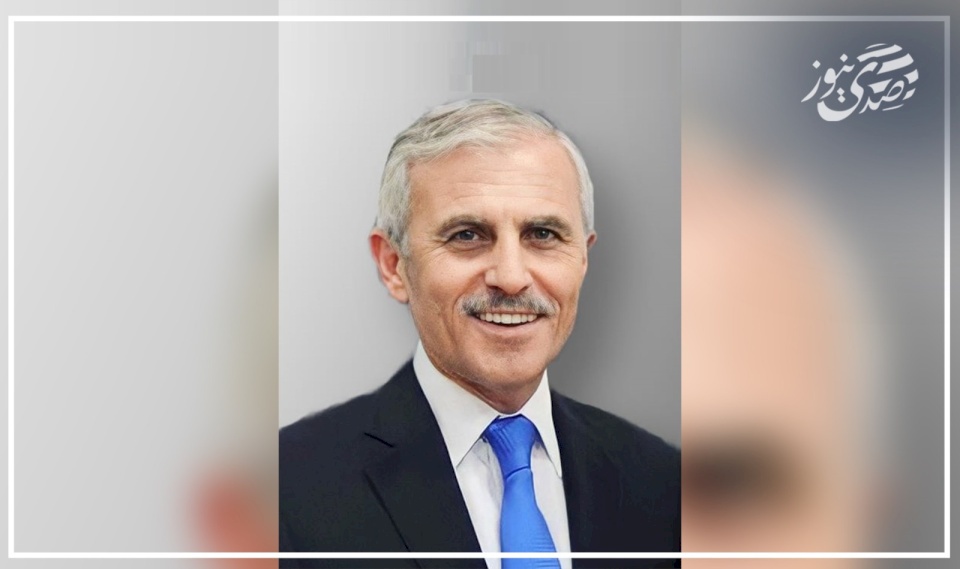
Why Does Marwan Barghouti Remain the Key to Unity and Settlement?
Marwan Barghouti is not just a Palestinian prisoner who has spent nearly three decades behind bars, nor merely a prominent leader in the Fatah movement; he is one of the most significant figures who has encapsulated a whole trajectory of the development of the Palestinian nationalist movement, with all its sacrifices and transformations, transitioning from popular resistance to the pursuit of a just political settlement based on international legitimacy, without abandoning the established national rights.
His repeated return to the forefront of interest is not only explained by his status within Palestinian society but also by his position in regional and international political calculations. Whenever there arose a need to rebuild the Palestinian political system, restore its unity, or seek leadership that enjoys broad national legitimacy, the name of Marwan Barghouti re-emerged as one of the few names that transcends organizational and divisive boundaries, touching upon the idea of a unified national leadership.
The issue is not just about a person but rather about what he represents: the possibility of converging three elements that seldom come together in a single political figure: legitimate resistance, popular presence, and the ability to address the political future beyond the logic of managing the conflict indefinitely.
Barghouti has progressed through the ranks of the nationalist movement since his early youth, being one of the most prominent leaders of the student and nationalist movement in the West Bank during the 1970s and 1980s. He contributed, along with a whole generation of field, trade union, and popular leaders, to preparing the organizational, political, and popular environment that paved the way for the outbreak of the First Palestinian Intifada in 1987.
Despite being exiled outside the homeland just before its eruption, he became, from his position abroad, one of the leading figures supporting the Intifada politically and organizationally alongside the martyr Khalil Al-Wazir (Abu Jihad), who was one of the most prominent leaders supporting the Intifada and its unified national leadership. After his assassination in 1988, Barghouti continued this role within the framework of working with President Yasser Arafat, before returning to the homeland in April 1994.
This trajectory was not merely a transition between organizational positions but rather expressed his belonging to a national school that viewed political and popular struggle as complementary to searching for a historical solution that ends the occupation and achieves freedom, independence, and return. This school recognized that the strength of any Palestinian leadership is measured not only by its ability to endure but also by its capacity to transform sacrifices into a viable political project.
Peace Between Enemies, Not Between Friends
Marwan Barghouti was not an advocate of peace at any cost, nor was he a proponent of conflict management as an eternal fate. He started from a clear political conviction that the Palestinian-Israeli conflict can only end by ending the occupation, realizing the Palestinian people's right to self-determination, and establishing their independent state based on international legitimacy and international law.
Peace does not mean abandoning rights but recognizing that a historical settlement, if based on mutual recognition and minimum justice, is the only way out of the cycle of open conflict. Therefore, the leaders capable of making peace are not necessarily the most acceptable during moments of confrontation but rather those best able to convince their peoples that achievable peace is better than endless war.
This realization has been understood throughout history by national leaderships in various conflicts. The power needed for peace is not just the power of arms but the power of legitimacy and the ability to bear the responsibilities of historical decisions. Only leaders who possess the trust of their peoples can transition from the stage of conflict to the stage of settlement without losing their national legitimacy. This understanding intersected with the vision of several Palestinian national leaders, perhaps alongside some Israeli leaders who experienced the cost of bloody conflict, but lacked the political will and courage necessary to pursue a historical settlement at the heart of which lies the recognition of the rights of the Palestinian people as defined by international legitimacy, rather than a settlement between masters and slaves as most successive Israeli governments have attempted to impose, particularly the current government.
Some sectors of the Israeli right have bet on the possibility of weakening the Palestinian leadership or producing a leadership that accepts less than what the Palestinian people can accept, rather than confronting the essence of the conflict and addressing its historical and political causes. The result has been a tragic trajectory represented in the assassination of Yasser Arafat, the imprisonment of Marwan Barghouti, and the ongoing targeting of political paths and figures linked to more pragmatic options within the Palestinian arena, contributing, alongside other Palestinian, regional, and international factors, to opening the pathway for the rise of the extremist Israeli right and the religious-nationalist, Daesh-like currents, and racist factions that view the continuation of the conflict as a tool to preserve their political project.
Why Marwan? What Are the Similarities and Differences with Yasser Arafat?
The significance of Marwan Barghouti does not stem from being a replica of Yasser Arafat; each has his own historical context and unique personal and political characteristics. Nevertheless, a comparison between them becomes relevant when discussing the nature of Palestinian leadership capable of dealing with moments of major transformation.
Yasser Arafat was the leader of the political founding phase of the Palestinian Liberation Organization, the man who succeeded, through decades of national effort, in transforming the Palestinian issue from a refugee affair to one of a people with internationally recognized political rights. He possessed an exceptional ability to build the Palestinian nationalist movement and maintain its presence despite the complex regional and international circumstances; then he made the historic decision to transition from a logic of revolution to a logic of statehood and political settlement.
Marwan Barghouti, on the other hand, emerged from a different generation—the generation of the First Palestinian Intifada, which grew under direct occupation and witnessed the Palestinian people's ability to engage in mass action and popular organization within the homeland. Thus, he gained his prominence from his position as a field and political leader who combined organizational work with popular presence before becoming one of the most prominent Palestinian figures linking national struggle with the need for a serious political horizon to end the conflict.
The most important similarity between the two men lies not only in belonging to a single political and national school but also in the nature of the legitimacy upon which they relied, deriving from direct national experience and the ability to reach out to the people, rather than from an imposed position or external legitimacy. They both understood that any Palestinian leadership capable of making historical decisions needs first the trust of its people and national institutions based on popular participation.
However, the difference between them is equally important. Arafat led the PLO at a time when the Palestinian nationalist movement was battling to affirm the political existence of the Palestinian cause on the international level, then he navigated the complexities and contradictions of governance after the establishment of the national authority. In contrast, Barghouti has remained distant from executive authority, which kept him away from many burdens of the daily governance experience, but at the same time deprived him of the opportunity to test his political and institutional vision in managing practical realities.
Nevertheless, the most prominent common factor remains the same historical question: how can a people under occupation maintain its national rights while also having a leadership capable of making difficult decisions when a genuine opportunity arises?
In the end, Arafat realized that peace requires an Israeli partner capable of making painful decisions, as it needs a Palestinian leadership that possesses the legitimacy to bear the responsibility for those decisions. Perhaps the importance of Barghouti, for those who see him as a character able to play a historic role, lies in his possession of some elements of this equation: a history of struggle that provides him legitimacy, a political vision that opens the door to settlement, and a potential capacity to address a wide Palestinian audience.
Yet any historical role for Marwan Barghouti, like that of any other Palestinian leader, cannot succeed outside the framework of rebuilding democratic national institutions, ending division, and restoring the unity of Palestinian decision-making. Symbols may open doors, but they alone cannot build the future. Only strong institutions and popular legitimacy have the capacity to transform historical moments into a sustainable national project.
Between Symbol and Institution: There is No Salvation for a People Without Leadership or Institutions
Ultimately, the issue does not lie in Marwan Barghouti as an individual nor in turning any leader into a substitute for the people or the national institutions. People do not build their future solely through symbols, regardless of their historical stature, but through democratic institutions, popular legitimacy, and the ability to transform sacrifices and aspirations into a viable political project.
However, history also teaches us that some figures become, in moments of great transformation, more than just individuals. They encapsulate the experiences of generations and carry within their presence the potential to transcend divisions and open new paths. Thus, the importance of Marwan Barghouti lies not in being the only solution but in being one of the most significant potential keys to rebuilding a unified Palestinian national center capable of combining internal unity with a realistic political vision.
Therefore, the first step that cannot be overlooked Palestinian-wise is to restore internal legitimacy through presidential elections followed by free legislative elections that rebuild the relationship between the people and their leadership, opening the door to renewing national institutions based on participation, accountability, and ending division.
The elections are not merely an internal Palestinian matter; they are part of the conflict equation itself. A people cannot embark on a new historical phase without leadership based on clear popular mandate, nor can any international or regional actor deal seriously with a Palestinian partner unless that partner derives from the will of its people and its institutions.
Conversely, Israel also faces a historical requirement that cannot be escaped. Experience has proven that military power, no matter how great, cannot produce lasting peace or security. Israel must learn lessons from the history of the conflict and realize that its future cannot be built on extermination, continued occupation, annexation, or conflict management but rather on the acknowledgment that true security is linked to ending the causes of the conflict.
It is noteworthy that Marwan Barghouti's name is now present not only in Palestinian and Israeli discussions but has also emerged in international political calculations. U.S. President Donald Trump referred to him by name during discussions related to the prisoner exchange deal and the cessation of the "war" in Gaza, reflecting an awareness that the issue of Palestinian leadership must be part of any long-term political arrangements. This places Trump before a true test that aligns with his political pragmatism. Will he settle for managing crises and forging interim deals, or will he recognize that Israel's own interests do not lie in open warfare but in a historical settlement that ends the conflict?
Despite Trump’s known biases towards Israel, any realistic reading of the region’s future must lead him to realize a fundamental truth: the Israeli people's need for peace is no less than the need of Palestinians for that peace to be just, for the continuity of the conflict threatens to turn Israel’s military strength into a permanent strategic burden.
However, this peace cannot emerge from policies driven by the logic of annexation, liquidation, and total power. The path taken by successive Israeli governments, accelerating annexation projects, expanding settlements, and attempts to politically liquidate the Palestinian cause, culminating in the extermination of Gaza, as many experts and international human rights organizations describe it, reveals the depth of the crisis facing the region's future.
Peace is not built on the ruins of a people, nor on the attempt to erase a rooted national identity, nor on enforcing a permanent reality by force. Attempts to subjugate the Palestinian people or bypass their national rights will not end the issue but rather will reproduce the conflict in more dangerous forms. Thus, any real opportunity to escape this trajectory requires active international intervention, not limited to crisis management or temporary ceasefires, but working within the framework of international law and international legitimacy resolutions.
What is required is not merely a new agreement but a change in the rules of the game; Palestinian-wise through restoring legitimacy and unity and building institutions, Israeli-wise through transitioning from a logic of control to a logic of recognizing Palestinian national rights, and internationally through bearing the responsibility of ending a conflict that has lasted longer than it should.
In this equation, Marwan Barghouti remains a symbol of a question larger than himself: can Palestinians and Israelis transform decades of conflict into the beginning of a new path, or will everyone remain prisoners of the logic of war that has produced nothing but more blood and losses?
Peace between enemies is possible, but it requires leaders who possess legitimacy and courage, and an international community that has the will to prioritize the logic of law over the logic of power.
 Follow the latest Sada News via Google News
7-10 Billion Shekels.. The Bill for the Absent Worker from Brussels

Why Does Marwan Barghouti Remain the Key to Unity and Settlement?

The Joy That Passes Through Barriers

Post-Palestinian Elections: Who Holds Legitimacy and Who Has the Ability to Govern

A Personal Perspective .. What Jerusalem Needs "Now, Not Tomorrow"

Amendments to Amendments... When the Electoral Law Becomes a Reflection of Political Confu...

Palestinian Elections: Between Impossibility and Possibility
