

Israel Reveals Details of Secret Iranian Nuclear Facility in Mount Fas
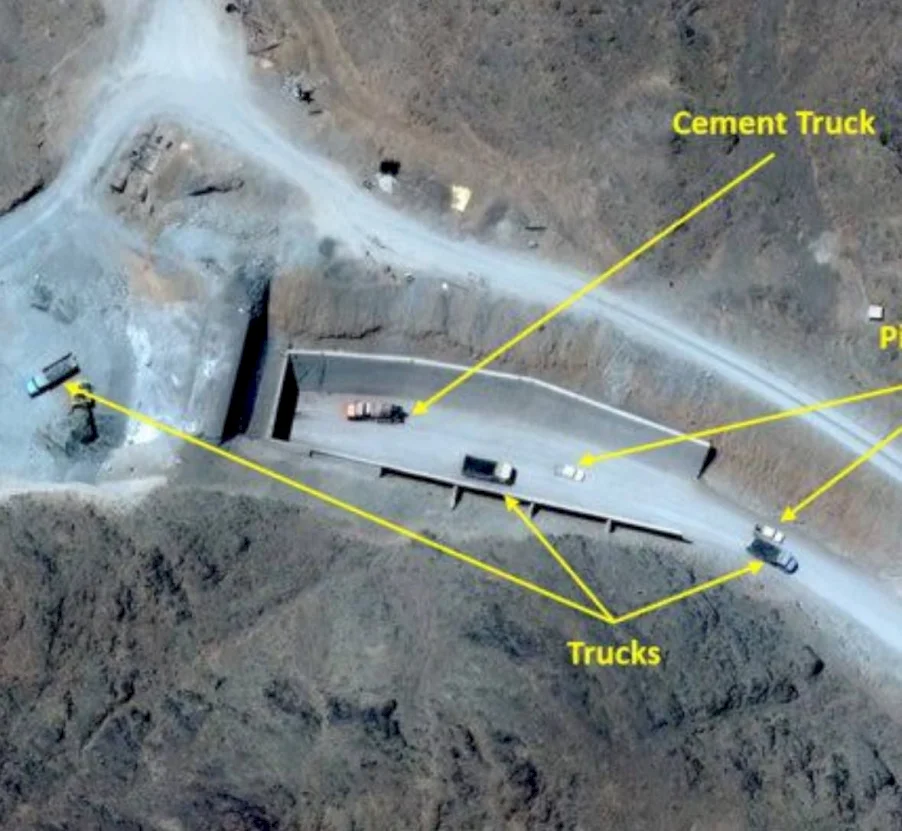
SadaNews: The Israeli occupation army radio reported that an image captured by a satellite in late June 2026 showed vehicles moving in and out of underground entrances to the nuclear facility located in the fortified Mount Fas inside Iran.
According to available information, the facility conceals thousands of advanced centrifuges, according to Israeli intelligence estimates. The scientific research institute led by nuclear affairs expert David Albright indicates that the complex is a network of tunnels that began construction in 2020, after former U.S. President Donald Trump's withdrawal from the nuclear agreement, and it has been excavated within a granite mountain.
During the construction period, Iran announced that the underground halls were designated to replace the advanced centrifuge assembly facility in Natanz. However, Israeli assessments view the objective as accommodating thousands of advanced devices for use after the restrictions on uranium enrichment under the nuclear agreement expire.
The facility includes two main entrances leading into the mountain, at a depth of no less than 100 meters. The elevation difference between the eastern entrance and the mountain peak is 145 meters, while the difference at the western entrance is about 100 meters, suggesting that the facility consists of several levels.
In 2025, Iran began constructing a fence and wall surrounding the facility, with a patrol road that winds entirely around the mountain. It also added layers of concrete and earth over the entrances to reduce the chances of targeting them. After the recent wars, Iran partially closed the eastern entrances while keeping the western one in use.
The facility did not experience any direct attacks during the wars against Iran in 2025 and 2026, except for a raid that targeted a nearby vehicle believed to be linked to air defense. The extent of the site's fortifications against airstrikes remains unclear, despite President Trump's recent threats to target it.
The research institute believes that the facility has vulnerabilities that can be exploited, notably the electricity, ventilation, heating, and cooling networks, in addition to the operational and supply personnel who enter and leave the site.
 Follow the latest Sada News via Google News
Organizations of the Temple Prepare for the Largest Raid on Al-Aqsa on What is Called the...

Smotrich: Israel Has No Interest in Joining the War Against Iran

Occupation Issues Military Order to Seize 5 Dunams of Land in Jaba'

Axios: Proposal for a 10-day Ceasefire Between Washington and Tehran and Two Options for M...

In a Rapid Pace.. The Occupation Builds a Huge Earth Barrier Inside Gaza

Meeting Between Aoun and Trump Expected Alongside 'Experimental Areas'

Gaza Health Warns of Collapse of Oncology Services Due to Depletion of Treatments and Susp...
