

7-10 Billion Shekels.. The Bill for the Absent Worker from Brussels
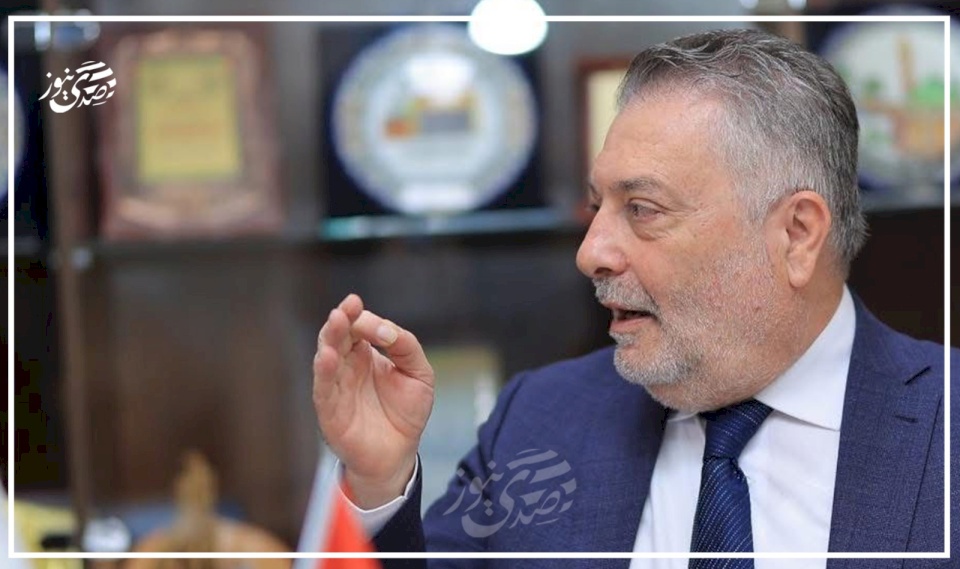
-International Economic and Financial Advisor – Member of the International Committee for Transformation and Digital Economy – General Secretariat
In every international conference held to support Palestine, the headlines focus on the announced aid figures, while a more important number remains off the radar: the size of income that has ceased to flow into the Palestinian economy since the doors of the Israeli labor market were closed to tens of thousands of workers. Since October 7, 2023, most of them have not returned to their jobs, and until now, no clear equation has been proposed linking the size of this absence to the amount of support needed to actually compensate for it. The recent Brussels conference repeated the same scenario: commitments of hundreds of millions of euros, without posing the most important question: how much has the Palestinian economy actually lost from the halt of internal employment, and is this funding sufficient to fill the gap?
The Size of the Shock: Numbers Not Just Impressions
Before the events of October 7, 2023, approximately 156,000 to 178,000 licensed Palestinian workers were employed in Israel and the settlements, in addition to around 37-40,000 workers without official permits, according to data from the Palestinian Central Bureau of Statistics. With the outbreak of the war, Israel revoked the permits of about 120,000 workers in one go, and by the end of 2025, only about 34,000 workers are expected to return, most of them in the settlements.
As for the average wage, it reached approximately 300 shekels per day (about 81 dollars), equivalent to around 6,600 shekels monthly per worker, a figure much higher than what is sometimes circulated in optimistic estimates. Multiplying this average by the number of workers who have left the market, the direct loss in wages alone approaches 7 to 10 billion shekels annually. If we take into account the multiplier effect of this income within the local market, the actual economic cost exceeds the value of direct wages, to include a decline in consumption, reduced business activity, and additional pressures on public finances.
These numbers reveal the reality that the Palestinian worker was not just an individual looking for work; they represented a regular financial flow into the local economy: their wages translate into daily consumption, demand for goods and services, the ability to meet obligations, and support for trade and the banking sector. Here emerges what is known economically as the "multiplier effect": every shekel lost by the worker does not disappear at the boundaries of their family, but decreases overall market spending, and impacts tax revenues, which are already suffering.
Moreover, the loss of this income does not only affect families and the private sector; it reflects on public finances through reduced economic activity and declining tax revenues at a time when the Palestinian budget already suffers from accumulated funding gaps. In other words, the return of the worker to the production market means alleviating pressure on public finances, not just improving family income.
What strengthens the value of this lost labor is that attempts to replace it have not succeeded even on the Israeli side itself. Israel turned to increasing the importation of foreign labor, but this did not compensate for the speed, skill, and experience of Palestinian labor, especially in the construction sector. This confirms that Palestinian labor was not just a cheap workforce that could be replaced, but rather a complex economic value that is difficult to fully substitute.
Brussels in the Balance: Support vs. Lost Income
The second ministerial meeting of the Donor Group for Palestine was held in Brussels in mid-July 2026, resulting in commitments of about 900 million euros, alongside a broader European program worth 1.6 billion euros distributed over four years (about 400 million euros annually), and a separate initiative for early recovery in Gaza worth nearly one billion dollars.
These figures, despite their importance, still need to be translated into programs that respond to the size of the economic gap resulting from the loss of income. While European annual support approaches 400 million euros (about 1.6 billion shekels), the annual loss in wages alone is estimated to be several times that amount. In other words: international support is necessary to fill emergency shortfalls, but it needs to be redirected to become a tool for building sustainable income, rather than remaining a temporary alternative to a productive economy capable of generating its own income.
The question that should be raised after Brussels is not only: what is the size of the announced funding? But also, perhaps primarily: how can part of this funding be converted into job opportunities and sustainable income sources, instead of remaining recurring relief assistance?
Towards a Comprehensive National Program to Address the Worker Crisis
Addressing this gap requires simultaneous courses of action, not just separate relief programs:
First, launching an emergency employment program for workers who have lost their permits, through labor-intensive projects in infrastructure, agriculture, energy, and housing.
Second, directing a specific and binding percentage of the announced international funding in Brussels towards stimulating the Palestinian private sector to expand and hire, instead of most funding remaining dedicated only to emergency humanitarian response. Possible options include creating a national economic employment fund, in partnership between the government, private sector, and donors, to finance productive projects that create sustainable income rather than temporary assistance.
Third, investing in converting the accumulated experiences of these workers, especially in construction, which constituted two-thirds of Palestinian labor in the Israeli market previously, into opportunities within the local economy or alternative markets.
Fourth, reconsidering the structure of reliance on a single foreign labor market by enhancing local production and encouraging investment in sectors capable of creating stable job opportunities.
And what about our role?
In return, the international community cannot be solely responsible for addressing this gap. A clear national employment plan from the Palestinian government is also required, one that goes beyond temporary solutions and links public spending, investment, and policies supporting the private sector. It is worth noting that existing steps, like the "Bader" program for financing projects for internal workers, and platforms for registering job seekers, remain useful tools but are much smaller than the scale of the gap, and require a clearer link between registering the unemployed and actually funding their employment. Serious treatment begins from within as much as it relies on external support.
Conclusion
The success of the Brussels conference will not be measured by the size of the announced figures, but by the ability of this funding to re-start the engines of the real economy, rather than funding the continued crisis more stably. Every job created today reduces the need for assistance tomorrow, and every shekel that returns to the Palestinian worker's pocket brings back market movement and the economy's confidence in its future, and this is an investment in stability no less important than any item on the donors' agenda. Ultimately, the real measure of success for any international support is not only the amount of money entering the economy but also the income returning to the citizen and the number of job opportunities being restored to the production circle..
 Follow the latest Sada News via Google News
Khalil Al-Hayya as President of Hamas.. Continuation of the Founders' Approach

The Annihilation of Sportsmanship

Until When Will the Palestinian Citizen Pay the Price of an Endless Phase?

7-10 Billion Shekels.. The Bill for the Absent Worker from Brussels

Why Does Marwan Barghouti Remain the Key to Unity and Settlement?

The Joy That Passes Through Barriers

Post-Palestinian Elections: Who Holds Legitimacy and Who Has the Ability to Govern
