

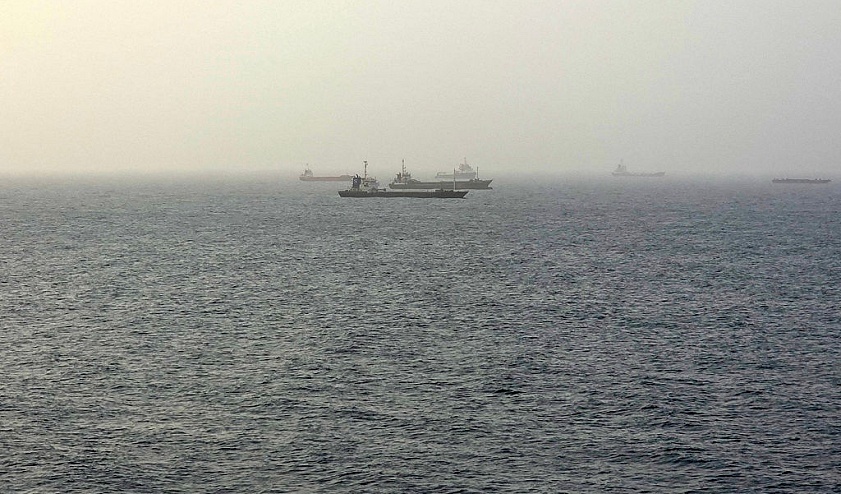
Progress in Iran-Oman Talks on Managing the Strait of Hormuz
SadaNews - Iran announced today, Sunday, that there has been progress in talks it is holding with Oman regarding navigation management in the Strait of Hormuz, at a time when there is relative calm following two consecutive nights without U.S. strikes against Iran and Tehran suspending its attacks on U.S. targets in the region.
Iranian Foreign Ministry spokesman, Ismail Baghaei, stated that several rounds of technical talks were held on Friday and Saturday in Tehran between the deputy foreign ministers of Iran and Oman, focusing on "common principles and executive mechanisms" to ensure safe passage in the strait while respecting the sovereign rights of the two coastal states.
Baghaei described the talks as "beneficial," confirming progress, and added that "technical and political consultations between the two sides are still ongoing."
The discussions come after the United States resumed its strikes against Iran on July 7, amid American efforts to undermine Tehran's control over the strait, following a memorandum of understanding signed between Washington and Tehran in June that temporarily reduced tensions.
Last month, Iran and Oman announced they were discussing an agreement related to the future management of navigation in the Strait of Hormuz and the associated services and costs, a move that Washington strongly opposes.
In parallel, Muscat has designated a route for ships to cross through Omani waters, which has prompted objections from Tehran and led it to take gradually escalatory steps.
On Sunday, Baghaei confirmed that "no change has occurred" regarding the navigation situation in the Strait of Hormuz.
Later, the Iranian armed forces announced that they had stopped six ships attempting to cross the strait after issuing warnings to them within the last 24 hours, according to Iranian state television.
Iran announced on Saturday that it had not detected new American attacks after about two weeks of mutual strikes.
The Axios website reported that the U.S. Department of Defense presented President Donald Trump with a plan to resume strikes, but he refrained from endorsing it, preferring to resume negotiations.
The report added that Trump ordered the strikes to be halted after an Omani delegation arrived in Tehran for talks on a new arrangement to reopen the Strait of Hormuz.
In the same context, Iran announced the suspension of its attacks on American targets in the region, following the cessation of U.S. strikes against it for two consecutive nights.
Iranian Army spokesman, Mohammad Akrami Nia, stated that "the Americans ceased their attacks over the past two nights," adding: "Since our strategy is primarily based on mutual response, we have also halted our retaliatory operations."
The renewed fighting around the strait had disrupted the diplomatic track between Washington and Tehran before escalating to include attacks on U.S. bases in the Gulf and regional shipping.
However, the recent relative calm has reopened the door for the resumption of negotiations, despite American reports linking the halt in strikes to concerns over depleting stockpiles of "Patriot" interception missiles and air defense systems among Gulf states.
CNN quoted a source in the U.S. Department of Defense stating that plans to escalate against Iran are currently "on hold," despite Trump’s threat to expand the strikes.
The New York Times reported that the decision to expand strikes was suspended due to fears of placing additional pressure on "Patriot" systems and other interception means, along with concerns about the region slipping into a broader war that threatens Washington's allies and impacts energy markets.
CNN also reported that U.S. Vice President, Jay D. Vance, and Chairman of the Joint Chiefs of Staff, Dan Kane, warned about the risks of escalation during a meeting held at the White House on Friday.
According to the network, Kane informed Trump that U.S. forces are capable of executing the military options on the table, but he pointed to the potential consequences of such actions.
In contrast, the Iranian military warned that war "will broaden further" if the United States resumes its attacks, just ahead of Israeli Prime Minister Benjamin Netanyahu's visit to Washington on Tuesday.
 Follow the latest Sada News via Google News
Katz Signals Expansion of Camps Evacuation Model to Other Areas in the West Bank

Progress in Iran-Oman Talks on Managing the Strait of Hormuz

U.S. Ambassador to the United Nations: Trump Gives Iran Talks a "Limited Opportunity"

The President Sends Messages to Several Leaders of Countries and International and Regiona...

West Bank Under Targeting: Netanyahu Directs Intensification of Raids and Comprehensive Ar...

Presidency: Israeli escalation in the West Bank and Gaza will keep the region in a state o...

After Barrier Closures.. Two Women Forced to Give Birth Inside Vehicles Near Nablus
