

Does the liberation of 5 areas in Kordofan open the way to Darfur?
SadaNews - In a rapidly evolving field development, the joint forces of the armed struggle movements in the Darfur region of western Sudan announced the liberation of 5 strategic areas in North Kordofan State and the destruction of over 73 vehicles belonging to the Rapid Support Forces, in an operation that involved the armed forces and allied military and popular forces.
The military command announced that these operations inflicted "heavy" losses on the Rapid Support Forces in terms of lives and equipment, in a "painful" blow coinciding with the continuing advance of the joint forces and the Sudanese army towards the city of Geneina in western Darfur, the last stronghold of the Rapid Support in the region.
These simultaneous developments raise a question about the extent of the link between the two fronts, and whether the progress in Kordofan will alter the balance of power in Darfur, especially with the continuing mobilization of Rapid Support Forces around Geneina in preparation for expected confrontations.
In this context, the official spokesman for the joint forces confirmed that the troops are determined to liberate Darfur completely, and that the army and the joint forces are fully prepared for the decisive battle.
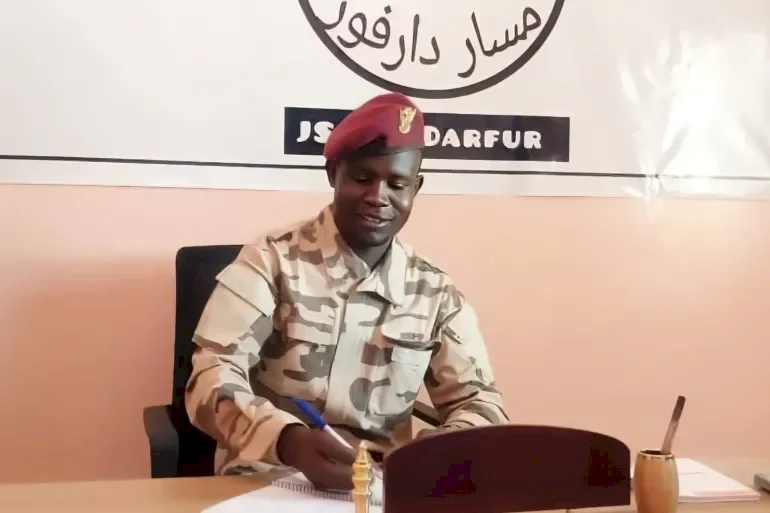
In an interview with Al Jazeera Net, the official spokesman for the joint forces of the armed struggle movements in Darfur, Major Mutwakil Ali Wakil Abuja, touched on the latest field developments, the strategy of the forces in protecting civilians, and future plans to secure the region "after liberation".
He stated that the forces and the army are progressing in their plan to tighten the noose around the Rapid Support Forces in western Darfur, as part of a military strategy aimed at restoring security and stability in the region.
Field Advancement
Abuja pointed out that the joint forces are determined to liberate Darfur completely and that they and the army are fully prepared for this stage, "in a manifestation of the state's will to assert its sovereignty over all its territory".
Regarding the field advancement, he explained that the operations recently carried out by the joint forces, including the recapture of the strategic area of "Bir Um Suleiba" north of Geneina on July 15, and the Orchi reservoir earlier, are part of a meticulous plan to tighten the noose on the Rapid Support Forces.
He emphasized that these operations aim to cut off the "enemy's" supply lines and pave the way for a decisive battle in Geneina, the last stronghold of the Rapid Support Forces in the region, stressing that the joint forces and the Sudanese army are determined to "purify all of Darfur from the militias and restore security to the civilians who have long suffered from its violations".
Regarding the "tactical withdrawal" from the city of Kalbiss, which sparked widespread controversy after the area witnessed extensive violations against civilians, Abuja stated that it was a planned step within a military strategy, but it led to the creation of a security vacuum exploited by the Rapid Support Forces to terrorize civilians. He emphasized that this reveals "the criminal pattern of these forces that use forced displacement as a weapon to change the demographics".
He emphasized that the joint forces are currently working to secure the liberated areas and fill any security gaps, confirming that they and the army prioritize the protection of civilians, while noting that security challenges require international efforts to condemn the violations perpetrated by the Rapid Support Forces against civilians.
A Significant Difference
Regarding the use of drones, Major Mutwakil Ali Wakil Abuja revealed that they have made a significant difference in destroying the Rapid Support Forces' vehicles and disrupting their movements, reflecting a qualitative development in the capabilities of the joint forces and the Sudanese army.
He indicated that the qualitative operations carried out by the forces in cooperation with the army "cripple the enemy's combat capabilities and cut their supply lines, paving the way for the completion of the liberation of all of Darfur, and confirming that the state is moving to restore its prestige and sovereignty over all its territory".
Regarding the ongoing actions of the Rapid Support Forces in burning villages and destroying infrastructure, especially in Orchi and targeting the Baso reservoir, Abuja stressed that the joint forces and the army are making great efforts to secure the liberated areas and prevent any attempts by militias to infiltrate, as part of their commitment to protecting civilians and ensuring their safe return to their homes.
However, he pointed out that complete protection requires international efforts to condemn these violations and stop the funding and supplies to the Rapid Support Forces, "which continue to target civilians and infrastructure in a blatant challenge to international laws".
Regarding how to deal with the deteriorating humanitarian situation and new waves of displacement coinciding with the advance towards Geneina, Abuja stated that the military advancement of the joint forces aims to secure cities and villages so that displaced persons can safely return to their homes, which represents a top priority for them and the armed forces.
He confirmed that the continued targeting of civilians by the Rapid Support Forces deepens the humanitarian crisis, necessitating urgent international intervention to provide protection and aid, appreciating the resilience of the displaced and their understanding of the circumstances facing the country.
Calls for Accountability
Regarding the movements of the International Criminal Court and warnings of crimes against humanity, the official spokesman for the joint forces confirmed that achieving justice for the victims is an essential part of their battle, stating: "Victory over the militia is not only military but also a victory for human values".
He added that the joint forces support any international effort to hold the perpetrators of these crimes accountable, affirming that military defeat will not be the end, but the beginning of the road to justice, and that the army and the joint forces are striving to ensure that none of the perpetrators of crimes escape punishment.
Regarding the joint forces' vision for the next phase after liberating Geneina, Abuja revealed that there is a clear plan that includes securing liberated areas, protecting civilians, preparing conditions for the return of displaced persons to their homes, and rebuilding what the war has destroyed.
However, he stressed that this requires support from the international community for reconstruction and stabilizing in the Darfur region, affirming that the forces and the army are "determined to establish security in every inch of the region".
In conclusion of his interview, the official spokesman for the joint forces conveyed two messages:
The first to the people of Sudan that "victory is near, that the blood of the martyrs will not be in vain, and that the army and the joint forces will not stop until the full liberation of the national territory".
The second to the international community to "stop its silence in the face of the crimes of the Rapid Support Forces that commit violations against humanity", and to take responsibility for classifying them "as a terrorist organization, similar to how the world deals with groups that threaten international peace and security".
These statements come at a time when the joint forces and the army continue to achieve successive field victories in western Darfur, including the control of the strategic area of "Bir Um Suleiba" north of Geneina and the recapture of the Orchi Reservoir, as part of efforts to tighten the noose around the Rapid Support Forces in preparation for the battle for Geneina.
This battle is expected to represent a decisive turning point in the course of the conflict in the region, as observers believe that the liberation of Geneina will deal a severe blow to the Rapid Support Forces and restore confidence in the state's ability to regain its prestige, which will positively reflect on reconstruction efforts and the return of displaced persons to their homes.
Source: Al Jazeera
 Follow the latest Sada News via Google News
Does the liberation of 5 areas in Kordofan open the way to Darfur?

Berri: Lebanon Needs a Tripartite Guarantee Involving Saudi Arabia, the United States, and...

Raging Fires and a Hurricane.. Simultaneous Disasters Displace Hundreds of Thousands Acros...

Khartoum Rejects American Proposal to Equate Rapid Support Forces with Contact Points

30,000 North Korean Soldiers for War in Ukraine.. What’s the Story?

16 Killed in Mutual Attacks Between Russia and Ukraine

Dozens Dead and Injured in Collision of Passenger Buses on Deir ez-Zor - Damascus Road
