
The Broadest Reform of Saudi Education Governance in Decades May Pave the Way for Bigger Investments
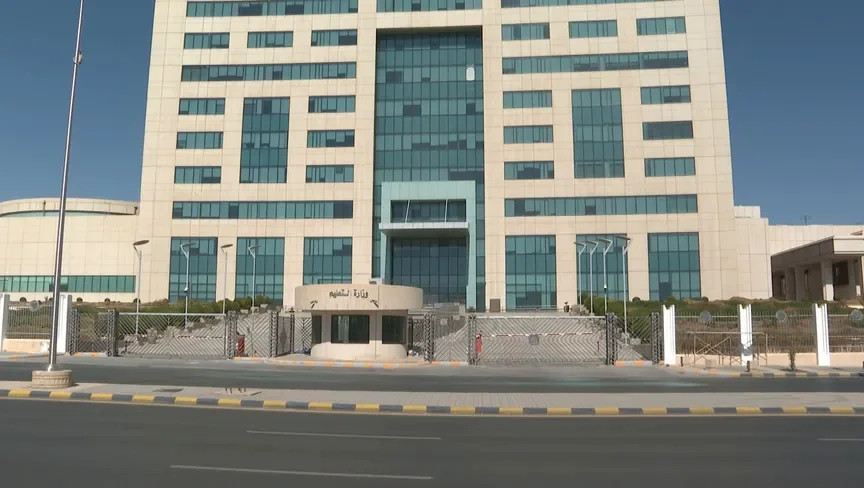
SadaNews - Saudi Arabia has approved the broadest restructuring of public education governance and regulation in decades, a move that could encourage further private and foreign investments in a sector that plays a key role in the Kingdom's plans to diversify the economy and enhance its competitiveness.
This was announced through a royal decree on Friday to establish a new public education system, replacing several fragmented systems and regulations, including the public education policy document issued in 1969.
The new system establishes a General Education Affairs Council aimed at unifying the governance of the sector and simplifying its regulatory environment by bringing together all key entities involved in education, investment, and the labor market under one framework. This aims to reduce the time required for decision-making and granting necessary approvals for initiatives or projects, instead of the current systems which require separate decisions from each entity.
Powers of the Council
The royal decree specified that the Council would be chaired by the Minister of Education, with representatives at the deputy minister level from various ministries including finance, investment, economy, planning, human resources, health, culture, and sports, alongside the Education and Training Evaluation Commission and representatives from the private and non-profit sectors. The Council will begin exercising its powers from the date of publication of the system in the official gazette, while the system itself will come into force after 180 days, with existing provisions temporarily remaining in effect until alternatives are approved within a year of its enforcement.
The formation of the Council, along with the extensive powers granted to it by the decree, reflects the link between education development and economic and development goals that extend beyond school management, including the development of human capital amid rapid changes in global economic drivers, which represents one of the biggest challenges facing the Kingdom and Arab governments in general.
Rana Maristani, founder and president of "R Consultancy Group," which advises British institutions wishing to enter Saudi and Gulf markets, stated that foreign investment in education has been allowed for some time, but the path to entering the market has often been "complicated, with multiple approvals and uncertainty regarding implementation and lengthy timelines."
The Role of the Private Sector
She added to "Asharq Bloomberg" that the new framework provides greater clarity regarding licensing, governance, and operational requirements, granting international operators more certainty and confidence, which represents a transition from a phase of intentions to "a more organized and investable operational environment."
The new system has granted the Ministry of Education, under controls approved by the Council, the ability to delegate some of its educational tasks or manage and operate some educational institutions to the private or non-profit sector, in addition to delegating certain assets – such as lands or educational buildings – to the private or non-profit sector, "including foreign investors, to manage, operate, or invest in private educational institutions."
Several foreign investors are already present in the education sector in the Kingdom. Karim Moussa, co-CEO of "EFG Hermes," revealed the intention of the regional investment bank based in Cairo to inject more than $150 million into education in Saudi Arabia over the next two years through its dedicated fund for sector investment.
Demand for Private Education in Saudi Arabia
Moussa explained in an interview with "Asharq Bloomberg" published on July 21 that the bank's fund invested already $125 million in six schools in the Kingdom, adding that the group intends to expand its "Hayat" schools in the Kingdom this year, in addition to studying the acquisition of two schools and entering the nursery sector within the next two years, amid continued strong demand for private education services.
However, the importance of the system may exceed its ability to encourage investment in infrastructure and schools if it contributes to developing students' skills in a manner that aligns with the Kingdom's ambitions and global economic challenges.
The latest indicators of "Vision 2030" show the ongoing gap in educational outcomes, as Saudi students scored 387 points in the 2022 PISA benchmark test, compared to a baseline of 386 points and a phased target of 394 points, while the Kingdom aims to raise the score to 500 points by 2030.
 Follow the latest Sada News via Google News
After raising $7.7 billion for Israel since the Gaza war.. "Luxembourg closes the window o...

The Approach of Oil Prices to $100 Puts the "Fed" and Its Peers to the Test

The Broadest Reform of Saudi Education Governance in Decades May Pave the Way for Bigger I...

Gold prices reach nearly $4,053 per ounce

Global Equity Funds Continue Gains for the Ninth Week

Gold Retreats as Dollar Approaches Its Highest Levels

النفط فوق 100 دولار متجها لتحقيق رابع مكسب أسبوعي على التوالي
