

American Report Reveals the Depth of Arab Disagreements on Managing the Crisis with Iran and the Future of Hormuz
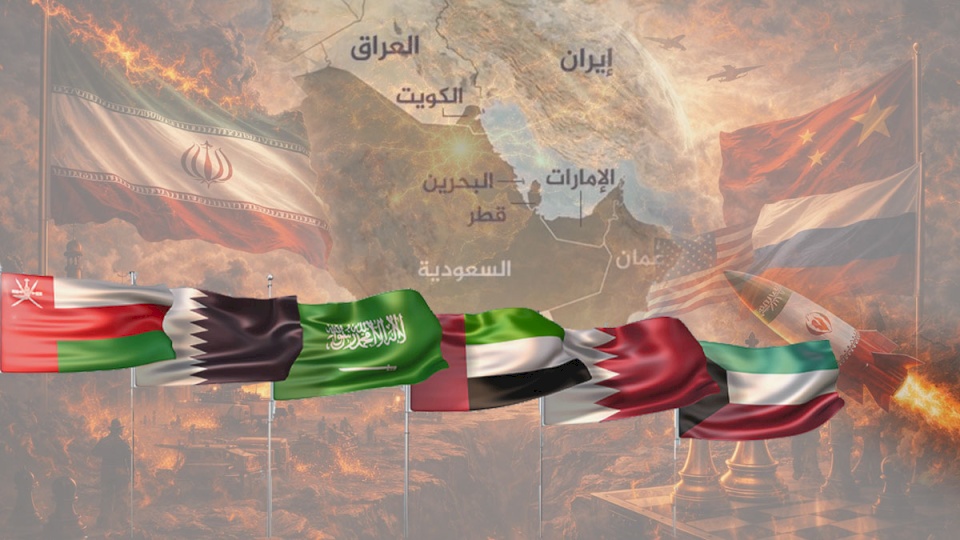
SadaNews Translation - The divide among Arab countries regarding how to handle the current and future crisis with Iran is widening, along with differing visions on managing the ongoing war in the region, according to a recent report published by the American newspaper "Politico" and translated by SadaNews. Despite the utmost strategic importance and common interest that binds these countries in maintaining the flow of maritime trade through the Strait of Hormuz, the stark differences in national and political priorities among each country prevent any tangible progress or the crystallization of a unified Arab stance.
This gap in positions is attributed to a range of foundational economic and logistical factors, as some Gulf states have alternative routes and points for exporting their oil away from the risks posed by the Strait of Hormuz, while the economies of other countries directly and centrally rely on trade with Iran. Additionally, the extent of economic damages and losses incurred by each country due to this draining crisis varies, leading to differing responses and political engagement regarding the war issue.
Perhaps one of the most prominent indicators and practical evidence of this increasing division is the sudden decision by the United Arab Emirates to withdraw from the Organization of the Petroleum Exporting Countries (OPEC) last April. Analytical readings of the report confirm that this step was not taken in isolation from the geopolitical context, but rather came partially as a direct result of the deep disagreements related to managing tensions and the war with Iran, as well as the subsequent differences in regional energy policies.
This tension has clearly reflected on regional cohesion, according to SadaNews translation, as an Arab diplomat from a non-Gulf state stated to "Politico" that the UAE’s withdrawal caused widespread anger among other countries, particularly Saudi Arabia. The diplomat added that the Gulf region will not return to its previous state, noting that the Gulf Cooperation Council is now experiencing a state of paralysis and has ceased to perform its usual functions or fulfill its role in resolving crises and unifying ranks.
In a related context, the report indicates that these structural divisions directly hinder any diplomatic efforts to reach a comprehensive political settlement or ensure the reopening of the Strait of Hormuz on a permanent basis. While some regional parties are pushing for escalated pressure and tightening political and economic screws on Iran to force it to make concessions, other parties prioritize the issue of reopening the strait and restoring maritime flow to avoid further direct losses.
To clarify this complex map of positions, the report quoted former U.S. ambassador to Saudi Arabia, Michael Ratney, detailing the nature of the roles of the concerned countries, indicating that Oman was the most open and willing to communicate with the Iranian side, followed by Qatar, which took a slightly less open approach while striving to continue its role as an effective mediator. In contrast, the UAE emerged as the most hardline party, calling for strict and firm measures against Tehran, while Saudi Arabia preferred to adopt a balanced and moderate position that combines caution and the maintenance of maneuvering space between the various parties.
 Follow the latest Sada News via Google News
Settler Outburst and Accelerating Escalation in the West Bank Amid Warnings of an Imminent...

American Report Reveals the Depth of Arab Disagreements on Managing the Crisis with Iran a...

Report Reveals Reasons Behind Washington's Freeze on Escalation Against Iran

Progress in Omani-Iranian Talks on Reopening Hormuz

Weather: Decrease in Temperature with Remaining Very Hot Conditions

Israeli Alert in Anticipation of Escalation in the West Bank: "The Sequence of Events Coul...

Axios: Trump Halts Strikes on Iran Awaiting Omani Mediation Efforts
