

Munich.. Laboratory of Military Systems Supported by Artificial Intelligence
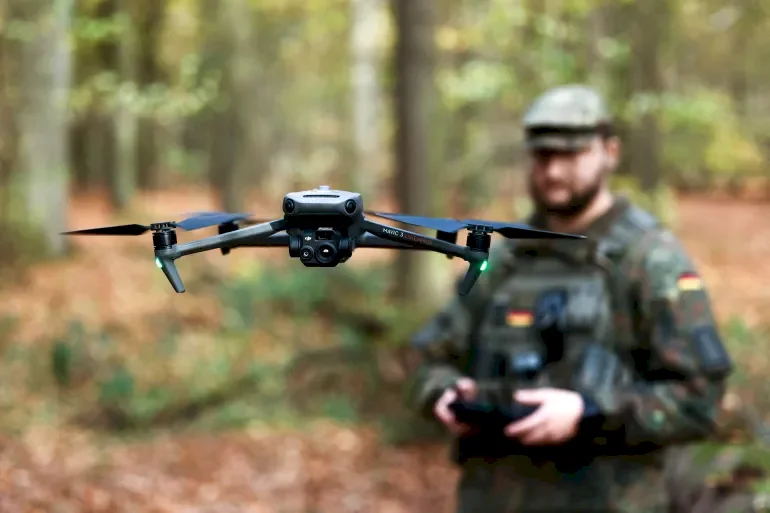
SadaNews - Munich, the capital of Bavaria in southern Germany, not only holds the titles of the club with record numbers in the Bundesliga (Bayern Munich) and the famous car brand (BMW) but has also become, in recent years, the actual laboratory for military systems based on artificial intelligence in Germany.
The exact number of private companies working on the development of artificial intelligence technologies in Munich and its surrounding areas is not known, although a recent investigative report from the specialized site Correctiv identified 21 companies "whose innovations cover a wide range of military applications, from reconnaissance missions and decision support systems during military operations to the development of autonomous vehicles and offensive weapons."
Since technologies such as the "Kill Chain" with its five phases—identifying the target, fixing and tracking it, selecting the means of attack, executing the strike, and assessing the results—remain largely a black box, the fundamental question arises: to what extent can humans relinquish control over the course of wars?
Frenzied Race
The radical transformations in the nature of war management are clearly manifested, as in the Ukrainian war, where the use of drones by both sides of the conflict has become a daily method of managing the battle to the extent that reporters sarcastically refer to the explosive drones that hunt soldiers in shelters, trenches, and closed buildings as "human hunting."
This war, which has entered its fourth year, has effectively turned Ukraine into the leading producer of drones in Europe, with estimates suggesting that Ukraine produces about 4 million drones annually, a number that exceeds the total production of all NATO member countries.
This "black box" is on the cusp of a new technological breakthrough: Swarm Intelligence, which simply means allowing one soldier to control a large number of drones and manage them in a coordinated and collective manner. The report cites Ukrainian military personnel as saying that this is a decisive factor in winning battles in the future, which requires reliance on artificial intelligence to connect all these drones and coordinate their operations integrally.
Future Wars
About 2000 kilometers away from the front lines in Ukraine, specifically in Munich, a new generation of development and programming companies is closely monitoring what is happening in Ukraine. Meanwhile, the German defense industry is striving to keep pace with developments, which explains Germany's position as the leading European country in private investments in artificial intelligence for military purposes in 2024, according to a joint study by NATO and the analysis company Dealroom.
As future war management will rely on what is known as "precision warfare," which effectively combines high-precision weapon systems, it requires the integration of several systems simultaneously: reconnaissance, sensing, analyzing mountains of data, and making execution decisions once the target is identified. According to Correctiv, German companies cover all these areas.
One of the key companies in this field is Helsing, which has made agreements with prominent companies in the arms manufacturing sector such as Hensoldt, ARK Robotics, and Airbus Defense and Space.
The report quotes Frank Sauer, a military science professor at the Bundeswehr University, also based in Munich, stating that the use of robots and artificial intelligence in the military will change the nature of wars in the future. "Everything will become faster and more lethal," says Sauer.
The expert recalls the recent American-Israeli war against Iran, saying: "Identifying thousands of targets in just one day and hitting them was unimaginable just a few years ago."
Sauer places German companies like Helsing, Stark, Titan, and ARK Robotics—each operating in the Bavarian capital—at the forefront of competitors developing artificial intelligence in creating Kill Chain technology.
From a purely technical standpoint, Sauer notes that each step of the Kill Chain can now be executed entirely without human intervention, even down to the execution of the attack itself. However, the expert warns: "The great danger lies in the potential loss of sufficient human control and oversight" over these operations, as evidenced in Gaza.
Here, Correctiv cites the 972 Magazine site, which uncovered that the Israeli army used the Lavender system (presumably based on artificial intelligence) during the early months of the war on Gaza for thousands of attacks without human supervision (…) this system can support or even independently execute attacks.
In Germany, specifically in Munich, several companies are working on developing similar systems, including Rheinmetall, PWI, Blaknight, Helsing, Hensoldt, and Airbus Defense and Space.
Are We Losing Control?
It is true that the German government currently rejects relying fully on autonomous combat systems, as evidenced by a briefing response provided by the Berlin government to the Bundestag, but the question remains: how long will Germany maintain this position at a time when a joint NATO and Dealroom study places it at the forefront of European investment in this field?
The latest report from the parliamentary commissioner for armed forces clearly states: "Armed drones, AI-supported systems, and autonomous systems are necessary to maintain the capability to manage armed conflicts and effectively protect forces. These technologies provide equipment and, above all, personnel."
All of this comes at a time when the German government's ambitious plans to develop its military capabilities are in full swing, according to the economic magazine Capital. While updating the German army requires significant effort and funding, the magazine confirms the private sector has made superior strides in artificial intelligence technologies.
The magazine states that 2024 witnessed the injection of high-risk capital investment from private investors amounting to about $1.3 billion into startups developing advanced technological solutions.
Munich Again
This report also places the startup Helsing at the forefront of the future sector, stating that the hundreds of millions injected into the company in recent years have raised its market value to nearly 5 billion euros (about 5.4 billion dollars), enabling it to open branches in the UK, France, Ukraine, and the Baltic states.
In Europe—according to the magazine's report—more than 5 billion dollars were invested in 2025 in startups working in security and defense, representing an increase of 24 percent compared to the previous year.
The figures also show that investments in the defense sector in Europe are no longer facing the criticism they once did. In 2024, these investments constituted about 10 percent of the total high-risk capital, double the amount recorded in 2022, which witnessed the outbreak of the Russian-Ukrainian war.
Source: German Press
 Follow the latest Sada News via Google News
No Miracle in Tokyo.. A Book Returns Japan to the Laws of Urbanization

Al-Swehli Crowned Champion of the Libyan League for the First Time in Its History

Egypt's Public Prosecution Reveals Details of the Investigation with Sabry Nakhnokh

Closure of a Fake Doctor's Clinic Famous for Saying 'We Cleaned and Wiped the Intestines,...

Foods Rich in Water That Help Hydrate the Body, Including Cucumber

Expert Confirms: Artificial Intelligence is Eroding our "Virtue of Patience"

Report Warns of the Expanding Scope of Cyber Attacks Surrounding the 2026 World Cup
