
Iran's War Drives Global Gas Trade Underground
SadaNews - A day before crossing the Strait of Hormuz, an Indonesian sailor aboard the gas carrier "Al Rayyan" posted a picture of a rainbow stretching over the bow of the ship. He wrote on social media: "When a dream ship becomes a reality," expressing his gratitude to God for this blessing.
However, the LNG carrier then turned off its tracking device and began its journey out of the Arabian Gulf.
The "Al Rayyan", loaded with Qatari LNG, was following another gas carrier coming from the emirate called "Fuwairit", which was preparing to cross the waterway under an agreement between Pakistan and Iran.
A Beacon of Safety in a Dangerous Passage
For the sailors on board the second vessel, who lacked such governmental protection, this tanker represented a beacon of safety through a perilous maritime corridor, according to testimonies from sailors later.
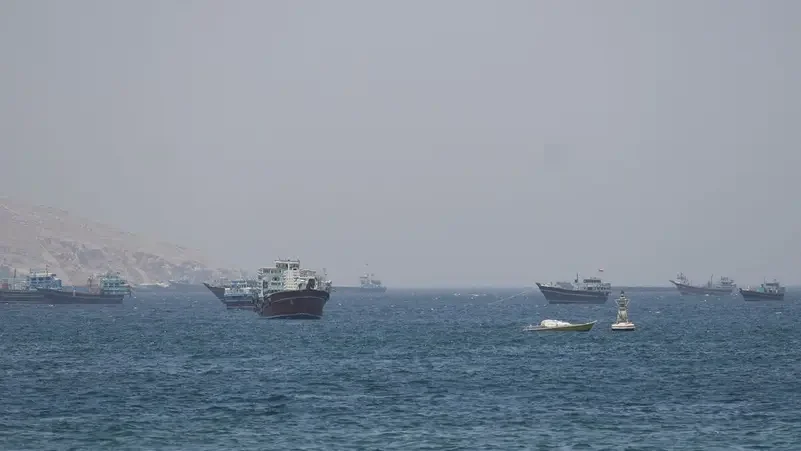
The two vessels slowly entered Iranian-controlled waters, scanning the horizon for the appearance of other tankers, Iranian patrol boats, or attacking drones approaching the area.
An oppressive silence settled over the place. Then the tracking signal for the first ship also disappeared. In those moments, some crew members resorted to prayer.
After a day, the two ships emerged from their "dark" journey to appear in the Gulf of Oman, before heading east after months of waiting.
As US and Israeli strikes began on Iran in late February, Qatar was among the first producers to find themselves in the crosshairs of the economic fallout from the conflict.
The movement of its giant LNG facility and its fleet of tankers was abruptly disrupted, including some of the most expensive ships in the world. As the war entered its fourth month, the Strait of Hormuz remained effectively under Iranian control.
Nevertheless, the world's second-largest LNG exporter has begun again to transport its shipments out of the Arabian Gulf, drawing on employment and navigation practices more akin to the murky aspects of the oil market than to the much smaller and more conservative LNG sector, where buyers' ability to track shipments from port to port was part of its reputation for reliability.
A Fierce Battle for Freedom of Navigation
Michelle Wiese Bockmann, an analyst at maritime information firm Windward, said: "It's a battle for freedom of navigation." She added, "When you look at all those vital straits, you realize that the foundations of global maritime trade are suddenly being shaken. We're also witnessing a jump in shadow transits (dark shipping) and an accelerated escalation in the level of risks."
During May, it appears that at least four Qatari ships discreetly traversed that waterway, according to shipping data and informed sources.
These shipments represent a tiny fraction of pre-war levels, but they offer a glimmer of hope for buyers such as India and Bangladesh, who have had to resort to the spot market to compensate for supply shortages, paying prices double compared to Qatari gas shipments.
Nearby, the Abu Dhabi National Oil Company (ADNOC) also discreetly transported a similar number of shipments.
The shift to shadow transit is primarily an attempt to mitigate the risks vessels and crews face when crossing the Strait of Hormuz—risks that will remain high until a permanent settlement is reached—but it also reflects the political and financial pressures faced by producing countries like Qatar and its neighbors.
A Threat to LNG Reliability
This shift also holds potential long-term implications for the LNG trade, which has become less transparent while consumers in Asia raise questions about the future of this fuel, which has already faced two supply crises in just over four years.
This narrative around the changing LNG flows in the Arabian Gulf is based on more than a dozen interviews with brokers operating in the region, officials from companies and governments, sailors, and analysts, all of whom spoke on condition of anonymity due to the sensitivity of the topic.
These testimonies reveal exporters' attempts to adapt to an unprecedented energy crisis, along with its repercussions on parties reliant on this trade.
Neither ADNOC nor QatarEnergy responded to requests for comments.
The first indication of this change in the LNG industry—which had been fully trackable thanks to the specialized nature of its ships and terminals—emerged in 2023, as US sanctions began to impact the Russian gas export sector.
Russia's Shadow Fleet for China
As Moscow sought to reroute shipments from its main project "Arctic LNG 2", it established a parallel fleet of vessels, following the oil sector's model, aimed at serving the world's largest market, China.
Neither Qatar nor Abu Dhabi is subject to sanctions, nor do they engage in trade covered by these sanctions. However, both countries have gleaned from the Russian experience the need to turn to operating a shadow fleet as an alternative option when necessary.
This comes despite International Maritime Organization requirements that mandate the operation of "AIS" tracking devices, especially in narrow and congested sea lanes.
Sol Kavounis, senior energy analyst at MST Marquee, said: "It's natural for LNG producers in the Gulf to try to avoid Iranian attacks by adopting shadow fleet practices." He added: "This may continue as long as Iran seeks to assert control and threaten passage through the strait, which may extend even after any peace agreement."
Orders to Disable Tracking Devices at Ras Laffan
Last month, Qatar began directing tankers, whether owned or chartered, to turn off their digital transmitters (tracking devices) as they approach the "Ras Laffan" facility, the largest LNG export terminal in the world, and to repeat the same procedure when crossing the Strait of Hormuz, whether entering or exiting the Gulf, according to informed sources.
The new measures also required ships to move in tandem within a small convoy to enhance safety levels, according to the sources.
At the same time, the sources said that companies are replacing ship leaders and sailors who cannot or refuse to navigate through this waterway. In a striking shift, expertise is no longer a constant requirement for those filling this gap. For instance, the "Al Rayyan", owned by Qatar Energy, according to the shipping database Equasis.
Tracking records by Bloomberg since late 2016 indicate that this vessel had only operated over the past decade to fulfill the export needs of the "Ras Laffan" port. However, since February, it found itself unwittingly at the heart of a historic crisis.
The ship was docked near the Qatari facility when Iranian missiles struck the site in March, prompting an emergency evacuation and pushing the ship into open waters.
Testimonies from Filipino Sailors
Sailors from the Filipino crew, totaling more than 20 individuals, recounted how alarms blared in the dead of night, prompting them to move and flee in a state of panic.
One Filipino sailor wrote on social media, attaching a picture of the massive "Ras Laffan" facility ablaze following the Iranian attack: "One cannot imagine the horror of the scene unless they see it with their own eyes." He added: "Just an hour after we left, larger explosions occurred, and the attacks continued for three hours. Our ship was the last to leave the port."
Crew members reported receiving some comforts and appreciation, such as Toblerone chocolates, but most demanded to be returned to their home countries and left shortly thereafter.
Typically, sailors working on giant LNG vessels like the "Al Rayyan"—which is approximately two and a half times the length of an American football field and valued in the hundreds of millions of dollars—are highly specialized due to the complex technical nature of these ships and their severely refrigerated cargoes.
However, timing was crucial in replacing this crew. The recruiting agency offered double the wages and did not require direct experience in LNG.
Captain David B. Cihombing organized the selection process for applicants. His recruiting company, Savana Charta, had previously supplied Indonesian crews for at least two ships transporting LNG shipments subject to sanctions to China, before narrowing down the final list to 25 individuals.
The applicants gathered in a small office in Jakarta at the beginning of last month to hear a briefing on the mission's risks, from drone attacks and collision incidents to the possibility of being stranded at sea for long months.
The instructions were clear: If the tanker was to cross the Strait of Hormuz, it had to disappear from tracking systems to avoid becoming a target. This practice has already begun to have repercussions for some of the most energy-hungry buyers.
Iranian Approval for a Pakistani Shipment
In early May, Pakistan obtained Iran's approval to receive a Qatari gas shipment, a crucial cargo for a country suffering from electricity shortages and in urgent need of LNG to mitigate recurring power outages.
One tanker named "Mihzem" was approved to cross.
However, as the "Mihzem" tanker approached the Strait of Hormuz on May 11, it unexpectedly turned back and disappeared from tracking systems.
This confused officials in Islamabad, who rushed to secure alternative supplies, including from the costly spot market, before it became clear that this retreat was merely a diversion tactic.
Hours later, a Pakistani official received a call from a sailor on the vessel confirming that it had safely crossed the Strait of Hormuz. Shortly thereafter, the tracking signal reappeared, followed by confirmation from Qatar that the shipment would arrive that week.
Dark Transit Extends Beyond Qatar
Qatar is not alone in resorting to shadow transit operations. At the beginning of the conflict, ADNOC pressured ships to keep their "AIS" tracking systems running, allowing them to be easily tracked.
Ship leaders resisted this, opting to follow practices common among certain sectors of the oil industry, which involve passing without informing other vessels or maritime authorities. They argued that hidden shipments freed the company from coordinating its movements or obtaining Tehran’s approval, a requirement imposed by Iranian forces. Eventually, ADNOC acquiesced to this approach.
Under the current procedure, which aims partially at maintaining operations at the "Das" export facility, ship leaders heading to the Arabian Gulf are required to first stop at the Khorfakkan anchorage east of the Strait of Hormuz. There, the ship anchors and the "AIS" tracking system is turned off.
For the new crew of the "Al Rayyan", sailing orders came after the successful crossing of the "Mihzem" tanker. The crew was informed that the tanker would cross in "full blackout" mode without broadcasting tracking signals.
According to sailors and traders familiar with its movements, the tanker paid no transit fees, nor was it covered by any agreement with Iran, but it was to accompany another ship protected by a diplomatic agreement, namely "Fuwairit", heading to China, the largest buyer of Qatari gas.
How Sailors Face Attacks on Gas Carriers?
In case of an attack, the instructions were simple: shield then retreat. The sailors later recalled the moment the ship safely crossed the eastern side of the Strait of Hormuz. Relief spread among crew members, all of whom feared that Tehran would order them to turn back.
The "Al Rayyan" did not reactivate its tracking systems until it was north of Muscat, safely away from the Iranian navy.
The tanker set off on May 23 from the Gulf of Oman towards China, becoming the first Qatari LNG shipment to take this route since the war began. In Jakarta, recruitment officials at Savana Charta have already begun searching for new batches of crew members.
 Follow the latest Sada News via Google News
The Chinese Central Bank Continues to Buy Gold Amid Ongoing Price Pressures

Iran's War Drives Global Gas Trade Underground

Washington Considers Using Iranian Assets to Finance Damage Repair in Gulf States

Continuous Fluctuations in Gold and Silver Prices

Among Arab Countries.. List of Countries That May Be Subject to Anticipated U.S. Tariffs

French Investigation Targets Swiss Branch of "HSBC" in Case of Embezzled Lebanese Funds

Eurozone Bond Yields Set for First Weekly Increase Since Mid-May
