

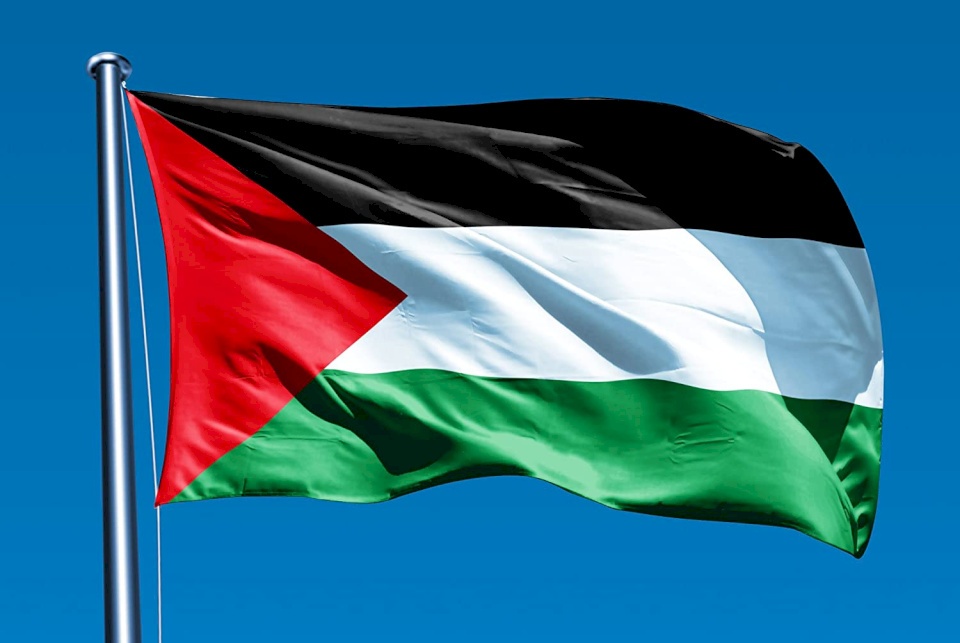
Palestine Participates in the 66th Session of the Advisory Council of the International Olive Council
SadaNews: Palestine concluded its participation in the International Advisory Council of the International Olive Council for the 66th session held in Lisbon, Portugal.
Palestine was represented in the meeting via video conference by Fayyad Fayyad, Director General of the Palestinian Olive Council, amidst the participation of 48 countries, including 27 EU member states, 10 Arab countries, in addition to 11 other countries from different regions.
The advisory council of the International Olive Council consists of four categories: the first includes farmers or producers; the second includes manufacturers who are olive mill owners; the third is about marketers who are traders and companies; and the fourth pertains to consumers.
Fayyad informed the attendees about the reality of the olive sector in Palestine and the systematic targeting it faces from the forces of occupation and settlers.
In his speech, Fayyad stated that the olive sector in Palestine is not just an agricultural sector or an economic commodity, but it represents our national identity, our living history, and a symbol of our human resilience, noting that the Palestinian olive sector maintains an average annual production of around 100,000 tons of olives, producing the finest types of extra virgin olive oil (Premium Extra Virgin) to cover our local consumption and export the surplus to international markets, despite all the unprecedented obstacles and challenges.
Fayyad pointed out that the Palestinian olive sector faces 13 different problems summarized by the aging of trees, the spread of diseases, small holdings due to fragmented ownership, unjust occupation laws, the assaults of settlers, and the apartheid wall, in addition to weak awareness and high production costs, along with very high oil loss rates in mills. He also noted the urgent need to modernize mills and develop agricultural guidance, emphasizing that at the top of these technical challenges is a global environmental enemy that threatens us all: climate change.
He added, "The temperature in Palestine has increased by 1.4 degrees Celsius since 1950, and it is expected to reach a difference of two degrees by 2050," pointing out that we are witnessing a decline and sharp fluctuations in rainfall, with a decrease in rainy days by 4 to 6 days every decade, along with extended dry periods during winter and shifts in seasonal patterns. He continues, "This thermal and water disturbance threatens to disrupt the growth cycle of the trees and doubles the phenomenon of alternate bearing, which warns of a decline in Palestine's olive production from the average of 100,000 tons per year over the last ten years to much lower figures by 2050, not to mention the potential decline in oil quality due to delayed ripening and the physiological effects that resurface complex chemical problems such as increased delta 7 compounds due to severe drought.
Fayyad confirmed that the biggest obstacle to the development of the Palestinian oil sector remains the Israeli occupation, which is waging a systematic war against this sector through three fierce fronts: the first is the economic blockade and military laws. The occupation authorities prevent the entry of fertilizers and essential nutrients for the trees under flimsy security excuses, cutting off the Palestinian countryside with a network of roadblocks and iron gates, as well as the deliberate closure of crossings and borders to disrupt and hinder the export of premium Palestinian olive oil to global markets. The second front is the encroachment of settlements and field assaults: millions of dunams have been isolated and confiscated to build and expand illegal settlements, with settlers, protected by the occupation army, carrying out daily assaults, including burning and cutting down ancient olive trees and openly stealing crops during harvest seasons, while preventing farmers from accessing their lands surrounding the settlements by force of arms.
The third front is the apartheid wall: this wall has caused an environmental and humanitarian disaster, isolating vast areas of the best olive farms. To access these isolated trees, the occupation imposes a humiliating and absurd 'military permit' system, most of which are systematically rejected, leaving thousands of trees to die and wither due to the prevention of care, plowing, and pruning.
Fayyad called on the Advisory Council of the International Olive Council to take strict institutional and practical measures to protect the olive tree and the Palestinian people, who represent a symbol of peace and sustainability in the Mediterranean Basin. He emphasized the need for international pressure to secure the safe and unconditional access of farmers to their lands behind the wall, in addition to funding vital projects in Palestine to combat climate drought, combat diseases biologically, and introduce modern technologies for mills.
It is worth mentioning that the International Olive Council was established in 1959 and is one of the organizations affiliated with the United Nations. Its advisory council holds two meetings annually, one in June, which is held in a selected country each time, and the second in November, which is continuously held in Spain.
 Follow the latest Sada News via Google News
Sheikh Discusses with Japanese Assistant Foreign Minister for Aid to Gaza Reconstruction M...

Palestine Participates in the 66th Session of the Advisory Council of the International Ol...

Yasser Arafat Foundation Holds Seminar on Israeli Elections, Change Prospects, and Their R...

Sheikh Receives French Consul General and Swiss Confederation Representative in Farewell M...

Occupation Storms Al-Mughayir Following Settler Attack on the Village Outskirts

RVF Foundation Launches New Water Desalination Unit in Northern Gaza Strip

Incursions and Arrests Targeting Workers in the West Bank
