

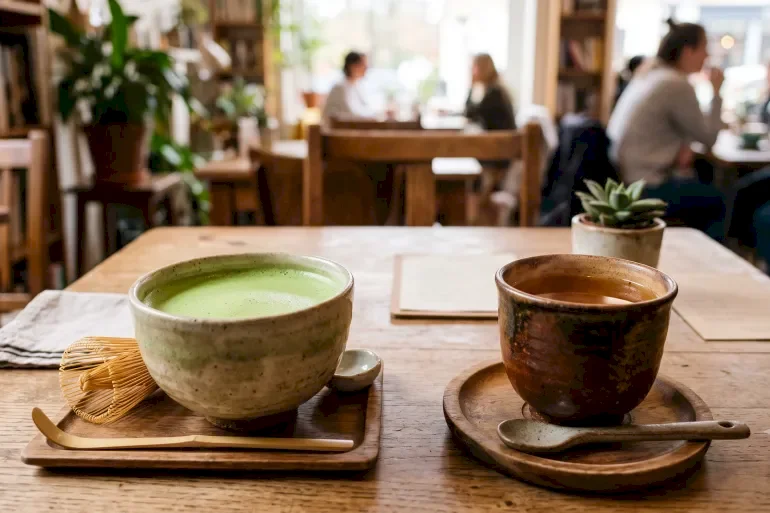
Combining the Flavor of Coffee with the Calm of Tea.. Can Hojicha Become a New Competitor to Matcha?
SadaNews - In recent years, matcha has become one of the most prominent beverages associated with a healthy lifestyle. While it dominates the spotlight, another Japanese competitor is quietly making its way into the world of trendy drinks: "Hojicha", a roasted green tea that attracts those seeking warmer and more subtle flavors.
Although it has not yet achieved the global fame of matcha, food and beverage experts consider it one of the rising trends in the tea world, especially with the growing consumer interest in drinks that combine distinctive taste, health benefits, and lower caffeine levels.
What is Hojicha?
Hojicha belongs to the family of Japanese green tea and is made from tea leaves, and sometimes from stems and branches that are roasted at high temperatures after processing. This method emerged in Japan during the 1920s when tea producers sought to utilize different parts of the plant and give them a new and distinctive flavor.
During roasting, the characteristics of the tea change noticeably, turning the color of the leaves from green to brownish-red, and developing aromatic compounds that give it a scent closer to light coffee or roasted nuts, which makes it completely different from most traditional green teas.
How Does it Differ from Matcha?
What gives Hojicha its distinctive personality is the roasting stage that sets it apart from most other green teas. After processing the leaves, the leaves and stems are roasted at temperatures ranging from about 160 to 200 degrees Celsius, in a process somewhat similar to coffee roasting, resulting in apparent changes in color, flavor, and composition.
During this process, the herbal flavors and bitterness associated with green tea and matcha diminish, replaced by warmer and softer flavors with hints of toasted bread, nuts, and cocoa.
Although Hojicha and matcha come from the same plant, matcha is made from leaves that are grown in the shade and then ground into a fine powder, while Hojicha relies on roasting the leaves first, whether served as whole leaves steeped in water or as a powder used in drinks and desserts.
The roasting process also reduces its caffeine content compared to matcha, making it a preferred choice for those looking for a drink that is more calming and less disruptive to sleep.
How Does it Affect Sleep?
One of the main reasons for the growing interest in Hojicha is its low caffeine content compared to coffee and matcha. This results from two main factors:
- The roasting process at high temperatures, which reduces some of the caffeine content.
- The use of more mature leaves that naturally contain less caffeine.
As a result, Hojicha provides a more calming experience suitable for individuals sensitive to caffeine or those looking for a drink they can consume late in the day.
Its appeal does not stop there; the roasting process gives it a warm and comforting aroma that many associate with a feeling of relaxation. It also naturally contains a compound called "L-theanine", known for its role in promoting mental calmness and reducing stress, making it a choice that combines distinctive taste with a soothing sensation.
Health Benefits that Withstand Heat
Some may wonder whether the roasting process reduces the nutritional value of tea, but recent scientific evidence suggests otherwise.
A study published in 2025 in the journal "Foods", which relied on simulating digestion in the lab, found that more than half of the polyphenols in Hojicha - compounds that are plant-based antioxidants and anti-inflammatory - remain stable during passage through the digestive system, retaining about 31% of their antioxidant activity. This means that a substantial part of its bioactive properties effectively reaches the body and is utilized.
Additionally, Hojicha contains compounds such as "pyrazines" that contribute to improving circulation, reducing feelings of fatigue, and promoting relaxation.
Since this tea has a lower caffeine content compared to other types of green tea, it is a suitable choice for those who prefer to reduce stimulants or suffer from their sensitivity, especially since excessive caffeine may be linked to increased anxiety and sleep disorders in some individuals.
However, Hojicha remains a health-supporting beverage as part of a balanced lifestyle, and is not a standalone medical treatment or a substitute for proper nutrition.
Why is it Gaining Attention Now?
The rise of Hojicha is linked to several interrelated factors, notably the feeling among many consumers of saturation from the dominance of matcha in the healthy beverage market, and the search for alternatives that provide a similar experience without the strong herbal taste or high stimulating effect.
Hojicha is characterized by a softer and warmer flavor, combining notes of roasted nuts, caramel, and light chocolate with limited bitterness, making it feel closer to light coffee in terms of depth, but without its sharpness or high caffeine. This calm sensory profile has helped it spread among those who do not prefer traditional green tea, along with its aroma associated with relaxation, especially in cold or evening atmospheres.
Social media platforms have also played a role in introducing it to a wider audience through recipes, drinks, and desserts that leverage its distinctive brown color. This aligns with a broader trend towards "comfort" beverages that enhance feelings of warmth and calm, alongside an increasing interest in mental health and sleep quality.
Will Hojicha Become the New Matcha?
Matcha remains firmly rooted in global health culture with its strong presence and known benefits, while Hojicha does not come as a direct competitor but rather speaks to a different palate among consumers.
It is suitable for those who find the taste of matcha too bitter or are looking for a light evening drink that does not affect sleep or prefer a warm experience closer to coffee without its stimulating effects; hence, it seems that each has its audience and characteristics.
It may be too early to say that Hojicha will replace matcha, but it is certain that it has transcended its status as a local tea in Japan and is now present in several global markets, driven by changing tastes and the trend towards quieter drinks with less caffeine, without compromising the enjoyment of the daily ritual of a cup of tea.
Source: Al Jazeera
 Follow the latest Sada News via Google News
Hollywood Enters the 'Microdrama' Race, Betting on Smartphone Audiences

6 Surprises Await You at Samsung's Upcoming Conference.. What Will the Company Reveal?

Combining the Flavor of Coffee with the Calm of Tea.. Can Hojicha Become a New Competitor...

What We Don't Know About Our Parents.. 9 Questions That Will Change Your Relationship With...

After Its Spread.. Will Remote Robotic Surgery Succeed in Critical Situations?

Holland the Last Victim.. How Did Morocco Become a "Nightmare" for Europe's Giants?

Morocco Qualifies for Round of 16 After Victory Over Netherlands in Penalties
