

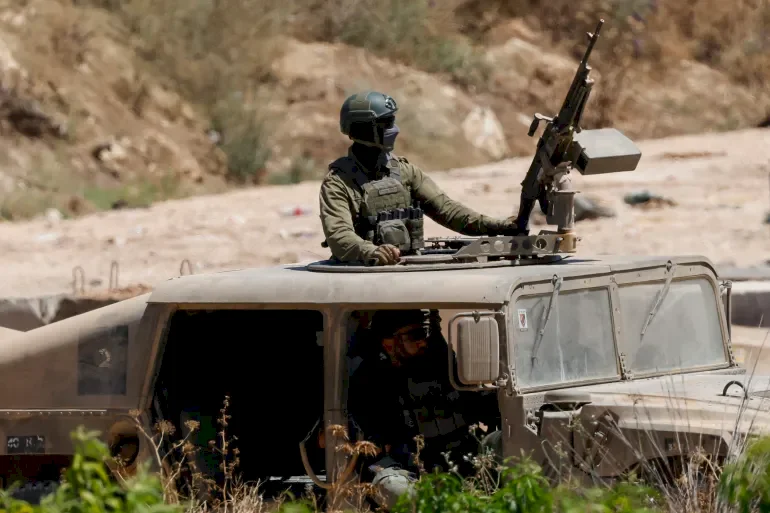
What is Behind Israel's Decision to Delay Withdrawal from Two Areas in Southern Lebanon?
SadaNews - Israeli broadcasting agency revealed that Tel Aviv has decided to delay its withdrawal from two experimental areas in southern Lebanon, claiming it is waiting to reach a joint monitoring mechanism with Beirut.
The agency reported on Tuesday evening, citing unnamed sources: "During discussions within the Israeli army regarding the plan, which was agreed upon by Lebanon and Israel during talks over the weekend, it was concluded that the timeline for its implementation will be delayed beyond the initial estimate."
The sources added: "The withdrawal of the Israeli army from the two Lebanese areas of Zawtar and Froun (south) will be postponed."
They claimed that this delay comes "until an agreement is reached on a joint monitoring mechanism between the Lebanese army and the Israeli army to implement the organized ceasefire agreement in the secret security annex to the agreement between the two countries."
The agency quoted an informed source as saying, "The United States is expected to approve the figures that will participate in this mechanism, to ensure that Hezbollah does not gain access to sensitive information being exchanged." He added, "This is one of the reasons that prevented the success of the previous mechanism established in 2024."
The broadcasting agency also quoted Israeli security sources: "There are currently no timelines; the withdrawal will occur, but it must be done properly."
According to these sources: "The withdrawal of troops will only occur after clear standards are established under which the Lebanese army commits to taking tangible and immediate action against Hezbollah."
On Friday evening, Beirut and Tel Aviv, under American sponsorship, signed a framework agreement stipulating a phased Israeli withdrawal from all occupied Lebanese territories, beginning with two unnamed experimental areas.
The agreement did not specify a timeline for the withdrawal and links it to the Lebanese army taking full security responsibility in the areas from which the withdrawal occurs, and the disarmament of armed groups, particularly referring to Hezbollah.
While Lebanese officials regarded the agreement as a "first step" towards restoring the state's sovereignty over its territories, Hezbollah considered it "non-existent" and "humiliating," viewing the linkage of withdrawal to its disarmament as a "crossing of red lines."
Earlier on Tuesday, Israeli Prime Minister Benjamin Netanyahu reiterated that his country would not withdraw from southern Lebanon as long as Hezbollah exists.
 Follow the latest Sada News via Google News
Occupation Chokes off Sinjil Town North of Ramallah and Closes All Its Entrances

Vance: The Iranian Nuclear Program Must Be Subject to Permanent Inspections

The Wall Street Journal Reveals Unprecedented Tensions Between Washington and Riyadh

What is Behind Israel's Decision to Delay Withdrawal from Two Areas in Southern Lebanon?

Newspaper: Trump Preferred Diplomacy Over All-Out War with Iran

Currency Exchange Rates Against the Shekel on Wednesday (July 1)

Hot Weather in Most Areas
