

Media Without Walls: Reality, Effects, and Testimonies of Journalists' Journey to Homelessness in Gaza Strip
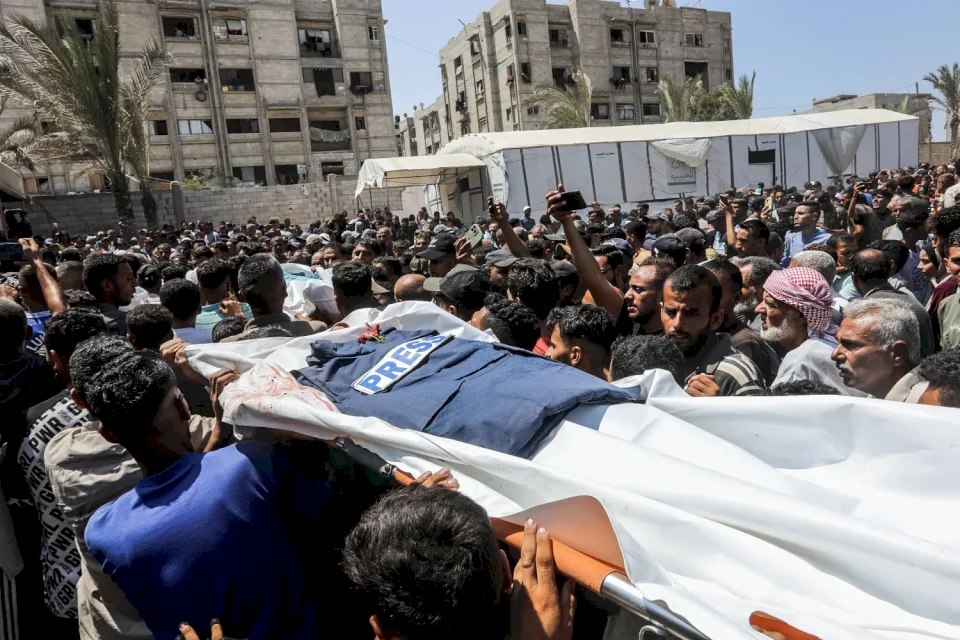
Since October 7, 2023, journalists in the Gaza Strip have faced unprecedented targeting that has affected their lives, workplaces, and homes, amidst a war that seeks not only to silence voices but also to uproot their environment completely.
Data from the Freedoms Committee indicates that around 265 journalists have been killed since the onset of the aggression, marking one of the highest recorded tolls globally for journalists in a single conflict. However, of equal concern is the widespread reality of homelessness that surviving journalists face.
The Reality of Homelessness in Numbers:
With nearly 1,200 journalists in the Gaza Strip, the committee estimates that between 60% to 75% of them have lost their homes or have been subjected to forced displacement, which translates to approximately 700 to 900 journalists.
Estimates also suggest that over 80% of media offices and institutions have been completely or partially destroyed, leading to a near-total collapse of the infrastructure for journalistic work.
Journalism Without Walls:
Journalists in Gaza no longer work from newsrooms but from tents, sidewalks, or corners in shelters. The mobile phone has become the primary production tool, and intermittent internet dictates the rhythm of publication, while public spaces have transformed into makeshift workplaces.
Human Testimonies from the Field:
Dr. Ahed Farwana, one of the displaced journalists, says: "I lost my home and my office in the same week. I no longer have a place to write, but I write from my phone among people, sometimes while looking for water for my family."
Journalist Ola Kassab recounts:
"I work from inside a shelter, choosing a corner that is as quiet as possible. The hardest part is not the shelling, but trying to focus amidst this overcrowding and fear."
Photojournalist Wissam Zagheer adds: "The camera is no longer the heaviest thing I carry, but the feeling that I am documenting what might happen to me as well."
Professional and Humanitarian Consequences:
The loss of shelter and workplace does not only represent a material loss, but it directly affects the quality of journalistic work, the safety of journalists, and their ability to investigate and document. It also limits the possibility of protecting sources and weakens professional standards under the pressure of circumstances.
Collapsed Work Environment:
In the absence of safe places to work, power outages, and communication disruptions, and with scattered journalistic teams, media work has become more akin to an individual effort for professional survival rather than organized institutional work.
The Freedoms Committee affirms that what is happening in the Gaza Strip represents a systematic destruction of the media work environment, and not just targeting individuals. Therefore, the committee calls for:
Immediate international protection for journalists in the Gaza Strip, support for the creation of safe and temporary workspaces for displaced journalists, pressure to ensure that media institutions are not targeted, and the provision of psychological and professional support for affected journalists.
"Media Without Walls" is no longer a metaphorical description, but a daily reality for journalists who continue their work under the harshest conditions, carrying their message despite the loss of space and the absence of safety due to the destruction of walls by rockets and shells from the Israeli occupation army.
 Follow the latest Sada News via Google News
Media Without Walls: Reality, Effects, and Testimonies of Journalists' Journey to Homeless...
Media Without Walls: Reality, Impacts, and Testimonies of the Journeys of Displacement for...

Targeting and Arresting Doctors is Part of Attempts to Undermine Civil and Humanitarian Wo...

Incursions and Arrests in the West Bank and Jerusalem, Attacks by Settlers on Palestinian...

Death of a Citizen in a Traffic Accident in Jenin

More than 34,000 travelers crossed the Alamah crossing last week

Weather Conditions: Extremely Hot Weather
