

Why Did Simba Believe He Killed His Father? The Psychological Secret Behind Your Children's Attachment to 'The Lion King'
SadaNews - What makes animated films and cartoons capture children's attention so powerfully? Is it merely the brilliance of colors and the speed of action and scene transitions, or does the combination of visual and auditory effects create a world enough to dominate their hearing and sight?
Despite the possibility of offering aesthetic, directorial, and artistic explanations for this phenomenon, this approach is based on a psychological analytical reading provided by Palestinian psychologist Imad Najm, centered around the three dimensions discussed by Jacques Lacan:
The Imaginary: a world of images, identification, and resemblance in which a person constructs their perception of themselves and others.
The Symbolic: a world of language, laws, culture, customs, and society, which grants a person their social identity and enables them to communicate.
The Real: that which escapes language and what the Symbolic cannot fully represent, meaning the shocking aspects that can’t be captured by words.
Three Realms in One Cartoon
When we examine animation through these three dimensions, the Imaginary dimension appears foremost; it gives children a space to build their self-understanding through direct comparisons: different and similar, strong and weak, good and evil. Simplified binaries provide a clarity that alleviates the complexity of the world.
This aspect is associated with what Lacan refers to as the "mirror stage," when a child between six months and eighteen months sees their reflection in the mirror; they see a complete body image with a nearly complete sense of sight, while simultaneously feeling their body is underdeveloped. They then choose to identify with the complete image as what they will eventually become.
Here, we can understand why children are drawn to superhero characters in cartoons; they embody the image of absolute power, control, and perfection that children identify with, especially during the early stages when a child experiences their first frustrations and begins to discover their capabilities, limitations, and weaknesses.
In this sense, the content of animations simulates a child’s journey in recognizing themselves and others in simplified ways. Lacan states that the Imaginary dimension "is blind to real difference"; it sees the world as either a version of myself that I love or different from me and thus an enemy whom I reject.
The Real and Symbolic.. Loss, Fear, and Law
In the Real dimension, it’s not only about liberation from natural laws within the cartoon world (characters that fly, fall, and do not die..), but it also extends to tackling heavy themes like loss, fear, and death, but in a manageable imaginary form.
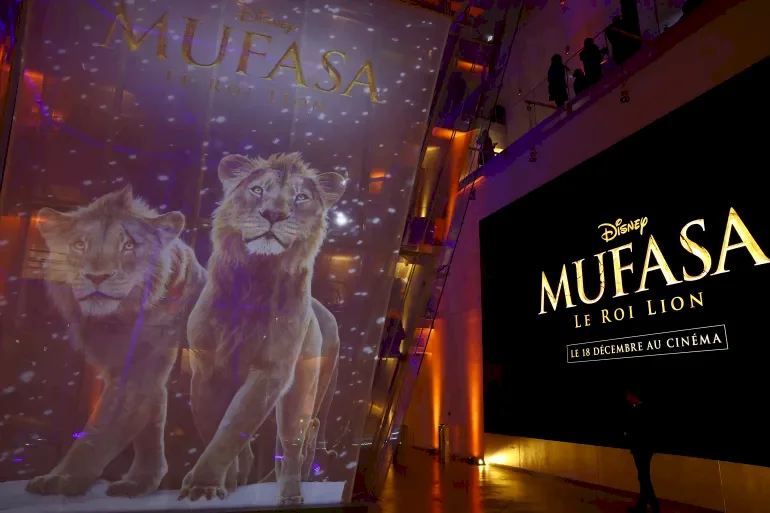
The scene of Mufasa's death in "The Lion King" is a clear example; it is a shocking reality, yet presented in a tamed symbolic manner that allows the child to approach the idea of death without crumbling before it.
As for the Symbolic dimension, cartoons convey messages about right and wrong, customs, traditions, family ties, and responsibility. Cartoon characters do not play their roles merely through their dialogue; they transform into symbols that help the child understand something about their position in the world, their relation to others, and their conflicts.
But are these general elements enough to explain children's attachment to cartoons and animated films? Here, a specific example becomes more illuminating, and through this perspective, we can read "The Lion King" (1994) or "King Simba" in its Arabic version.
"The Lion King".. A Tale of Power, Guilt, and Return
Simba is born the son of King Mufasa during a celebratory ceremony befitting a crown prince. Questions of power and status quickly emerge: the father's status and the son's status as heir. Simba becomes aware early on of the limits of permitted and forbidden areas; Mufasa forbids him from leaving the "Pride Lands" due to the hyenas and tells him it will be under his rule in the future after he is gone.
Simba sings: "I just can't wait to be king," a phrase that encapsulates a part of his desire for growth, independence, and usurping his father's position, with a sinister encouragement from his uncle Scar. His curiosity leads him to go with his friend Nala to the "Elephant Graveyard," where they are attacked, almost losing their lives had it not been for Mufasa's intervention.
Later, Scar orchestrates a plot luring Simba into a deep valley. Mufasa successfully saves his son, but when he tries to climb the rock, Scar betrays him and pushes him to fall and die. Scar then accuses Simba of being responsible for his father's death - despite knowing the truth - and orders him to flee and never return, before sending the hyenas to kill him. Simba escapes but flees to the desert burdened by guilt.
Here, we can recall what Sigmund Freud presents in "Civilization and Its Discontents" about the source of feelings of guilt and their relation to paternal authority. Freud distinguishes between external authority (the law represented by the father) that sometimes pushes the child to suppress their impulses for fear of punishment and loss of love and protection, and the resulting hostile feelings toward this authority. To overcome this difficult situation, the child internalizes this authority; thus, the "superego" is formed, which punishes not only for actions but also for desires, thoughts, and imagination, redirecting aggression inward.
From this perspective, we can understand the question: why did Simba believe Scar's accusation that he killed his father? The feeling of guilt here is deeper than mere external accusation; it touches upon conflicting desires related to competition, desire for status, freedom, and independence. Therefore, Simba remains shackled by guilt even though he did not actually kill his father.
"Remember who you are".. The Return of the Name, Father, and Position
Simba does not remain in hiding forever. After years of living away from the "Pride Lands," Nala urges him to return to save his people and throne that were destroyed by Scar's rule. He initially refuses, frightened of confronting his past and the guilt that haunts him.
Here, the wise monkey Rafiki intervenes, leading Simba to a symbolic confrontation with the image of his father. In the famous scene where Mufasa's spirit appears among the clouds, Simba hears the key phrase: "Remember who you are." This call is not merely a call to reclaim courage, but a call to reconnect with the symbolic position that was fractured after the trauma.
This moment can be interpreted as a return of the "Father's Name" as a symbolic function, not just a nostalgia for the absent father. The problem wasn't only in losing Mufasa, but in the disruption of Simba's relationship with the position which was associated with desire, authority, and responsibility, and his withdrawal from confronting what this position offers him and what it imposes on him at the same time.
When Simba returns to the "Pride Lands" to confront Scar, the confrontation is not just a struggle for power, but a confrontation with guilt, fear, and the image he holds of himself as the "killer of his father." At the climax of the confrontation, Scar reveals the truth: he is the one who killed Mufasa.
This confession constitutes a moment of liberation from old guilt, but it does not erase the impact of the experience; rather, it reorganizes Simba’s positioning concerning the loss of his father, his relationship with his desires and responsibilities, and his place within the community, allowing the redirection of aggression which had been turned inward to find its true target in Scar as the one responsible for the crime. Here we can understand the film's happy ending as also a restoration of the self after its fracture, not simply a conventional triumph of good over evil.
Why Do Children Attach to 'The Lion King' and Cartoons?
What attracts children to this film is not just the songs and beautiful visuals, but the fact that it symbolically and imaginatively mirrors struggles and themes from their psychological world: the fear of losing love, tension towards authority, the desire for power and independence, and feelings of guilt. These are not ideas clearly articulated in a child's consciousness, but they find a medium for expression through identification with the characters and stories.
In this sense, watching cartoons is not just a passing amusement but a space where imagination meets desire, fear meets enjoyment, and the self meets its possible images. Characters and stories transform into symbolic mediums that allow children to touch their conflicts and feelings indirectly and more tolerably, and perhaps this is why some cartoons, like 'The Lion King', remain present in their consciousness even after they grow up.
Source: Al Jazeera
 Follow the latest Sada News via Google News
Hakimi's Goal Gives PSG a Unique Record in the World Cup

What Changed Our Immune System? A Journey into the Causes of Allergy Spread

Why Did Simba Believe He Killed His Father? The Psychological Secret Behind Your Children'...

What Should You Know Before Stopping Cholesterol Medications?

When Risk Becomes a Necessity.. Yemeni Youth Engage in Dangerous Jobs Leading to the Abyss

From Muscle Building to Cancer Fighting.. A New Discovery About Creatine

Jordan Loses to Algeria 2-1 in the 2026 World Cup
