

What Should You Know Before Stopping Cholesterol Medications?
SadaNews - Cholesterol-lowering medications, primarily statins, are among the most commonly prescribed treatments in cardiology and family medicine clinics worldwide. They are used not only to improve lab results but also to prevent complications that can dramatically change a patient's life in an instant, such as heart attacks and strokes.
Despite these benefits, cholesterol medications remain surrounded by much anxiety. Some patients fear muscle pain, while others worry about the potential for elevated liver enzymes, and many hesitate to start treatment altogether due to experiences they’ve heard from relatives or friends.
However, doctors emphasize that the problem lies not in fear itself, but in allowing this fear to turn into an individual decision to stop the medication without medical consultation.
In many cases, the risk of discontinuing treatment is much higher than the risk of potential side effects, especially among patients with heart disease, diabetes, smokers, and those with a family history of early strokes.
Stroke Does Not Happen Suddenly
Dr. Alia Abu Suliman, a family medicine specialist and fellow of the Royal College of Physicians of the UK, states that cholesterol medications are a cornerstone in the prevention and treatment of arterial diseases, especially in patients most at risk of stroke.
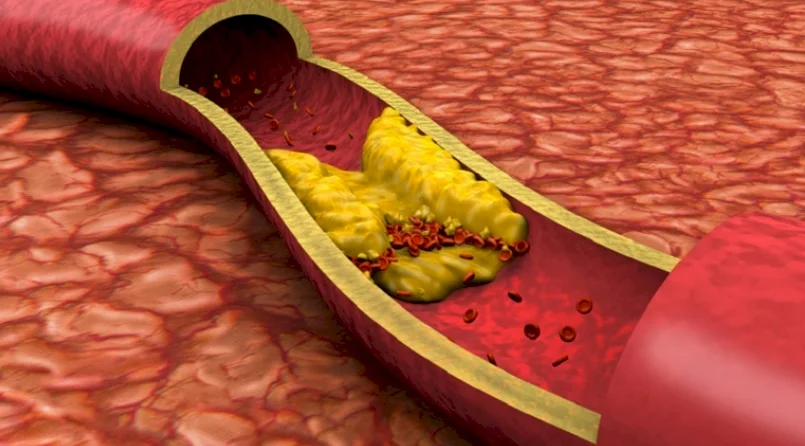
She explains that the role of these medications goes beyond merely lowering harmful cholesterol levels in the blood; it extends to a deeper level, as they help stabilize fatty deposits within the arterial walls and reduce the chances of them rupturing, which is one of the major causes leading to sudden heart or brain strokes.
As Dr. Alia explains, a stroke rarely occurs without warning. A person may live for years with a 50 or 60% blockage in one of their arteries without experiencing clear symptoms. They go to work, live their lives, and may feel reassured because they do not feel pain. But the real danger begins when one of the fatty deposits within the artery ruptures, suddenly leading to a clot that blocks the artery within minutes.
This is why she warns against stopping treatment without consulting a doctor, especially for those who have previously experienced a heart attack, had stents inserted, or undergone heart surgery, as the goal here is not just to lower a number on a lab report but to prevent the recurrence of an incident that could be far more dangerous.
Food Is Not the Only Culprit
Many people associate high cholesterol with overeating fats alone, but the medical picture is more complicated. According to Dr. Alia, some patients have high cholesterol levels even though they do not consume large quantities of fats, as the issue may primarily be genetic, where the liver produces excessive cholesterol spontaneously.
She points out the importance of lipoprotein analysis known as Lipoprotein (a), especially in individuals with a family history of early heart and arterial diseases. This test can reveal a genetic risk factor that does not always appear through traditional lipid tests alone.
The need to pay attention to cholesterol increases among diabetic patients because diabetes not only raises blood sugar levels but also creates a chronic inflammatory environment within the arterial walls, making them more prone to fat deposits and the development of arterial sclerosis.
Additionally, smoking is described by Dr. Alia as a silent and deceptive risk factor; many smokers believe they are fine as long as they do not feel tightness or pain, while inflammation and damage to blood vessel walls quietly continue for years.
To What Level Should Cholesterol Be Reduced?
There is no single number that works for everyone. Treatment goals differ from person to person based on age, medical history, presence of diabetes or high blood pressure, smoking habits, or previous heart diseases.
In general, it is preferable for total cholesterol in lower-risk individuals to be below 200 mg/dL. In patients who have previously experienced heart attacks or had stents inserted or have confirmed coronary artery disease, treatment typically aims to lower harmful LDL cholesterol to levels below 70 mg/dL, and physicians may recommend even lower levels for some higher-risk groups.
Recent recommendations indicate that risk assessment should no longer rely solely on cholesterol numbers but rather on the complete picture of the patient: Do they have diabetes? Do they smoke? Do they have a family history? Have they previously experienced a stroke? Are there signs of arterial sclerosis in imaging tests?
Liver Enzymes… When Should We Be Concerned?
One of the most common concerns among patients is the effect of cholesterol medications on the liver. However, Dr. Alia clarifies that elevated liver enzymes may occur in a limited percentage of patients, but it is often temporary or manageable and does not automatically necessitate stopping treatment.
She states that a doctor may request tests before starting treatment or during follow-up when needed, and may either opt for monitoring, adjust the dosage, or change the medication type if indicated. The more dangerous decision is for the patient to stop the medication independently as soon as they hear general information about "the harm of statins to the liver."
The medical principle here is based on balancing benefit and risk. For a patient who has previously experienced a stroke or has multiple risk factors, the benefit of continuing treatment may greatly outweigh the chance of experiencing a side effect that can be monitored and managed.
The Importance of Early Screening
Dr. Alia believes that the most common mistake is waiting for symptoms before screening because high cholesterol and arterial sclerosis can develop silently for a long time.
Basic tests include a full lipid panel, which measures total cholesterol, harmful LDL cholesterol, beneficial HDL cholesterol, and triglycerides.
In some cases, the doctor may request additional tests like CRP related to inflammation, Lipoprotein (a) analysis, CT scans of the coronary arteries, or Doppler ultrasound for the neck arteries, depending on the level of risk.
Conducting these tests does not mean that everyone needs medication; it means that the treatment decision should be based on clear knowledge, not on guessing or false reassurance.
Muscle Pain Does Not Mean the End of Treatment
Dr. Mustafa Adous, a general physician at a medical center in Qatar, states that muscle pain is one of the most common complaints associated with statin medications. These symptoms may manifest as pain, tightness, or muscle weakness, especially in the elderly or those taking multiple medications.
He clarifies that some types of statins may affect certain patients in the energy production pathways within muscle cells, which explains the complaint in some. However, this does not mean that every muscle ache in a patient taking statins is caused by the medication, nor does it mean that treatment should be stopped.
Dr. Alia adds that the right approach begins with informing the doctor, not stopping the medication. The doctor may choose to lower the dose, switch the statin type, try a different dosing regimen, or investigate other causes of pain such as vitamin D deficiency, thyroid disorders, or drug interactions.
In some cases, the doctor may order a CK or CPK test to evaluate muscle impact, especially if the pain is severe, recurrent, or accompanied by noticeable weakness.
Dr. Adous points out that some doctors might use the CoQ10 supplement in selected cases to improve treatment tolerance and reduce muscular complaints, but this should be under medical supervision, not as an alternative to treatment or an individual decision by the patient.
Treatment Does Not Start with Medication Alone
Dr. Mohamed Salah, a pharmacist in a private hospital in Qatar, explains that cholesterol is a necessary substance for the body, involved in building cells and producing certain hormones, but the problem begins when its levels rise excessively, increasing the risk of fat deposits within the arteries.
He emphasizes that treatment does not always start with a pill bottle but begins with lifestyle changes. Quitting smoking, losing weight when necessary, reducing saturated and trans fats, increasing fiber intake, and engaging in regular physical activity are all key steps to improving blood lipids and vascular health.
Exercise not only helps lower harmful cholesterol but also contributes to raising beneficial cholesterol and enhancing the body’s efficiency in managing excess fats. However, when these measures are insufficient, or when the patient is at high risk, medication becomes an essential part of the prevention plan.
Dr. Mohamed Salah stresses that selecting the appropriate treatment is not random, but depends on the doctor's assessment of risk factors, lab results, medical history, and the patient's tolerance to the medication.
How Can Patients Avoid Risks?
The American Heart Association and relevant medical associations recommend that cholesterol medications be a part of a comprehensive plan rather than a separate treatment from lifestyle changes.
This plan includes adhering to prescribed medications, not stopping or adjusting dosages without consulting a doctor, conducting regular follow-up of lipid levels, and being aware of any severe muscle symptoms or signs that may indicate liver issues, such as yellowing of the eyes, dark urine, or upper abdominal pain.
The plan also involves maintaining a healthy weight, engaging in regular physical activity, quitting smoking, and following a balanced diet rich in vegetables, whole grains, legumes, nuts, and fish while reducing fried foods, processed meats, and saturated fats.
Source: Al Jazeera
 Follow the latest Sada News via Google News
What Should You Know Before Stopping Cholesterol Medications?

When Risk Becomes a Necessity.. Yemeni Youth Engage in Dangerous Jobs Leading to the Abyss

From Muscle Building to Cancer Fighting.. A New Discovery About Creatine

Jordan Loses to Algeria 2-1 in the 2026 World Cup

Saudi Green Clings to Hope.. Scenarios for Qualification to the Round of 32 in Group Eight

How is Austria's coach planning to dethrone Messi and his team?

Hydration Breaks: A Tactical Weapon Shifting the Balance of Matches in the 2026 World Cup
