

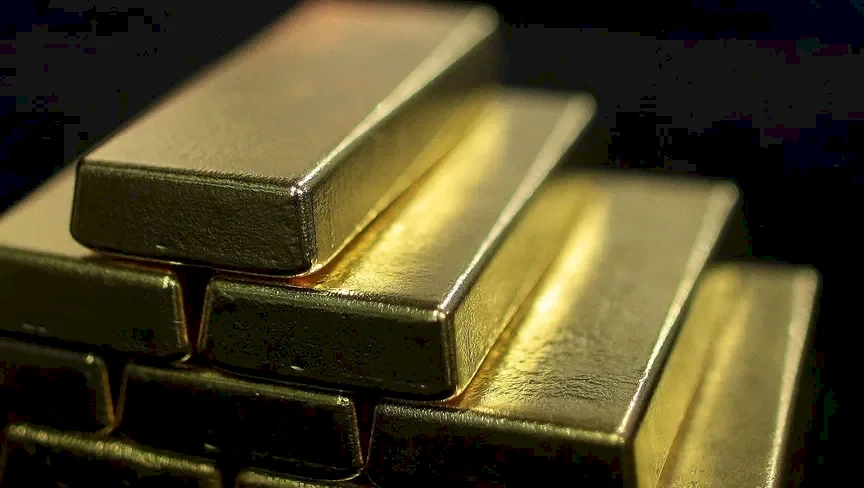
For the First Time Since November.. Gold Falls Below $4000 an Ounce
SadaNews -The price of gold has fallen below $4000 an ounce for the first time since last November, as the continued rise of the U.S. dollar puts pressure on the precious metal's price.
The price of the yellow metal dropped by 3% as the strength of the U.S. currency increased, raising the cost of acquiring the dollar-priced metal for buyers in other currencies.
Why Did Gold Prices Drop?
The increased aversion to risk has heightened pressure on gold, which is fundamentally under pressure due to ongoing concerns about inflation and the growing likelihood that the Federal Reserve will keep interest rates unchanged or raise them.
Rising borrowing costs pose headwinds for non-yielding precious metals, enhancing the appeal of yield-producing assets, such as U.S. Treasury bonds.
The yellow metal had recorded its all-time high of $5589.38 an ounce in late January, thus losing more than 28% from its peak.
Gold Price Forecasts for 2026
A number of banks have recently lowered their year-end gold price forecasts, the latest being the "Macquarie Group," which reduced its estimates for precious metal prices in the third and fourth quarters to $4450 and $4300 an ounce, respectively.
Goldman Sachs also cut its year-end price forecast for the precious metal last week by $500 to $4900 an ounce, justifying this by the dwindling chances of the Fed lowering interest rates this year.
Despite Goldman’s ongoing expectations for gold to gain additional value during the second half of the year, the bank warned of short-term downward risks, indicating that rising interest rates could weaken demand for gold as a hedge against economic and financial risks. In a more stringent scenario from the Fed, prices could drop to around $4400 an ounce by the end of the year.
Deutsche Bank also lowered its gold price forecast yesterday (Tuesday) to $4300 in the third quarter and $4800 in the fourth quarter.
These reductions represent a significant decline from previous, more optimistic forecasts.
Concerns from the World Gold Council
The World Gold Council has also expressed concerns about the ongoing pressures facing gold prices due to tightening U.S. monetary policy and rising real yields on bonds, considering that these factors limit the attractiveness of the precious metal in the short term.
In an interview with "Asharq" last week, Joseph Cavatoni, the strategic market analyst for the World Gold Council, stated that current interest rate and real yield forecasts represent the greatest challenge for gold.
He explained that tactical investors might prefer to hold bonds or cash in the current environment instead of increasing their holdings of the non-yielding metal.
Central Bank Purchases Support Gold
Despite these pressures, there remains a consensus among most financial institutions that central bank purchases remain the essential pillar for supporting the market.
After gold prices more than doubled over the past three years supported by official demand, surveys from the World Gold Council indicate that the majority of central banks intend to continue increasing their holdings of the precious metal in the coming years.
Despite today's fall of gold below $4000 an ounce and the decline in bullish bets, major financial institutions believe that the structural factors supporting gold have not disappeared, but rather entered a waiting phase largely linked to the trajectory of U.S. monetary policy.
 Follow the latest Sada News via Google News
For the First Time Since November.. Gold Falls Below $4000 an Ounce

European stocks fall as investors assess US-Iran talks

Qatar Expects to Resume LNG Production Normally Within Weeks

Oil Prices Near New Low as Tanker Traffic Improves Through Hormuz

Gold Falls for the Second Day Under Pressure from Strong Dollar and Tech Stock Sell-Off
Oil Continues to Decline Amid Signs of Progress in Peace Talks and U.S. Exemption for Iran
Gold Drops as Inflation Fears Rise and U.S. Rate Hike Prospects Loom
