

Do Protests in Iran Affect the Negotiation Process with the United States?
SadaNews - The positions of several figures in Iran reflect divisions and objections to conducting talks with the United States, but these alone will not be sufficient to hinder the negotiation process.
After weeks of conflict that began with a U.S.-Israeli attack on Iran on February 28, Washington and Tehran reached a ceasefire in April. On June 17, the two sides signed a Memorandum of Understanding, followed by Iranian delegation negotiations led by Parliament Speaker Mohammad Baqer Qalibaf with a U.S. delegation led by Vice President Jay D. Vance in Switzerland, mediated by Pakistan and Qatar, in an effort to reach a final agreement to end the war.
However, the negotiation process is likely to face many obstacles, following a brutal war whose repercussions extended across the region, where Iran recognized its ability to influence the global economy by closing the Strait of Hormuz, while U.S. President Donald Trump kept the threat of military action looming in case of failure.
Yet, both parties pursuing a rare understanding in nearly half a century of tense relations has not escaped criticism from hardliners in the United States.
In Iran, objections to direct negotiations with the country’s arch-enemy since the victory of the revolution that toppled the Shah's regime in 1979 have emerged, transitioning Tehran from a position of ally to the West and friend of Israel to an Islamic Republic that views Washington as the "Great Satan."
Yale University lecturer Arash Aazizi stated, "There are certainly factions that strongly oppose negotiations and any concessions to the United States."
He added: "But I see they lack the institutional power necessary to obstruct the talks or do enough to influence the outcomes."
"Positive Consensus"
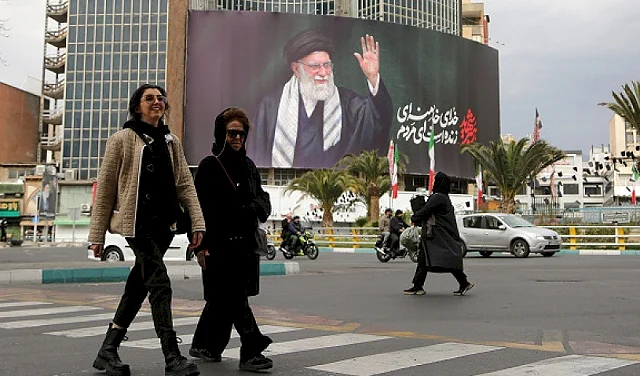
As news began to emerge about an understanding between Washington and Tehran, dozens of people staged a limited but unusual protest outside the Foreign Ministry offices in Mashhad on June 13. They chanted slogans against Qalibaf and Foreign Minister Abbas Araghchi, who are steering the negotiations.
Reports also indicate opposition from several officials, notably hardline conservative Saeed Jalili, who previously held the Secretaryship of the Supreme National Security Council and led negotiations on the nuclear file.
Nonetheless, the Iranian leadership has affirmed its approval of the negotiation path.
The Supreme Leader, Mojtaba Khamenei, stated in a message broadcast on state television the day after the signing, that he agreed to the Memorandum of Understanding despite having a "different opinion," emphasizing that direct negotiations with Washington do not equate to yielding to its views and demands.
Khamenei has not appeared publicly since his election in March, following his father's assassination at the outset of the U.S.-Israeli strikes on February 28.
Qalibaf responded to internal criticisms by saying in a post on the "X" platform that a state television presenter wished that Tehran's airport had been closed so that negotiators could not leave for Switzerland.
He argued that this would mean "spilling more blood" in Lebanon, where Hezbollah is engaged in a war with Israel, which continues its aggression.
Indicating that the talks have acceptance among hardline military figures, Quds Force Commander Ismail Qaani said that Araghchi and Qalibaf should be "praised."
In a rare television interview, he stated that "the brothers who stand behind missile launch platforms... and the brothers who sit at the negotiating table" are united in their "resistance."
Sunnam Vakeel, Director of the Middle East and North Africa Program at Chatham House, stated, "I do not believe that hardliners currently have the upper hand in Iran."
She spoke of a "positive consensus to give negotiations a chance and test President Trump’s willingness to reach an agreement."
"Changes in the System"
During the G7 summit held in France, Trump repeatedly and unexpectedly praised the Iranian leadership, describing Iranian officials as "smart" and "very rational" and "not extremists."
He said, "The first group (of leaders) has departed just as the second group has, and we found that the third group (consisting of leaders) is very smart... we ended up reaching an agreement."
For his part, Vance stated that Washington now believes that "hardliners" have realized they are making a "mistake" in their approach to the United States, adding that "the pragmatists within the Iranian system, who genuinely want to change their relationship with the Middle East and the world, are gaining the argument."
Araghchi and Qalibaf were keen to confirm that they would not compromise Iran's interests, and they avoided taking any photos with Vance in Switzerland, which would enter the political historical records but would provide rich material for critics of the negotiation path with Washington domestically.
During his nearly four-decade tenure, Ali Khamenei, the Supreme Leader and heir of the founding Imam Khomeini, had the final word on the country’s high policies and held the final authority in any strategic step; however, after his assassination along with several Iranian leadership figures during the war, the nature of the new political structure and the decision-making mechanisms in the already intricate Iranian political system remain unclear.
The International Crisis Group noted that the leadership system is "now severely troubled due to the killing of many of its leaders... as well as the ongoing fear of further strikes."
Aazizi viewed that anti-American sentiment remains a fundamental pillar of governance, but that "the new leaders are less ideological than (Ali) Khamenei and may continue to implement changes."
However, he suggested that "this process may be long and arduous, with unclear outcomes."
Vakeel pointed out that "hardliners exist" in both Washington and Tehran, adding, "But in Iran, they are easier to silence."
 Follow the latest Sada News via Google News
Trump Praises Zelensky's Performance in the War with Russia

Rabat: Signing of an agreement to train and educate Palestinian students from Jerusalem in...

Do Protests in Iran Affect the Negotiation Process with the United States?

Switzerland in Talks with France, Israel, and South Korea for Air Defense System

Fears of Thousands of Victims After Two Strong Earthquakes Strike Venezuela

Earthquake Measuring 6.9 Strikes Japan

U.S. Central Command Chief Arrives in Israel Tomorrow
