

Jerusalem Governorate Warns of a Massive Colonial Project for Waste Management on the Lands of Qalandia Village
SadaNews - The Jerusalem Governorate warned on Thursday of a decision by the Israeli occupation authorities to officially begin planning procedures for a massive colonial project to manage waste on the lands of Qalandia village, northwest of occupied Jerusalem. This move represents a serious escalation in the policies of annexation and seizure of Palestinian lands, threatening the population and agricultural existence in the area.
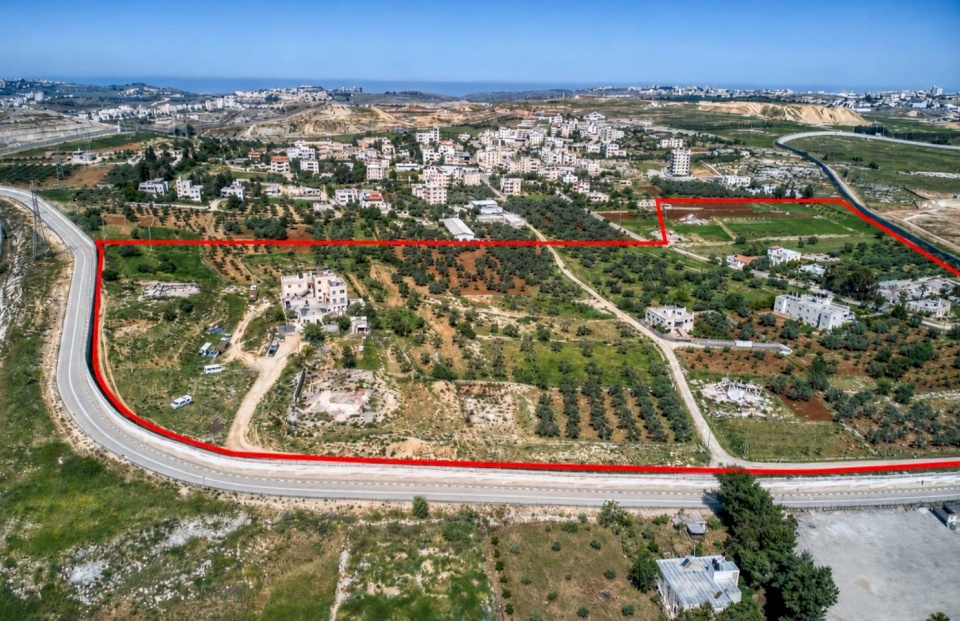
The governorate explained in a statement that the published plans include the establishment of a wide project for waste management on the lands of Qalandia, accompanied by a change in the route of the existing annexation and racist expansion wall by shifting it deeper into the village's lands. According to the plan, the project in all its components will lead to the seizure of approximately 278 dunams of citizens' lands, which far exceeds the areas discussed in previous plans, revealing the expansion of the colonial project's scope and objectives.
The governorate indicated that the targeted area includes nearly 40 inhabited homes, in addition to dozens of dunams of fertile agricultural lands planted with olive trees, grains, and vegetables, which makes the project a direct threat to the livelihoods of citizens, their social stability, and their right to remain on their land.
According to the plan, a facility will be established to process waste and convert it into electrical energy to be pumped into the Israeli electricity grid, where it will receive large quantities of various wastes, including plastic, paper waste, and other combustible materials, as part of a broader Israeli plan to expand the infrastructure for waste management at the expense of occupied Palestinian lands.
The governorate confirmed that the roots of the project date back to June 2024 when the occupation government commissioned the "Eden" company, affiliated with the occupation municipality in Jerusalem, to identify a location for the establishment of the facility. The company proposed a plot of land measuring 130 dunams in Qalandia, which includes at least seven residential buildings and agricultural lands, preparing for the establishment of the waste processing and energy recovery facility.
The governorate added that the Israeli Finance Minister Bezalel Smotrich signed in April 2025 a notification under Article 19 of the "Land Order" to activate two old confiscations dating back to 1970 and 1982 to prepare the land for the new project. The first confiscation, issued on August 30, 1970, involved about 1200 dunams designated for the industrial zone in "Atarot," of which 390 dunams are owned by the people of Qalandia, while the second confiscation, issued on June 1, 1982, covered an area of 137 dunams allocated for a so-called "security facility".
The Jerusalem Governorate emphasized that the project cannot be considered an environmental project, as claimed by the occupation authorities, but rather constitutes part of an integrated colonial system aimed at reshaping the geography and demographics of Palestine in occupied Jerusalem and its surroundings, through land confiscation, expanding Israeli control over it, and imposing new realities that lead to the tightening of restrictions on the Palestinian population and their forced displacement.
The governorate pointed out that the dangers of the project are not limited to land confiscation and threats to homes, but extend to serious environmental and health dimensions, due to the site's direct proximity to densely populated Palestinian residential areas in Qalandia and its surroundings. It warned that establishing a waste treatment facility in this area would lead to increased pollutant emissions, odors, and fine pollutants, accompanied by negative effects on air quality, soil, groundwater, and public health.
It confirmed that global experiences related to waste treatment facilities near residential areas indicate increasing risks to the health of residents, including heightened rates of respiratory, cardiovascular diseases, and certain types of cancer, especially among children and the elderly, in addition to the potential damage to agricultural production and local food security due to targeting productive agricultural lands.
The governorate considered that the project represents a clear example of what is known as "environmental racism," as Palestinian communities bear the burdens and environmental risks arising from projects that serve Israeli colonies and their corresponding infrastructure, in violation of principles of environmental justice and the right to a safe and healthy environment.
The Jerusalem Governorate affirmed that the project constitutes a blatant violation of international humanitarian law provisions, particularly the Fourth Geneva Convention, which prohibits the occupying power from confiscating private property or exploiting occupied land for its own interests. It also contradicts the principles of human rights and international environmental law.
It called on the international community, the United Nations, and international human rights and environmental organizations to take urgent action to halt the project and hold the occupation authorities accountable for their policies targeting land, people, and the Palestinian environment in occupied Jerusalem.
 Follow the latest Sada News via Google News
Sheikh Offers Condolences for the Martyrdom of Citizens in Deir Jareer

Ministry of Labor Calls for Registration in Licensed Private Vocational Training Centers a...

Occupation Forces Storm the Home of Major General Bilal Al-Natsheh in Jerusalem

The Working Group on Palestine of the Permanent Independent Human Rights Commission Issues...

Arrests in Occupation Attacks in the West Bank and Jerusalem

Ramallah and Al-Bireh Forces Mourn Al-Mughayer Martyr and Emphasize Popular Solidarity to...

More than 38,000 travelers crossed through the Karama crossing last week
