

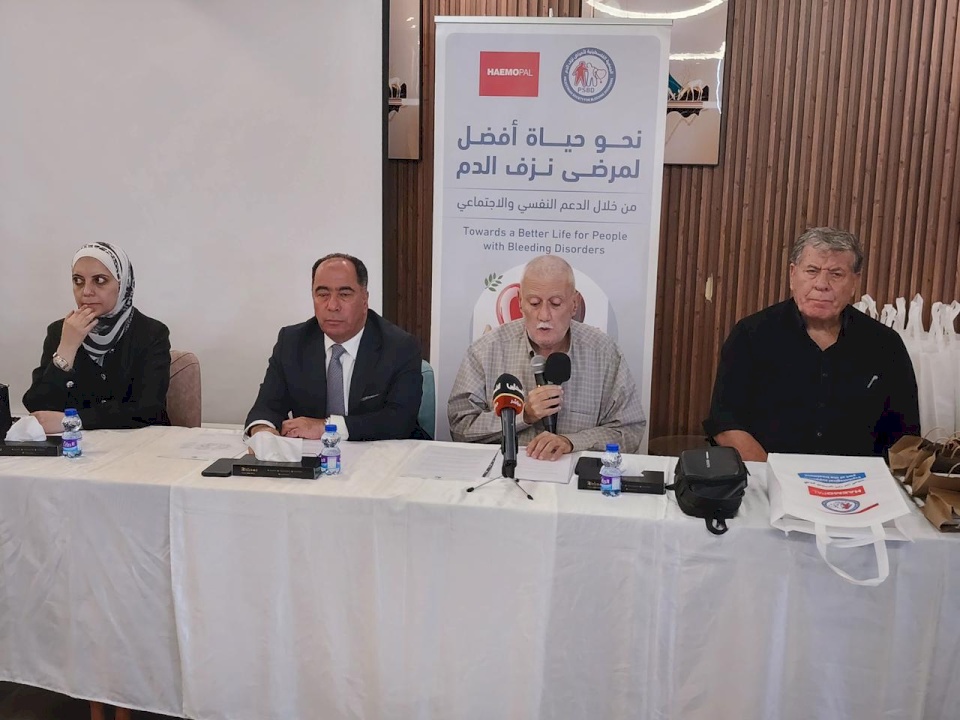
The Palestinian Society for Blood Disorders Issues Urgent Call to Save Patients and Honors Journalist Ali Al-Samoodi in Jenin
SadaNews - On Monday, the Palestinian Society for Blood Disorders issued an urgent call for intervention to protect patients with genetic bleeding disorders and hemophilia in Palestine during a press conference held at the Cinema Hotel in Jenin, in partnership with the Torture Victims Center, the Palestinian Network of Civil Organizations, and the Health Sector Committee. The conference was attended by board members of the society from various governorates in the West Bank, along with patients with genetic bleeding disorders of various types and their families, representatives from health and community organizations, and the media. The meeting saw significant participation from patients in Jenin and their families, emphasizing the importance of unifying efforts to defend patients' rights and improve the level of health services provided to them.
The meeting was opened by Ahmad Al-Eisa, a board member of the society and a hemophilia patient and nursing graduate. In his speech, the chairman of the board, Jad Al-Tawil, emphasized that patients with bleeding disorders and their families have always formed the foundation of the society's establishment and the continuation of its mission, stressing the importance of strengthening partnerships between patients and health and community institutions to defend their right to comprehensive and equitable healthcare.
Al-Tawil pointed out that the conference comes amidst escalating health and humanitarian challenges faced by patients with genetic bleeding disorders and hemophilia in Palestine, due to the shortage of medications and clotting factors and the difficulties in accessing specialized health services. He confirmed that the society aims to highlight patients' needs and enhance awareness of their health and human rights.
The conference included the presentation of a press statement by Dr. Ali Abdul Rab, the vice-chairman of the board, warning of the increasing risks threatening patients' lives due to the continuous deterioration of health services and the severe shortage of essential treatments and clotting factors, confirming that patients with genetic bleeding disorders and hemophilia face a real threat to their lives under the current circumstances.
The statement affirmed that patients with genetic bleeding disorders and hemophilia require comprehensive and sustainable healthcare that includes early diagnosis, specialized medical follow-up, laboratory and genetic tests, physiotherapy and rehabilitation, along with psychological and social support services, ensuring them a dignified life and reducing complications and disabilities resulting from repeated bleeding.
The Palestinian Society for Blood Disorders called on the Palestinian Ministry of Health and relevant authorities to integrate the needs of patients with genetic bleeding disorders and hemophilia into national health strategies and policies, allocate the necessary budgets and financial resources to ensure the sustainability of health services provided to them, and urgently take action to implement a set of essential demands, most notably:
* Establishing a Palestinian national center specialized in genetic bleeding disorders and hemophilia, to serve as a national reference for comprehensive care, diagnosis, treatment, training, and scientific research, and establishing specialized clinics in various Palestinian hospitals.
* Providing and training specialized hematologists in genetic bleeding disorders and hemophilia, and enhancing the capabilities of health personnel working in this field.
* Developing specialized laboratory services and necessary genetic tests for early and accurate diagnosis and patient follow-up.
* Ensuring sustainable and regular availability of clotting factors and essential medications for patients with genetic bleeding disorders and hemophilia.
* Ensuring safe and swift access for patients to health services and specialized centers within and outside Palestine when needed.
* Providing comprehensive and specialized healthcare services, including physiotherapy, follow-up, rehabilitation, alongside psychological and social support programs for patients and their families, and enhancing their integration into the community.
The conference included speeches by Dr. Atika Ghanem, a pediatric specialist at Jenin Government Hospital, and specialist Sahar Al-Samoodi, representing the Torture Victims Center, discussing the importance of psychological and social support for patients and their families and its role in enhancing their ability to cope with the disease and improving their quality of life. Additionally, Dr. Hisham Darwish, a board member of the society, presented the scientific and health aspects related to genetic bleeding disorders and ways to develop the services provided to patients.
In a gesture of appreciation, the society honored journalist Ali Al-Samoodi in recognition of his professional career and media and national contributions in conveying the sufferings of the Palestinian people and advocating for humanitarian issues, particularly the issues of patients with blood disorders and hemophilia, where it praised his continuous role in voicing patients' rights over many years.
The conference provided a comprehensive space for patients with various types of genetic bleeding disorders from Jenin, society board members, and representatives of partner institutions, where patients' experiences and their health and social needs were heard, reiterating the importance of involving them and their families in advocacy efforts and planning health services that meet their needs and ensure they receive care and treatment sustainably.
The event concluded with an open dialogue session with patients and their families and participants, discussing the main health, social, and psychological challenges faced by patients with genetic bleeding disorders in Palestine, and emphasizing the importance of unifying official and civil efforts to ensure they receive specialized healthcare and live with dignity and safety.
Participants confirmed that protecting the right of patients with genetic bleeding disorders and hemophilia to treatment and healthcare represents a national and humanitarian responsibility that requires an urgent response, ensuring the necessary health services are provided and preventing the worsening of patients' and their families' suffering.
 Follow the latest Sada News via Google News
Sheikh Offers Condolences for the Martyrdom of Citizens in Deir Jareer

Ministry of Labor Calls for Registration in Licensed Private Vocational Training Centers a...

Occupation Forces Storm the Home of Major General Bilal Al-Natsheh in Jerusalem

The Working Group on Palestine of the Permanent Independent Human Rights Commission Issues...

Arrests in Occupation Attacks in the West Bank and Jerusalem

Ramallah and Al-Bireh Forces Mourn Al-Mughayer Martyr and Emphasize Popular Solidarity to...

More than 38,000 travelers crossed through the Karama crossing last week
