

How Are American Forces Rescuing Their Pilots from the Heart of Combat Zones?
SadaNews - The United States and Iran are currently engaged (Saturday) in a race to locate one of the pilots whose aircraft crashed within Iranian territory, in an incident that marks the first of its kind since the start of the war.
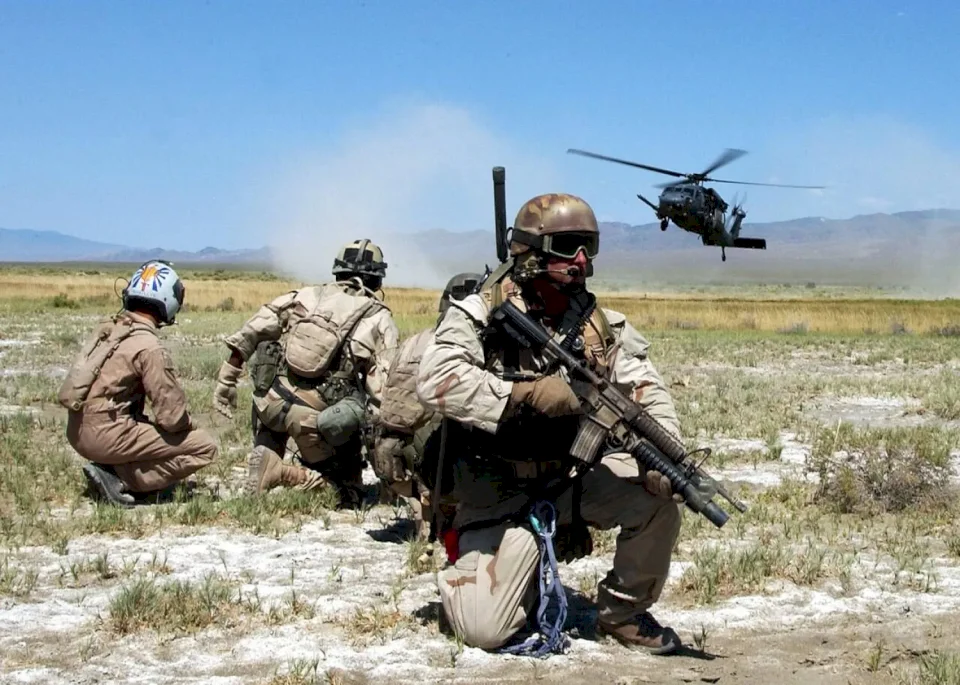
The search and combat rescue operations are among the most complex and time-sensitive missions prepared by the U.S. military, with elite units of the Air Force receiving specialized training for such missions. These units are often pre-deployed near conflict zones where aircraft may go missing, according to a report by the American ‘BBC’ network.
What are Combat Search and Rescue Operations?
Combat search and rescue operations are military missions aimed at locating individuals in need of assistance or rescue and providing support to them, including pilots whose aircraft have been downed or isolated soldiers.
Unlike traditional search and rescue operations - which may occur during humanitarian missions or after disasters - combat rescues occur in hostile environments or combat zones.
These operations are often carried out by helicopters, supported by aerial refueling aircraft and other military planes conducting bombing runs or patrols to secure the area.
A former commander of a paratrooper rescue squad told the American ‘CBS’ network that a rescue operation like the one reported in Iran would involve at least 24 paratroopers combing the area using ‘Black Hawk’ helicopters. He added that the team would be ready to jump from the planes if necessary, and once they reach the ground, their priority would be to make contact with the missing crew member.
If the missing pilot is located, the rescuers will provide medical assistance if needed, avoiding the enemy and trying to reach a site from which they can be evacuated.
Documented videos emerging from Iran yesterday (Friday) showed American military helicopters and at least one aerial refueling aircraft operating over Iran's Khuzestan province.
The Importance of Time
These missions are extremely time-sensitive, as enemy forces are likely to deploy to the same area, attempting to locate the American personnel whom rescue teams are trying to find.
Jonathan Hackett, a former U.S. Marine Corps special operations specialist, told the ‘BBC’ program “The World Tonight” that the rescue team's priority will be to look for any signs indicating that the person is still alive.
Hackett added, “They try to work backward from the last known point that person was located, and then they expand the search area based on the speed at which that individual can move under various conditions in this difficult terrain.”
A History of Rescue Missions
Air rescue operations in wartime have a long history, dating back to World War I when pilots would improvise land in France to rescue their downed comrades.
The origins of paratrooper rescue units in the U.S. military trace back to a 1943 mission when two military doctors parachuted into Burma (now Myanmar) to assist injured soldiers.
The world’s first helicopter rescue operation occurred a year later when an American lieutenant rescued four soldiers from behind Japanese lines, according to “Air & Space” magazine, part of the Smithsonian Institution. This incident also represented the first practical use of helicopters in combat.
Official search and rescue units were created in the U.S. shortly after the war, but the modern form of combat search and rescue operations began during the Vietnam War. One mission, known as “Bat 21,” resulted in the loss of several aircraft and American casualties when attempting to recover a pilot whose aircraft was shot down behind North Vietnamese lines.
The war necessitated a massive expansion of the scope and complexity of combat search and rescue operations, and that experience helped the military develop the tactics and procedures that became the foundation for modern rescue operations.
Paratrooper Rescue Teams in the U.S. Air Force
The U.S. Air Force has primary responsibility for locating and rescuing military personnel. This work is mainly carried out by what are known as paratrooper rescuers, who are part of the wider military special operations community. Their motto is: “We do these things so others may live,” and their work is part of a broader promise made to U.S. military personnel that they will not be left behind.
These individuals receive extensive training as both fighters and medics simultaneously and undergo what is widely considered one of the toughest selection and training programs in the U.S. military.
The selection and training process - from start to finish - takes about two years, including training in parachuting and diving, as well as survival, resistance, and escape training, in addition to a full course on working as a medic. They also receive specialized courses in battlefield medicine, complex recovery operations, and weapons usage.
On the ground, these teams are led by officers specialized in combat rescue operations, who are responsible for planning, coordinating, and executing recovery missions.
Recent American Rescue Operations
Paratrooper rescue teams were widely deployed during the Iraq and Afghanistan wars, executing thousands of missions to rescue injured or evacuated American soldiers and allies.
In 2005, Air Force rescue teams were involved in recovering a wounded U.S. Navy SEAL soldier hiding in an Afghan village after his team was ambushed, resulting in the deaths of three of his comrades; an incident that later inspired the film “Lone Survivor.”
While operations to recover downed American pilots have been rare in recent decades; in 1999, a pilot of the stealth ‘F-117’ shot down over Serbia was located and rescued by paratrooper rescue units.
In a highly publicized incident in Bosnia in 1995, American pilot Scott O'Grady was rescued in a joint combat search and rescue operation by Air Force and Marine Corps forces after his aircraft was shot down, and he evaded capture for six days.
 Follow the latest Sada News via Google News
High-level sources reveal to SadaNews: Washington seeks to hold a Gaza Reconstruction Conf...

Iraqji Reveals Details of the Attack on the Iranian Supreme Leader's Headquarters

صراع على إرث خامنئي وسط غياب مجتبى.. والمتشددون يتهمون قادة إيران بـ«الانقلاب»

The European Union Reiterates Its Call for Israel to Refrain from Expanding Settlements in...

"Mamdani Berlin".. The German Left Bets on a Politician of Turkish Descent to Lead the Cap...

Hebrew Channel: Kushner Pushing to Enhance Communication Between the United States and the...

SadaNews Report: Israeli Elections with a Settlement Flavor!
