

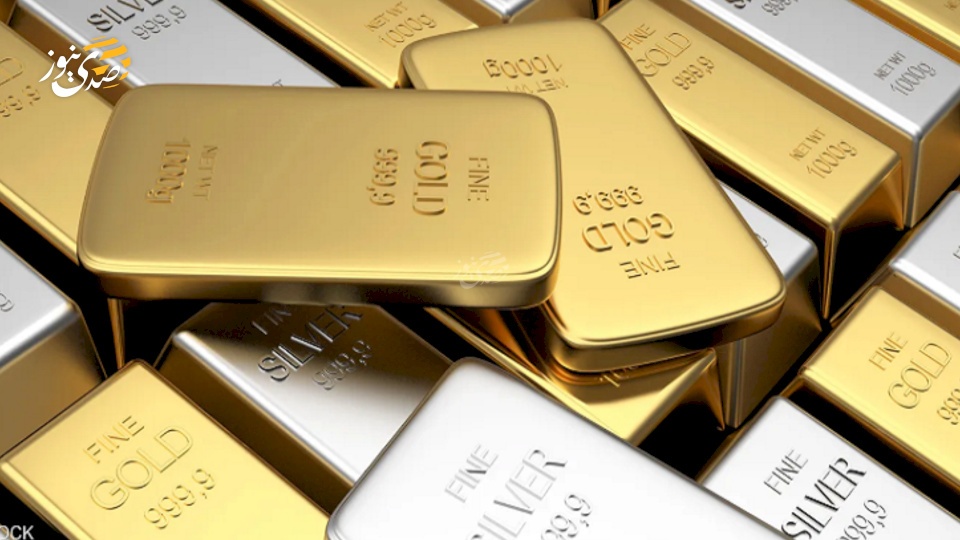
Gold Prices Fall Amid Uncertainty Surrounding Iran War Negotiations
SadaNews - Gold prices have fallen as clashes in the Middle East have rekindled doubts about negotiations between the United States and Iran to end the war that has disrupted energy flows and raised inflation fears.
The precious metal dropped by as much as 0.6% to approach $4470 per ounce before trimming its losses. U.S. President Donald Trump stated he is optimistic about the possibility of the United States reaching a temporary peace agreement with Tehran soon, contrary to reports published by Iranian state media indicating that talks with Washington had been suspended due to fighting in Lebanon. A new round of talks between Israel and Lebanon is scheduled for Wednesday.
However, the region has seen new attacks, as Iran launched ballistic missiles towards Kuwait and Bahrain, with reports indicating that some either crashed during flight or were intercepted, while U.S. forces conducted strikes on Iran's Qeshm Island, according to a statement by U.S. Central Command posted on the platform "X". Meanwhile, oil prices have risen for the third consecutive day, with Brent crude trading near $97 per barrel.
Middle East News Continues to Impact Market Sentiment
Ahmed Asiri, market strategist at Pepperstone Group Ltd, remarked: "The Middle East remains a major source of uncertainty, and the continuous flow of news continues to affect market sentiment in the short term." He added: "The repeated cycle of escalation and de-escalation has created a challenging environment for investors trying to assess the true level of risks facing gold."
Gold has moved largely in the opposite direction of oil prices since the outbreak of hostilities in late February. It significantly dropped in the early days of the conflict and is still trading about 15% lower than its level just before the war, despite having moved within a narrow range in recent weeks.
Asiri noted that the precious metal "has maintained a pattern of lower peaks, indicating that the fundamental sentiment in the market remains fragile."
Global Inflation Concerns
The prolonged disruption of energy flows through the Strait of Hormuz has raised concerns about global inflation, increasing the likelihood that central banks will keep interest rates unchanged or even raise them, which poses a negative factor for precious metals that do not provide returns to their holders.
Meghan Greene, a policymaker at the Bank of England, stated that the justifications for keeping borrowing costs at high levels are growing stronger as the war continues, suggesting that more officials may join the bank's chief economist, Hugh Pill, who has called for action to combat inflation.
Meanwhile, U.S. data released on Tuesday showed job vacancies in April reaching their highest level in nearly two years, boosting bets that the Federal Reserve will keep interest rates elevated for a longer period. Beth Hammack, president of the Federal Reserve Bank of Cleveland, said it makes sense to keep borrowing costs unchanged for now amid uncertainty surrounding economic outlooks, but she indicated that officials may have to act soon to address high inflation.
Silver Price
Silver prices were recorded near $74 per ounce.
 Follow the latest Sada News via Google News
London Stock Exchange Enters the Era of 24/7 Trading

Shamaran Petroleum: Suspension of Oil Production in Duhok Fields in the Kurdistan Region o...

Dollar Steadies Near One-Week High Amid War Developments

Trump Imposes Tariffs on Canadian Imports... Ottawa Vows to Respond

Oil Prices Drop After Reports of Mediation Efforts Between the U.S. and Iran

Gold Price Rises Supported by Increased Buying Amid Lower Prices

Due to "Hazardous and Counterfeit Products".. Europe Fines "AliExpress" $627 Million
