

Telegraph: The West Ignores the Dangerous Alliance Reshaping Iran From Within
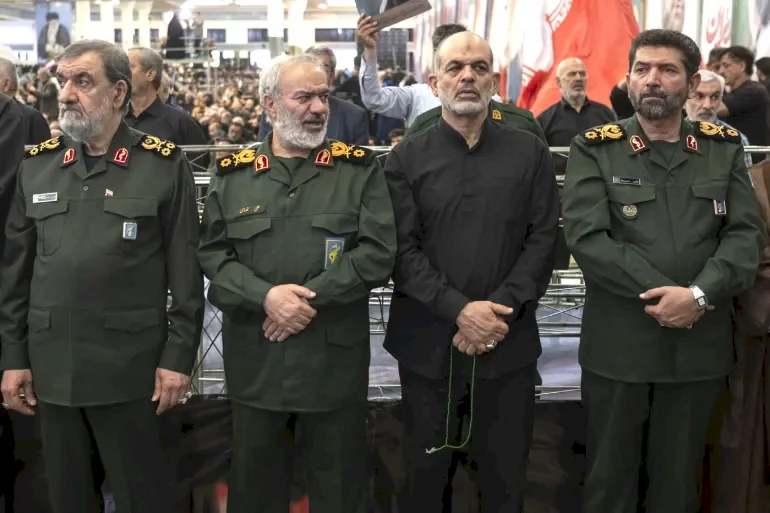
SadaNews - An article in the British Telegraph newspaper revealed deep and intriguing transformations within the power structure in Iran, specifically within the Iranian Revolutionary Guard. The authors assert that the West continues to ignore the dangerous reshaping occurring at the heart of the regime, led by an unannounced alliance between influential security and military figures that may redraw the power balances within Tehran.
The article by authors Khosrow Arabi and Saeed Golkar begins with a fundamental idea that Western analyses of the Iranian situation, particularly after the recent leadership changes and the absence of Supreme Leader Ali Khamenei - who was assassinated at the beginning of the American-Israeli war against Iran - and the subsequent disappearance of his son and successor Mojtaba, remain superficial and inaccurate in understanding the true centers of power.
Initially, the notion was promoted that Parliament Speaker Mohammad Baqir Qalibaf had become the "new strongman" in Iran. However, the article argues that this image is misleading, as Qalibaf is actually facing increased marginalization within the circles of influence and is suffering from a loss of trust even within the Revolutionary Guard himself.
In contrast, the name Ahmad Vahidi emerges as the new effective leader of the Revolutionary Guard, a claim supported - according to the article - by Western intelligence sources. However, despite Vahidi's central position, he faces a fundamental challenge due to his lack of a solid base of influence among the younger generations of the Guard and Basij, particularly after years of being away from direct leadership due to holding governmental positions.
Return of Jafari
Here, a more critical and complex element comes into play, represented by the return of former general Mohammad Ali Jafari to the sphere of influence - as the article notes. Jafari is considered one of the key architects of strategic transformation within the Revolutionary Guard during his previous leadership years, as he oversaw its decentralization, a model that enabled the Guard to adapt to war and internal upheaval.
Jafari also played a pivotal role in establishing intelligence capabilities and cyber capacities, along with developing asymmetric warfare methods, as well as overseeing the suppression of major protests that shook the regime in 2009 and 2017-2018, according to the authors.
However, Jafari's most significant role - as the article indicates - lies in establishing the "middle circle," a social-ideological network aimed at mobilizing pro-regime youth within thousands of small groups spread across neighborhoods.
This network, which is expected to include millions of members, is not only used for ideological mobilization purposes but also to influence elections and reshape the internal political mood, making it a crucial tool of influence within the Iranian system.
Leaks and conclusions presented in the article suggest that this network played a role in supporting certain candidates and sidelining others during elections, reflecting a shift in the tools of power management within Iran, from traditional agencies to deeper and more subtle social organizational networks.
An Unannounced Alliance
In this context, the article sees an unannounced alliance beginning to form between Ahmad Vahidi and Mohammad Ali Jafari, based on the exchange of political and strategic interests. Vahidi needs Jafari's expertise and his extensive network to secure a base of support within the Revolutionary Guard and among ideological youth, while Jafari benefits from Vahidi's current position to enhance his influence and marginalize his rivals, topped by Qalibaf.
The article portrays Qalibaf as a symbol of the "pragmatic elite" trend within the regime, yet at the same time beset by corruption suspicions and familial behaviors that have affected his image, making him a target for criticism among the newer, more hardline generations within the Guard.
The article concludes that this alliance between Vahidi and Jafari does not merely signify personal proximity, but reflects a deeper restructuring within the Revolutionary Guard's framework, marked by the rise of a more rigid and organized ideological trend that relies on youth mobilization and expanding social control networks, rather than traditional bureaucracy.
If this trend succeeds, Iran will witness a gradual transition towards a more centralized and ideological model within the Revolutionary Guard, empowering the more hardline younger generations and diminishing the influence of old pragmatic trends, which may impact not only domestic politics but also Iran's regional behavior and its security and military tools.
Thus, the article presents a picture of Iran quietly rearranging its centers of power from within, away from traditional Western media coverage, but according to dynamics that could have a more significant influence on the regime's future and stability.
 Follow the latest Sada News via Google News
High-level sources reveal to SadaNews: Washington seeks to hold a Gaza Reconstruction Conf...

Iraqji Reveals Details of the Attack on the Iranian Supreme Leader's Headquarters

صراع على إرث خامنئي وسط غياب مجتبى.. والمتشددون يتهمون قادة إيران بـ«الانقلاب»

The European Union Reiterates Its Call for Israel to Refrain from Expanding Settlements in...

"Mamdani Berlin".. The German Left Bets on a Politician of Turkish Descent to Lead the Cap...

Hebrew Channel: Kushner Pushing to Enhance Communication Between the United States and the...

SadaNews Report: Israeli Elections with a Settlement Flavor!
