

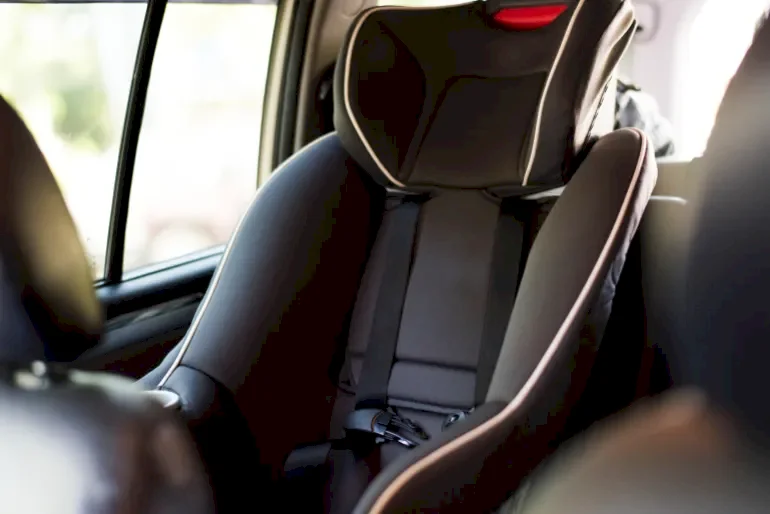
How Can Children's Car Seats Become Dangerous? 6 Common Mistakes That May Threaten Their Lives
SadaNews - In the near past, children spent family trips in their mother's lap or sitting in the back seat without any restraint or even considering that as a mistake. Today, however, the scene has completely changed, and "children's seats" have become one of the most important safety tools relied upon to protect children.
A study published in the American journal "Accident Analysis and Prevention," specialized in road accident prevention, indicated that the use of child restraint seats is extremely effective in preventing serious injuries and hospital admissions.
Data from 1998 to 2002 showed a 78% decrease in serious injuries among children who used complete restraint systems compared to those who used only seat belts; this confirms that these seats are not an optional choice but a fundamental necessity for every car journey.
Despite the widespread awareness of their importance, a significant percentage of families still make mistakes that affect the level of protection, making it crucial to know these mistakes and review installation instructions to ensure the child's safety.
The First Mistake.. Incorrect Installation
Some parents feel reassured when a child's seat appears stable after installation, but this "apparent stability" is not a sufficient safety measure, as each car has a different fastening system, and each seat has its specific instructions, making reliance on personal experience alone a common cause of unintentional errors.
The American Academy of Pediatrics indicates that about three-quarters of child seats are used or installed incorrectly; this can significantly reduce their effectiveness at the moment of impact, which is the critical moment when the true efficiency of the seat is measured. The seat may function properly under normal conditions, but it fails in accidents if it is not secured according to specific instructions.
Therefore, experts always advise reading the user manual for both the seat and the car together, ensuring that the seat is securely installed according to the guidelines. If needed, certified child passenger safety technicians should be consulted, which is a simple measure but makes a big difference in the level of protection for the child while traveling.
The Second Mistake.. Turning the Seat Forward Too Early
When a baby grows a little, many parents rush to turn the seat from the "rear-facing" position to the "forward-facing" position, either because they want to see their child's face while driving or because they think the child has outgrown the first position. Both reasons are incorrect.
The rear-facing position provides exceptional protection for the head, neck, and spine, as it distributes crash forces over a larger area of the child's body instead of concentrating them on weak points.
Modern safety guidelines emphasize that this position should remain for as long as possible, potentially extending until the child is three or four years old; the criterion is not just age, but reaching the maximum weight and height limits specified in the seat's instructions.
The Third Mistake.. Buckling the Belt Over Thick Clothing
Some parents believe that heavy winter clothing adds warmth and safety for their child during the journey, but this can actually reduce the effectiveness of the restraint belt.
Although the belt seems tight, in the event of a crash, thick clothing compresses quickly, leaving a gap between the child's body and the belt that increases the risk of injury.
The solution is simple and requires only a change of arrangement: the child should sit in light clothing inside the seat, and the belt should be secured directly on their body, then a blanket or coat can be placed over the belt from the outside for warmth.
The Fourth Mistake.. Positioning the Seat in Front of the Airbag
Airbags pose a significant danger to infants in seats positioned in the front of the car, as they can severely impact the head and neck during collisions.
This sometimes happens when parents want to monitor their child while driving, but the rule is strict: child seats – especially for infants – must always be positioned in the back seat and should never be placed in front of an active airbag.
The American Academy of Pediatrics confirms that the back seat is the safest place to protect children in the car, and adhering to this guidance is a fundamental step to reducing the risk of serious injuries.
The Fifth Mistake.. Using Inappropriate Seats
Some families rely on old or used child seats that were designated for a previous child in the family without ensuring their safety. What many do not realize is that child seats have an expiration date linked to their production date and not when they were purchased, usually between six and ten years from the manufacturing date.
Plastic deteriorates gradually under heat and time, and internal components of the seat can weaken without showing any visible signs.
The same applies to a seat that has been involved in an accident, even if it appears intact externally, as its internal structure may have been compromised and has lost its protective capacity.
Therefore, caution should be exercised after any accident as well as when purchasing a used seat, and ensuring that it is suitable for the child's age, weight, and height is very important, as using an inappropriate seat significantly reduces the level of protection.
The Sixth Mistake.. Ignoring Modern Guidelines
Many parents rely on their previous experiences or advice they received years ago, without keeping up with the latest safety recommendations. However, these guidelines are constantly evolving with periodic updates to cars, seats, and safety systems, making regular updates essential for better protecting children.
Data from the American Highway Safety Institute indicates that car accidents remain a leading cause of child fatalities, while adhering to appropriate restraint systems for each age stage significantly reduces these risks.
Although the rules for using child seats may seem more complicated than in the past, they are based on long-term studies and real-world experiences aimed at protecting children during daily travel. Adhering to the correct installation of the seat, choosing the right type for the child's age, and ensuring to follow modern guidelines are all simple steps that can make a significant difference in reducing the risk of injuries. A child's seat is not just an extra piece inside the car, but one of the most important means of protection that can save a child's life in an unexpected moment on the road.
 Follow the latest Sada News via Google News
After Deschamps' Departure... Zinedine Zidane Tops the Candidates to Lead France

Mbappe Surpasses Messi and Becomes the All-Time Top Scorer in the World Cup

England Defeats France and Achieves Largest World Cup Achievement Since 1966

Messi Refused to Play for Spain and Missed 3 World Cups

Publishers Sue Google for Allegedly Using Books to Train Artificial Intelligence

Google Expands Capabilities of Google Search Console to Support Social Media Accounts

The Mediterranean Table... An Ancient Diet Revealing Its New Secrets for Health and Longev...
