

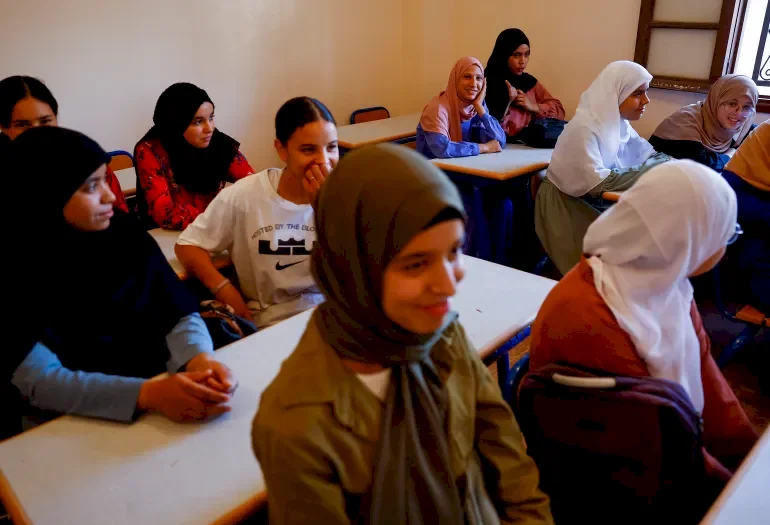
French Study Reveals Demographic Shift in the Maghreb.. What is Happening?
SadaNews - A French study has revealed that there is a change in the age structure of the populations of Morocco, Algeria, and Tunisia, adding that these countries will experience accelerated aging in the coming decades.
The study published by the "National Institute for Demographic Studies" in France indicated that the current slowing trend follows one of the fastest demographic transformations in the world that occurred in these countries during the last third of the 20th century.
The study, published in the journal "Population and Societies" issued by the institute, noted that the fertility rate in the three countries during the 1970s was between 7 to 8 children per woman. However, it now records "low" or "very low" fertility levels due to "significant changes in reproductive behaviors."
It explained that these changes manifest in the delay or postponement of marriage, the widespread use of contraceptives, the increase in women's educational levels, and changes in family norms.
Continuous Decline
The study stated that compared to the fertility levels in the 1970s, the decline in fertility began in the 1990s, adding that since the first decade of the 21st century, the trajectories of the three countries have varied; Morocco is experiencing a continuous decline in fertility without interruption for several decades, while Algeria recorded a temporary revival in mid-2010 before beginning to decline again, whereas Tunisia is currently witnessing the fastest decline.
In 2024, the composite index (average number of children per woman) for fertility is estimated at 1.53 children per woman in Tunisia, 1.97 in Morocco, while it stands at 2.61 in Algeria with a downward trend as well.
Delay in Marriage Age
The study clarified that the delay in marriage age is among the factors that led to the decline in fertility in the three countries.
Tunisia: Between 2014 and 2024, the proportion of single individuals has significantly increased among women and men under the age of 40.
Algeria: The increase in births around mid-2010 was closely linked to a significant increase in marriages, driven by a temporary improvement in economic conditions and the reaching of large generations to adulthood.
Morocco: Despite relatively early marriage ages for females, there is a decline in birth rates due to the widespread use of contraceptives.
Contraceptives
The study indicated that Morocco stands out for its continuous progress in the use of contraceptives, noting that the rate of contraceptive use increased from 40% in the 1990s to 71% in 2018.
It adds that, in contrast, contraceptive use has slightly declined in recent years in Algeria and Tunisia.
Education and Employment
The study mentioned that women throughout the Maghreb have become significantly more educated than before. For example, in Tunisia, the percentage of females among higher education students is about 60%. However, this educational advancement does not necessarily translate into stable professional success; the unemployment rate among educated young women remains high, and career paths for females are fragile, especially after childbirth, according to the study.
It adds that these difficulties in balancing family life and professional activity contribute to the delay in childbirth and reduce the number of children.
Accelerated Aging
The study stated that the continuous decline in fertility has led to a change in the age structure of populations in the three Maghreb countries, explaining that Tunisia is the first among them in terms of the aging process. The proportion of individuals aged 60 and older has risen from 8% to 17% between 1997 and 2024.
It added that Morocco and Algeria also witness high rates concerning the aging process, and this is expected to accelerate in the coming decades.
Source: Al Jazeera
 Follow the latest Sada News via Google News
Earthquake of 5.5 Magnitude Hits Western Iran

To Enhance His Support for "Increasing Children"... Vance Announces the Birth of His Fourt...

Death of a Mosque Imam in Armed Attack in Southeastern Iran

Rubio Reveals Circumstances Surrounding the Death of an American Soldier in Iraq

Reliable Threat.. US Embassy in Jordan: Evacuation of International Airport and Port in Aq...

Italy Raises Alert Level to 'Red' with Deadly Heat Wave

Kuwaiti Army Intercepts Iranian Missile and Drone Attacks
