

Fitch Places Qatar's Sovereign Rating at "AA" on Negative Watch Due to Fallout from Iran's War
SadaNews - Credit rating agency "Fitch" revealed its methodology for addressing the risks of Iranian escalation on global markets, confirming that negative scenarios have become substantial enough to warrant precautionary measures, including adjusting outlooks or placing entities on a watch list in anticipation of a potential downgrade.
The agency stated in a report issued from London on March 26, 2026, that it published a set of heat maps on March 20 that measure the potential exposure levels of various sectors should a pressuring economic scenario materialize, involving an average price of Brent crude at $100 per barrel during 2026, along with a slowdown in global growth, rising inflation, tightening financial conditions, and falling stock markets, compared to the baseline scenario that assumes a price of $70 per barrel.
Despite discussions on the possibility of resuming U.S.-Iranian negotiations, Fitch believes that the risk level has become high enough to prompt early indications for entities that may face downgrades if the negative scenario occurs.
Reviews on Sector and Country Levels
The agency clarified that it has begun reviewing companies and entities under its ratings in sectors and regions indicated by the heat maps as being most vulnerable to the oil shock, noting that any potential action will be based on a detailed analysis of each issuer, taking into account mitigating factors.
Fitch confirmed that it still views the baseline scenario, which anticipates a Brent price of $70 per barrel in 2026, as realistic, even with the actual closure of the Strait of Hormuz continuing until the end of April, with supply movements expected to gradually resume in May and June.
The agency indicates that the market was already oversupplied at the outbreak of the conflict, with high inventory levels, alongside withdrawals from strategic reserves by countries that are members of the International Energy Agency, factors that could keep prices near $100 if the closure of the strait lasts for additional weeks.
Fitch believes that the reopening of the strait in the second quarter could lead oil prices to drop faster than the markets anticipate, thereby bringing the annual average price back to $70 per barrel.
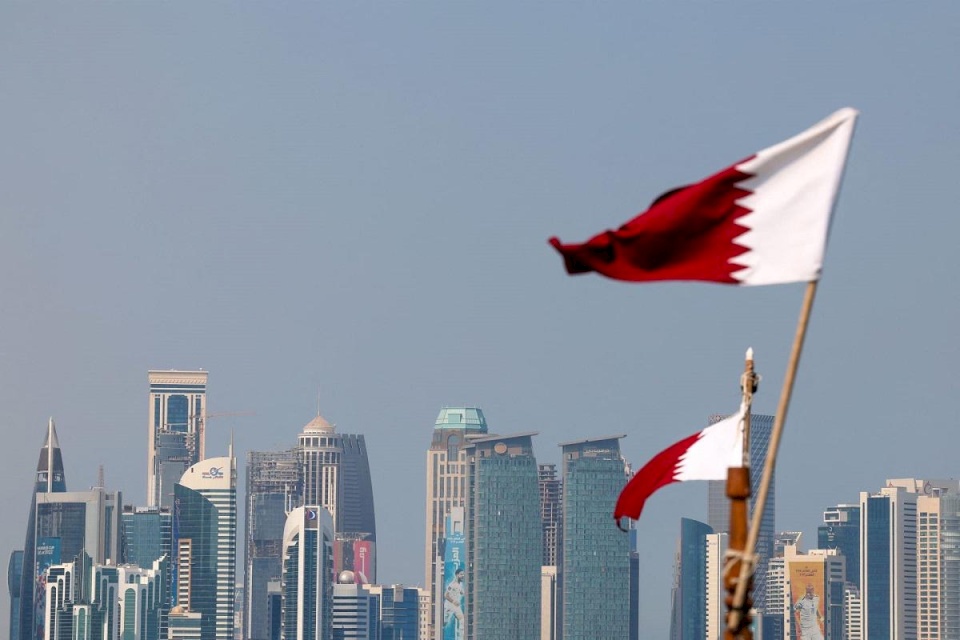
Additionally, Fitch places Qatar's sovereign rating at "AA" on a negative watch list due to the uncertainty surrounding the security environment in the region as a result of the war in Iran.
The agency sees that the attack on the Ras Laffan liquefied natural gas complex and the closure of the Strait of Hormuz will negatively impact public finances in Qatar.
Risks Leaning Towards Price Increases
Nevertheless, the agency emphasizes that the risks surrounding the baseline scenario "are significant and lean strongly towards higher prices and longer disruptions," as the negative scenario expects a surge in prices to $130 per barrel during the second quarter, raising the average for 2026 to $100.
Fitch warns that Iran's ability to disrupt navigation in the Strait of Hormuz – even after military operations subside – enhances the likelihood of the risk premium remaining elevated for an extended period. Scenarios such as a ground incursion into Iran, significant damage to oil and gas infrastructure, additional maritime disruptions in the Red Sea, or offensive actions from Gulf countries against Iran could lead to a longer war and a slower return to normal conditions.
Negative Outlook... or Placement on Watch List
In light of this scenario, Fitch confirms that it does not consider the negative scenario likely, but it has become material enough to raise the risk of downgrades for some entities beyond historical averages, which aligns with a negative outlook.
Rating watches are activated when there is a specific set of developments that may prompt swift action on ratings in the short term, even if the likelihood of these developments remains uncertain, as long as their potential impact on the rating is clear and direct.
 Follow the latest Sada News via Google News
Oil Rises for the Fourth Day as Supply Risks Escalate

An Additional $8 Billion.. A New Account from the Pentagon on the Cost of the War with Ira...

London Stock Exchange Enters the Era of 24/7 Trading

Shamaran Petroleum: Suspension of Oil Production in Duhok Fields in the Kurdistan Region o...

Dollar Steadies Near One-Week High Amid War Developments

Trump Imposes Tariffs on Canadian Imports... Ottawa Vows to Respond

Oil Prices Drop After Reports of Mediation Efforts Between the U.S. and Iran
