

Egypt proceeds with issuing "Samurai Bonds" worth half a billion dollars
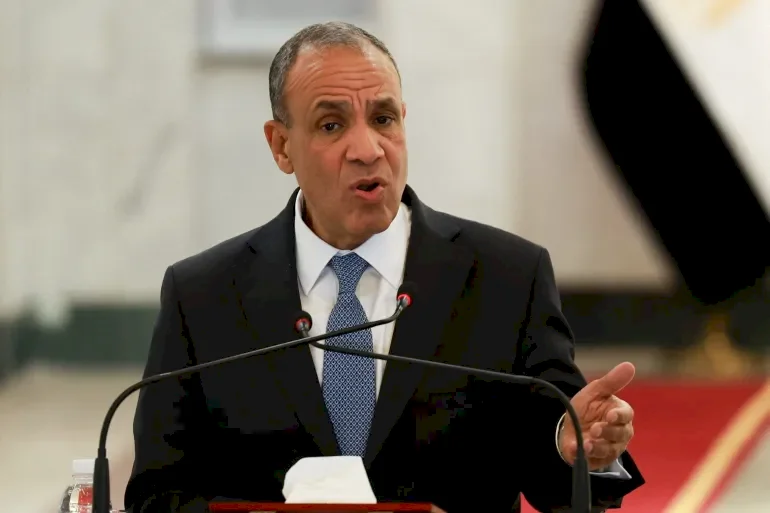
SadaNews - Egyptian Foreign Minister Badr Abdel Aty said today, Thursday, that Egypt is completing plans to issue Samurai bonds denominated in Japanese yen, marking the first offering of its kind for Cairo in three years, as part of efforts aimed at diversifying sources of external financing and reducing borrowing costs.
Reuters quoted Minister Abdel Aty as saying, during a visit to Tokyo today Thursday, "We are in the final stages of completion," explaining that he is promoting during his visit to Japan the issuance of the bonds and other investment opportunities in Egypt.
The Egyptian Foreign Minister noted that his country has had "extensive discussions" with the Japanese side regarding cash and financial support, particularly related to budget support and Samurai bonds, adding that the issuance will be "very important," despite Egypt being affected by the repercussions of the US-Israeli war on Iran.
The African Development Bank mentioned in December that it will provide a partial credit guarantee to support Egypt's issuance of sustainable Samurai bonds in the Japanese capital markets worth the equivalent of $500 million, with the proceeds from the issuance to be used for projects that fall under the framework of sustainable sovereign financing in Egypt.
The bank explained that the guarantee aims to give investors an additional level of reassurance amid ongoing aversion to the risks of emerging market issuances, allowing the Egyptian government to obtain longer tenors and more competitive pricing, mentioning that the proceeds will be directed to projects including renewable energy, clean transportation, energy efficiency, climate adaptation, water and sanitation management, and financing small and medium enterprises, infrastructure, and essential services.
Return to the Japanese market
The upcoming issuance represents Egypt's third offering in the Japanese market after two previous offerings in March 2022 and November 2023, according to data from the Egyptian Ministry of Finance, which stated that the country diversified its international debt instruments through the first Samurai bonds in the Japanese market, the first international sukuk, and the first Panda bonds in the Chinese market, followed by a second Samurai issuance.
In November 2023, data from the Ministry of Finance showed that Egypt issued Samurai bonds worth 75 billion yen (equivalent to $500 million at the time), for a term of 5 years at an annual cost of 1.5%, in a step that the ministry said was part of a policy to diversify funding sources in different currencies and attract new investor segments.
The debt bulletin issued by the Egyptian Ministry of Finance indicates that the portfolio of existing international government bonds as of December 2024 included conventional dollar issuances valued at $24.5 billion, international sukuk valued at $1.5 billion, green bonds (linked to renewable energy) worth $750 million, euro issuances amounting to $4.142 billion, in addition to Samurai bonds of about $859 million and Panda bonds equivalent to $480 million.
Samurai bonds mean that a foreign entity, such as a government or company outside Japan, borrows from investors in the Japanese market in yen, allowing the issuer to reach a different investor base than those in the dollar and euro markets, and may reduce financing costs if the issuance receives credit guarantees or appropriate pricing.
Panda bonds
Cairo preceded its new move in Japan by issuing Panda bonds in the Chinese market, as the African Development Bank announced in October 2023 that Cairo issued the first sustainable Panda bonds in Africa worth 3.5 billion yuan (approximately $478.7 million), guaranteed by the African Development Bank and the Asian Infrastructure Investment Bank.
The offering memorandum for the Egyptian Renminbi bonds (the other name for the yuan) reveals that the program was registered with the National Association of Institutional Investors in the Chinese capital market, and that Egypt intended to issue sustainable development bonds worth 3.5 billion yuan, with an unconditional and irrevocable guarantee from the African Development Bank and the Asian Infrastructure Investment Bank.
The African Development Bank stated in the Samurai bond project document that the Egyptian Panda bonds were issued in October 2023 worth 3.5 billion yuan with a yield of 3.51% for a term of 3 years, and that their proceeds were directed to 7 sub-projects across 3 ministries: Communications and Information Technology, Electricity and Renewable Energy, and Transportation.
The expansion in Samurai and Panda bonds and international sukuk reflects an Egyptian trend towards broadening its investor base outside traditional Eurobond (foreign currency bonds) markets, utilizing multi-party guarantees to mitigate risks that investors seek to compensate for in emerging market issuances.
Debt pressures
The new issuance plans come while Egypt faces high debt and financing burdens, as the medium-term debt strategy issued by the Ministry of Finance indicated that the debt of budgetary agencies reached 83.8% of GDP in June 2025, compared to 89.4% in June 2024, after it had reached 95.7% in June 2023.
The Ministry of Finance stated that the debt of budgetary agencies decreased by about 12 percentage points of GDP from June 2023 to June 2025, and it projected a decline to 81.8% in the fiscal year 2025-2026, then to 78.1% in the fiscal year 2026-2027 and 75.2% in the fiscal year 2027-2028, before reaching a range of 71% to 73% in the fiscal year 2028-2029.
The latest data from the Central Bank of Egypt also indicated that the total external debt registered $163.911 billion at the end of December 2025, compared to $163.713 billion at the end of September 2025, with long-term external debt at $129.49 billion, while short-term debt recorded $34.421 billion.
Source: Al Jazeera + Reuters
 Follow the latest Sada News via Google News
Dollar Steadies Near One-Week High Amid War Developments

Trump Imposes Tariffs on Canadian Imports... Ottawa Vows to Respond

Oil Prices Drop After Reports of Mediation Efforts Between the U.S. and Iran

Gold Price Rises Supported by Increased Buying Amid Lower Prices

Due to "Hazardous and Counterfeit Products".. Europe Fines "AliExpress" $627 Million

Gasoline Prices Exceed $4 Again in America Amid Resumed War

What was the financial reward for Spain after winning the World Cup?
