

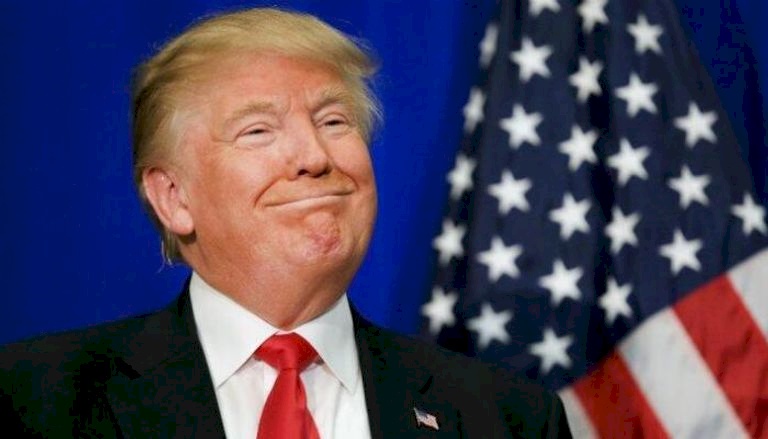
Bombs and Plans.. Why Does Trump Extend a Hand for Peace While Striking with the Other?
SadaNews - The American-Israeli war on Iran has entered the most complicated phase since its outbreak, as US President Donald Trump adopts a dual strategy that mixes enticing "peace offers" with an increase in military buildup near Iran, which threatens a ground invasion.
While Washington leaks details of a "15-point plan" to end the war, the Pentagon continues to bring more troops to those stationed in the region, amidst Israeli astonishment and deep Iranian skepticism regarding American intentions.
The 15-Point Plan
Trump's administration presented Iran, through intermediaries from Pakistan, with a comprehensive plan consisting of 15 points. This plan, described as a "basis for negotiations", goes beyond merely a ceasefire to include thorny issues, as it demands complete dismantling of the Iranian nuclear program, cessation of the ballistic missile program, ending support for regional proxies like Hezbollah, and reopening waterways, in exchange for lifting sanctions.
Israeli Channel 12 reported, citing three sources, that Washington is seeking to impose a "one-month truce" to discuss these principles. Trump, for his part, stated to reporters at the White House on Tuesday that "the United States is talking to the right people", claiming that the Iranian side "strongly wants to make a deal".
This optimism from Trump coincided with his remarks about what he described as the "great gift" from Iran regarding the flow of oil and gas in the Strait of Hormuz, which he considered evidence of the seriousness of the leadership in Tehran.
Increased Military Buildup
However, this outstretched hand for peace is met with a "fist ready to strike", as described by one of Trump’s advisors to Axios. While the White House speaks of negotiations, the Associated Press and The Washington Post reported orders to deploy at least 1,000 additional troops from the "82nd Airborne Division" to the Middle East.
The danger of this move lies in the nature of this division, as it is a "rapid response force" trained to parachute in and secure airports and vital infrastructure in hostile territories within just 18 hours.
This buildup also includes about 50,000 soldiers from the Marines and sailors already aboard warships close to the region, which the Soufan Center for Research views as a maneuver aiming to give Trump "maximum flexibility".
Analyses go further, as The Washington Post notes that the option of a ground invasion, particularly on the strategic "Khark Island", remains on Trump's table, even though he has not made a final decision yet.
US Secretary of War, Pete Hegseth, reinforced this vision by stating: "We are negotiating using bombs", emphasizing the continuation of military pressure alongside diplomatic efforts.
Tehran Fears the "Third Deception"
On the other side, it does not seem that the American offers are stirring enthusiasm in Tehran as much as they provoke "deep suspicions". Axios reported that well-informed sources revealed Iranian officials clearly informed intermediaries from Pakistan, Egypt, and Turkey: "We have been deceived twice by Trump, and we do not want to be deceived again".
Recalling events explains this anxiety; last June, Israel launched an attack with US support just days before talks regarding the nuclear program, and the ongoing American-Israeli war on Iran occurred just two days after a preliminary agreement in Geneva.
Formal Iranian news agencies launched a counterattack against Trump's narrative, as Parliament Speaker Mohammad Baqer Qalibaf denied the existence of any direct negotiations, describing them as "fake news".
The Tasnim agency quoted a military source saying that Trump's recourse to statements stems from "the poor state of his stock of offensive and defensive munitions", and that he is trying to buy time to carry out his military plans or reduce global energy prices, which have soared due to the closure of the Strait of Hormuz. The headquarters of Khatam al-Anbiya openly declared that America is negotiating with itself.
Tehran sees the troop buildup as evidence of bad faith and asserts through its security sources that "the American messages are a deceptive plot" that will not deter it from broad defense and retaliation.
Intermediaries and Islamabad's Moves
In these final meters "amid this impasse", the role of intermediaries emerges, as Pakistani Prime Minister Shahbaz Sharif wrote on X about his country’s readiness to facilitate "crucial dialogues", while intermediaries from Egypt and Turkey pressured for a meeting in Islamabad within 48 hours.
The Wall Street Journal indicated that Washington proposed the participation of high-profile figures such as envoy Steve Wittecuff, Jared Kushner, and even US Vice President JD Vance to demonstrate the seriousness of the talks. The specific choice of Vance carries significance, as sources told Axios that Wittecuff recommended him because the Iranians do not consider him part of the hardline hawks against Iran.
Nevertheless, the gap remains massive, as Iranian demands for the closure of US bases in the region and substantial reparations, and the refusal to negotiate as long as the "epic anger process" continues are met with American requests to completely end the nuclear file and terminate the Iranian missile file, which Iran utterly rejects.
The Israeli Position
Israel, for its part, is monitoring the scene with caution tinged with aggression. The Associated Press quoted an informed source stating that Israeli officials, who had urged Trump to continue the war, were "surprised" by the offer of a ceasefire.
In this context, the Israeli occupation army continues to carry out new raids on the Iranian capital, Tehran, targeting infrastructure and residential areas.
Israel's representative to the United Nations confirmed that his country "is not participating in any talks" and continues to target military sites, while Israeli Channel 14 alleged that Abbas Araghchi and Qalibaf received a "temporary immunity" from targeting, yet that did not prevent Tel Aviv from insisting on continued bombing until ensuring the "dismantlement of Iranian nuclear and ballistic capabilities".
In a clear message, Yedioth Ahronoth reported that senior officials do not expect a quick agreement, describing the Iranian leadership as "creative liars".
The Future of Violent Negotiations
It seems we are facing a stage of "strategic finger-biting", as Trump seeks to explore whether Iran will make concessions "it was not willing to make before" under the pressure of bombardment, while Iran bets on its influence in energy markets and the global fuel prices to extract a better agreement.
According to media reports, the war is planned to continue for an additional two to three weeks, even if negotiations commence. The upcoming scenario depends on the ability of the "three intermediaries" to convince both parties to sit in Islamabad; however, a potential American ground invasion may open new pathways for the war.
 Follow the latest Sada News via Google News
Trump: We will make great progress with Beirut.. Aoun: It is time for Lebanon to be stable

The Lebanese Army Deploys in the South and Comes Under Gunfire; Israel Clarifies

Bezhkian: Directives from the Leader to End the State of No War, No Peace

Saudi Arabia condemns the Houthi threats to navigation and pledges to protect its ships

Global Warning to Americans Due to Rising Tensions in the Middle East

Houthi Movement Announces Ban on Maritime Navigation Against Saudi Arabia

Earthquake of 5.5 Magnitude Hits Western Iran
