

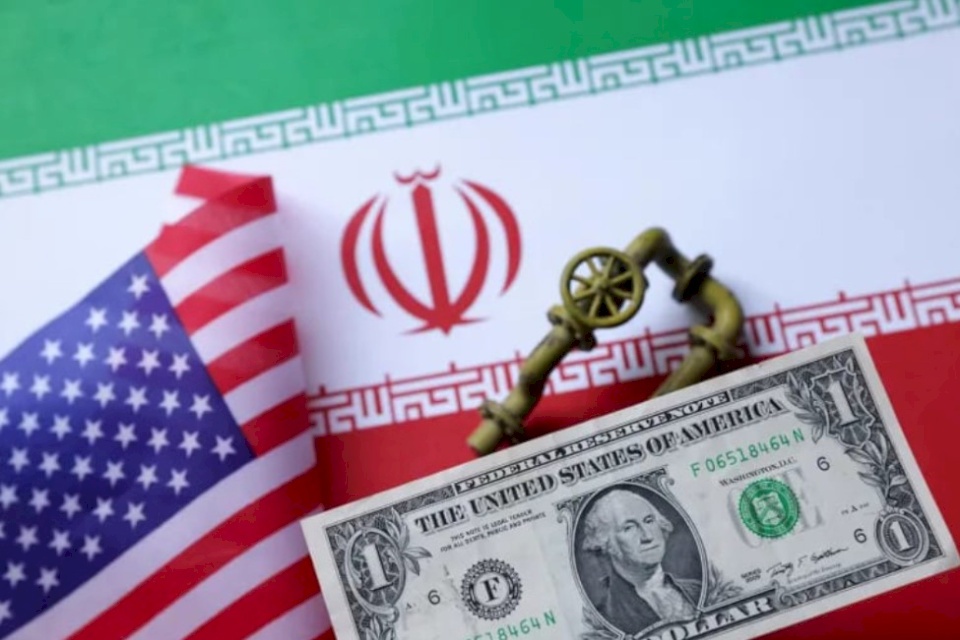
One Million Dollars Per Minute: Iran's War Entraps America in Costs and Division
Economy SadaNews - As a fundamental change in the announced strategic objectives of the Iran war looms on the horizon, urgent questions arise about the duration of this confrontation and the opportunity cost being borne by the American citizen from his pocket and the future of his service programs, while international powers seek to impose complex political trades linking the Middle Eastern front to the ongoing conflict in Ukraine.
A series of analyses and reports published by prominent American newspapers and websites indicate that the war led by President Donald Trump's administration against Iran is entering a critical stage where military calculations intertwine with economic pressures and political divisions, at a time when declared objectives are changing and costs are notably increasing.
One Million Dollars Per Minute
According to an analytical article published by The New York Times by opinion columnist Nicholas Kristof, in collaboration with journalist Ingrid Holmqvist, the cost of the war has reached an unprecedented level, estimated at about 1.3 million dollars per minute during the first six days of operations alone.
The authors believe that these figures not only reflect a massive financial burden but also reveal a moral and political paradox, as the article compares the cost of war to the lost opportunities domestically.
According to their estimation, using a tiny fraction of this money could largely eliminate the worst forms of child malnutrition globally and save about 1.5 million children annually.
The article also points out that the cost of just two weeks of military operations would have been sufficient to guarantee free college education for every American family earning less than $125,000 per year.
This stark disparity places the Trump administration before the test of "political will," which is clearly displayed when dropping bombs and completely disappears when it comes to human development and providing healthcare and education.
Kristof and Holmqvist report that military experts estimate the total eventual cost could approach one trillion dollars, a figure that raises moral and social questions about national spending priorities.
Clear Regression
Alongside this economic criticism, a clear shift in the political rhetoric of the U.S. administration emerges. According to a news report published by the same newspaper by writer David Sanger, President Trump stated that he is considering "scaling back" military operations in Iran, marking a retreat from the ambitious goals he announced at the beginning of the campaign, foremost among them pushing for regime change in Tehran.
However, Trump also stated, "We are very close to achieving our goals," leaving the matter of reopening the Strait of Hormuz to other countries that use this waterway, claiming that the United States does not use it.
The report shows that the U.S. administration has started to focus on more limited objectives, such as weakening Iran's military capabilities and ensuring the protection of allies in the region, rather than seeking to bring about radical political change within Iran.
Trump has also toned down his demands regarding the Iranian nuclear program, retreating from the condition of removing all nuclear fuel stock, merely emphasizing the United States' ability to respond in the event of the program being rebuilt.
This shift reflects, according to Sanger, increasing domestic pressures, with fuel prices in the United States rising to about $4 per gallon and growing concern within the Republican Party about the economic repercussions of the war, especially amidst the need for massive additional funding to compensate for expended munitions.
Historical Paradox
For its part, Newsweek magazine provided an in-depth analysis highlighting the historical paradox in which President Trump has found himself, having spent two decades criticizing the war in Iraq and labeling the invasion as "the worst decision ever made."
Despite his repeated electoral promises to end the "endless wars," just three weeks after the "Operation Wrath of God" against Iran, he asked Congress for immediate funding of $200 billion, a figure far exceeding what former President George W. Bush requested at the onset of the Iraq invasion in 2003, even after adjusting figures to match current inflation rates.
The U.S. administration attributes this increase to the nature of modern wars, which increasingly rely on expensive high-tech weaponry, such as the "Tomahawk" missiles costing about $3.5 million each and precision-guided bombs.
The report also reveals that U.S. forces targeted over 7,000 locations within Iran in just three weeks, leading to the depletion of cruise missile stocks like the Tomahawks.
Nevertheless, the cost of operations reached about $16.5 billion in just 12 days, indicating a rapid rate of spending.
Strategic Traps
In another news analysis written by a group of senior editors, Newsweek warned of five "strategic traps" that could push the conflict into a more dangerous and expansive course.
The five traps mentioned by the magazine include the escalation trap that could occur if the American president carries out his warning to completely destroy the South Pars gas field if Iran attacks Qatar again.
The second trap is the alliance trap, manifested in losing control over Israel, while there is the credibility trap that arises when presidents publicly set red lines that continue to be tested by facts, as is happening with Trump as he retreats from the objectives he set for the war against Iran.
The fourth is the energy trap, highlighting one of the most dangerous challenges facing Trump, and the fifth is the domestic political trap, as inflation resulting from surging oil prices poses a direct threat to American voter confidence ahead of the upcoming congressional midterm elections in November.
Cracks and Investigations
The challenges are not limited to the financial and strategic sides but extend to the American political interior, as The Hill newspaper revealed in a report by its correspondent Fiona Burke about the deepening divisions among the political elite, including within the Republican Party itself.
The website detailed the resignation of Joe Kent, the former director of the National Counterterrorism Center, in protest against the United States' war against Iran. Kent accused the Trump administration of entering the war under direct pressure from Israel and its lobbying groups in Washington, and accused authorities of attempting to divert public discussion towards leaks and side investigations to distract from the reasons for entering the war.
Fiona Burke mentioned in her report that the FBI had announced an investigation against Kent for allegedly leaking classified intelligence information to media workers, including broadcaster Tucker Carlson.
This incident reflects the extent of the rift within the far-right itself, where hawkish proponents of military action clash with the "America First" movement which sees this adventure as a repetition of past mistakes, especially in the Iraq and Afghanistan wars.
In another report by the same website, journalist Philip Timothia indicates that there is a growing concern within the Republican Party about the possibility of the U.S. getting involved in a ground intervention in Iran, despite Trump's repeated denials of this intention.
According to Timothia's report, supporters of the war are promoting the idea that taking control of the Iranian island of Khark, which is Iran's main oil artery, does not constitute an "invasion" but is a process of "securing vital facilities."
The Russian Trade-off and Transatlantic Tensions
On the international stage, Russia has entered the game by offering an intelligence "trade-off" that could alter the balance.
Politico reported in a piece prepared by four of its reporters that Moscow offered to stop providing Iran with precise coordinates of American military sites in the region in exchange for Washington stopping to provide Ukraine with intelligence regarding Russian forces.
Despite Washington's rejection of the offer, the mere suggestion of it sparked panic in European capitals, which fear a deal between the two superpowers that would leave Europe alone facing Russian ambitions.
Compounding the problem is Trump's fierce attack on NATO allies, calling them "cowards" for refusing to participate in military operations in the Strait of Hormuz.
As the war pressures American munitions stockpiles, Politico reported that European countries - like France - have begun to take the lead in supporting Ukraine with intelligence.
Overall, these analyses and reports collectively reveal a complex picture of a war characterized by rising financial and human costs, ambiguity surrounding its strategic objectives, and increasing political pressures domestically and abroad.
While the U.S. administration seeks to achieve rapid military gains, it faces growing challenges in maintaining domestic support, calibrating escalation, and avoiding slipping into a broader conflict that could cost much more than anticipated.
Questions remain open regarding the administration's ability to end the war on acceptable terms, or whether it will turn into a long-term conflict that reproduces past crises, amid increasing indications of eroding political consensus and diminishing strategic maneuverability.
 Follow the latest Sada News via Google News
London Stock Exchange Enters the Era of 24/7 Trading

Shamaran Petroleum: Suspension of Oil Production in Duhok Fields in the Kurdistan Region o...

Dollar Steadies Near One-Week High Amid War Developments

Trump Imposes Tariffs on Canadian Imports... Ottawa Vows to Respond

Oil Prices Drop After Reports of Mediation Efforts Between the U.S. and Iran

Gold Price Rises Supported by Increased Buying Amid Lower Prices

Due to "Hazardous and Counterfeit Products".. Europe Fines "AliExpress" $627 Million
