

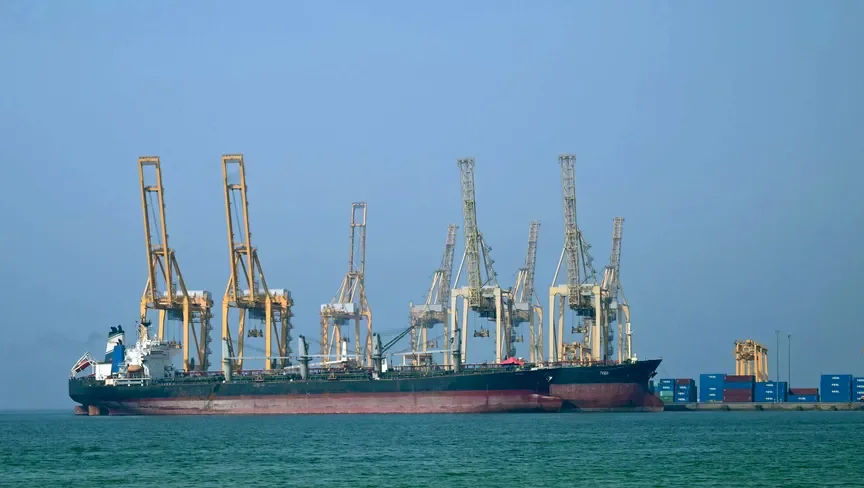
The Crisis in the Strait of Hormuz Hits Global Trade, Not Just Oil
SadaNews - Ships transiting the Strait of Hormuz account for approximately 4.5% of total annual global trade. The war between the United States and Iran has caused a significant decline in transit traffic, reaching extremely low levels, while the Trump administration seeks solutions.
Oil tankers are the most affected by this situation. However, aside from the energy sector, our analysis indicates that shipments of metals and fertilizers are likely to be disrupted. We anticipate that Gulf countries and African nations will bear the brunt of the damage inflicted on non-oil trade.
Additionally, aluminum and cement importers in India, as well as fertilizer importers in Australia and South Africa, face risks, along with exporters of precious metals in India, Turkey, and South Africa in particular.
Countries with ports along the Arabian Gulf, other Middle Eastern nations that depend on their neighbors' ports, those using Gulf ports as transit points for their goods, and countries trading with Gulf states are all directly affected by the closure of the Strait of Hormuz.
Threat to International Energy Supplies
About one-fifth of total oil and liquefied natural gas passes through the strait, and if traffic is disrupted, these shipments may not reach global markets.
The risks to non-oil sectors may be less severe. Nevertheless, our estimates indicate that disruptions could affect around 2.4% of non-oil trade.
Gulf Exports at Risk
Gulf Arab countries are significant exporters of fertilizers, precious metals, aluminum, and cement, placing between 4% to 7% of global imports of these products from outside the Gulf at risk.
Apart from supply shocks, shipping disruptions mean that many economies will struggle to sell their products to the other side of the Strait of Hormuz.
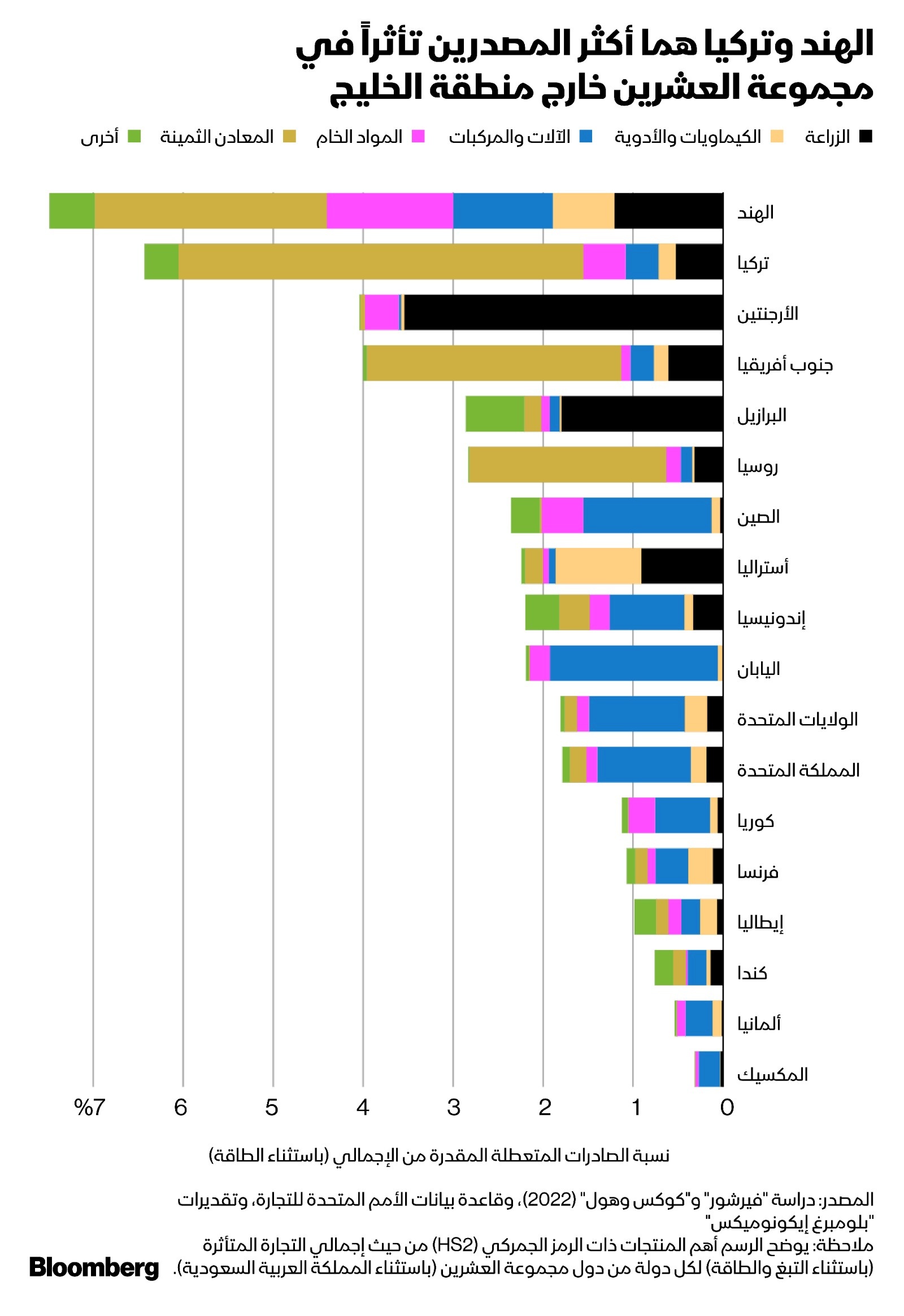
Among the G20 countries outside the Gulf, India, Turkey, South Africa, and Argentina face risks threatening at least 4% of their non-oil exports. The situation remains volatile, and the extent of the impact will depend on the duration of the actual closure of the Strait of Hormuz.
Some disrupted trade may be redirected to alternative routes, reflecting on shipping prices if this leads to congestion in maritime corridors. Additionally, the possibility of renewed Houthi attacks in the Red Sea could exacerbate shipping disruptions, alongside the impact of continued airspace closures on air freight operations.
Countries Most Exposed to Risks Due to the War
Traditional trade data do not show the routes goods take while moving between countries, complicating the process of measuring the impact of such disruptions.
To measure the impact of closing the Strait of Hormuz on non-energy-related trade, we rely on academic research estimating the share of global trade passing through each port in the world. We assume the closure of all ports within the Arabian Gulf, except for intra-Gulf trade that does not require crossing the Strait of Hormuz.
This includes all ports in Qatar, Kuwait, Bahrain, Iraq, nearly all ports in the UAE, and some ports in Saudi Arabia and Iran.
The analysis revealed that closing the strait would affect around 2.4% of global non-oil trade flows. Adding the significant 20% impact on oil and LNG trade, we estimate that disruptions in the Strait of Hormuz could impede about 4.5% of global trade, preventing it from reaching its destination.
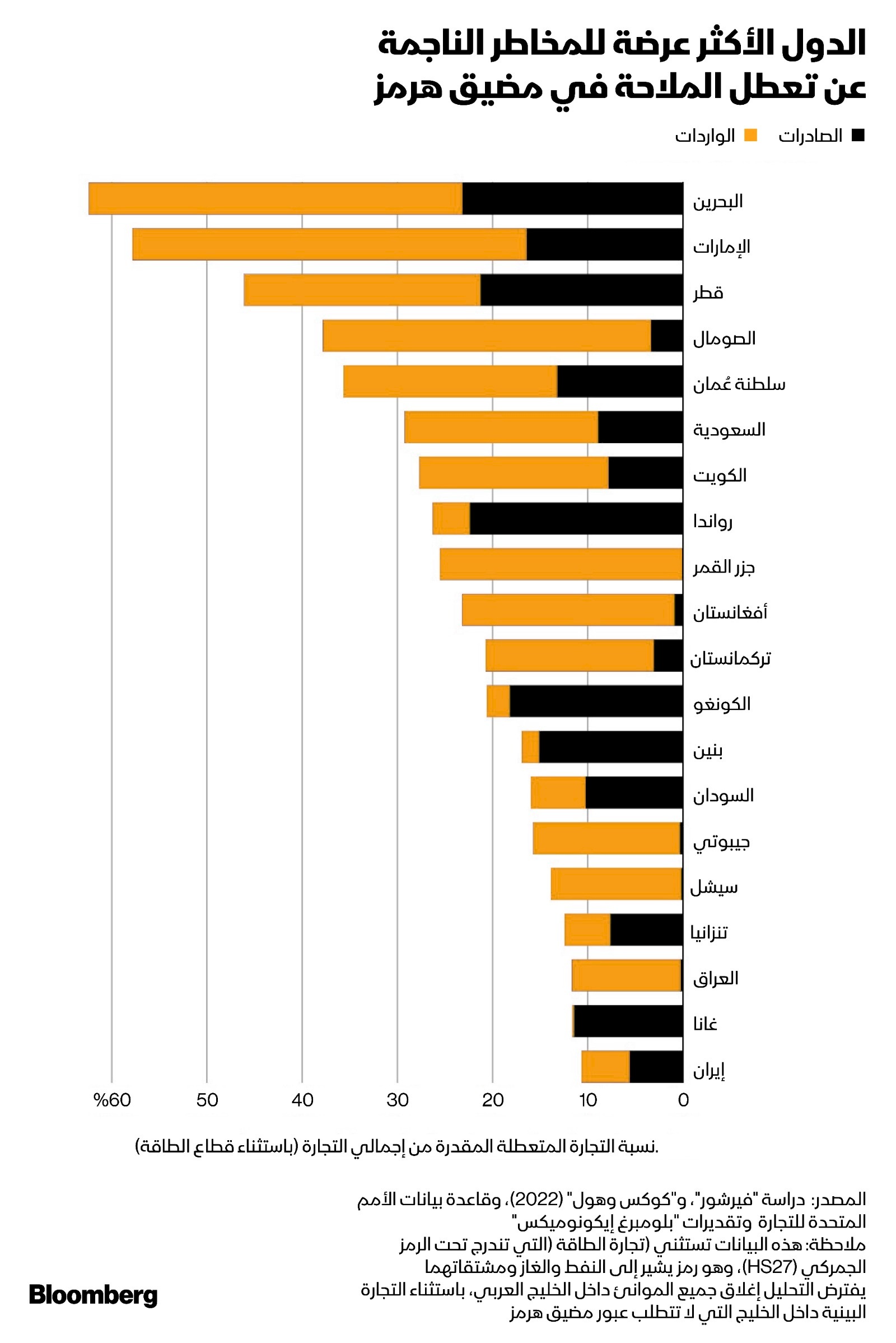
As expected, the economies facing the highest risks in non-oil trade are those in the Gulf Arab region; Bahrain and the UAE face disruptions in more than half of their trade, largely due to the impact on imports.
Many African countries are also affected by the crisis, particularly those located in East Africa that rely on Gulf Arab ports as transit points for their goods headed to Asia.
Oman also faces severe disruptions, as its trade depends on dealings with Gulf countries while also relying on the impacted ports for its trade with the rest of the world.
Importers Most Affected by the Halt of Gulf Products
The greatest impact of shipping disruptions falls on energy markets, with about one-fifth of global oil and LNG supplies transiting through the Strait of Hormuz. Prices have already risen, and global trade flows for these two commodities are likely to reroute.
Asian countries like China, India, South Korea, and Japan are the largest buyers of Gulf oil and are most susceptible to effects in the short term. Away from the energy sector, our estimates highlight significant other Gulf exports.
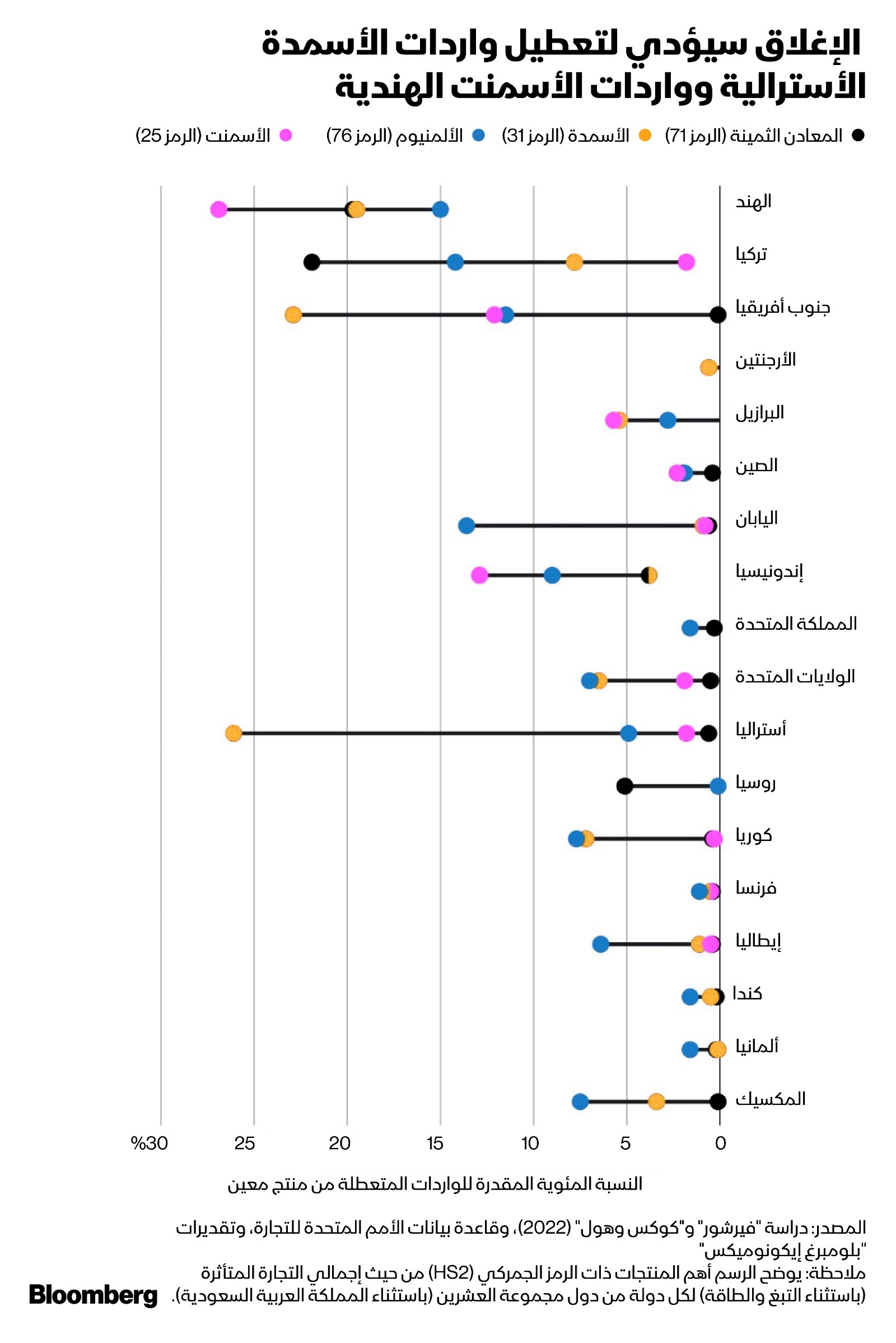
We estimate that nearly 7% of global fertilizer exports, about 6% of precious metals, 5.3% of aluminum and its products, and 4.4% of cement and other non-metallic minerals were shipped from Gulf ports and are at risk of disruption in the strait.
This might affect about a quarter of India’s cement imports, although New Delhi's reliance on cement imports for domestic use is limited.
Additionally, about one-fifth of fertilizer imports in India and South Africa, as well as precious metals imports in Turkey and India, face risks of disruption.
Increased reliance on air freight for high-value exports such as precious metals may mitigate some of these risks, but disruptions to air freight associated with the war could also lead to negative effects.
Exporters Most Affected
Losing access to markets on the other side of the Strait of Hormuz will also present demand risks for exporters worldwide.
Among G20 countries, Saudi Arabia’s oil exports through the strait place the Kingdom in a position as the most directly affected country.
Considering non-oil commodities exported from outside the Gulf, around 7.5% of total Indian non-oil exports could be disrupted under this scenario.
About one-third of that value comprises precious metals, including gold and diamonds, a significant portion of which is exported to the UAE.
For Turkey, which faces a 6% share of its total exports at risk of disruption, most affected trade also comprises precious metals sent to the UAE.
Potential damages could also affect agricultural exports from Argentina, although part of this is due to using Gulf ports affected as transit points for products headed to India, as the option to change shipping routes is more feasible.
 Follow the latest Sada News via Google News
Citibank: Fed Moves to Keep Rates Steady Despite Oil Surge

Oil Prices Drop Below $90 as Supply Risks Diminish

Gold prices reach near $4,090 per ounce

Oil Drop Eases Inflation Concerns

Prime Minister: Australia Will Raise Its Concerns About Tariffs with Trump

After raising $7.7 billion for Israel since the Gaza war.. "Luxembourg closes the window o...
The Approach of Oil Prices to $100 Puts the "Fed" and Its Peers to the Test
