

Lebanon: Extension of the Parliament's Term for Two Years and Postponement of Legislative Elections
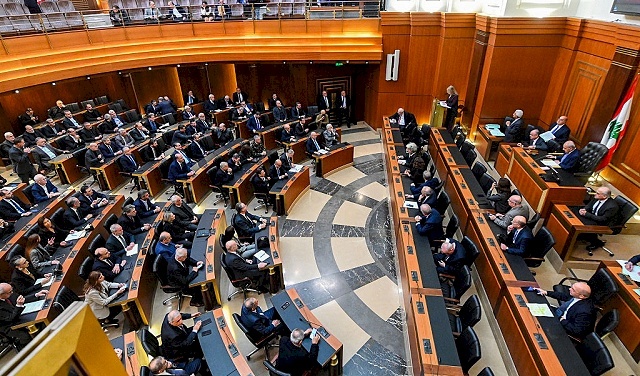
SadaNews - The Lebanese parliament decided today, Monday, to postpone the legislative elections scheduled for next May for two years, amidst the ongoing war between Hezbollah and Israel.
The parliament's presidency stated in a statement that "the General Assembly of the Parliament approved the extension of the Parliament's term for two years by a majority of 76 votes, against 41, with four deputies abstaining from voting."
The session was held at the parliament's headquarters in downtown Beirut, attended by several deputies from Hezbollah, including the head of the bloc, Mohammad Raad, while Israeli planes were launching strikes on the party's stronghold in southern Beirut, targeting sites belonging to the "Al-Qard Al-Hasan" foundation affiliated with the party.
In this context, Lebanese Prime Minister Nawaf Salam held a ministerial session to follow up on the political developments and the response plan to the needs of displacement and relief.
Lebanese President Joseph Aoun confirmed during his meeting with the ambassadors of Denmark, Sweden, and Norway that "the ongoing Israeli attacks on the southern suburbs, the south, and the Bekaa will not achieve what Israel aims for." He pointed out that "Lebanon's position is firm and was stated in the Council of Ministers' decision last week regarding Lebanon's complete and final commitment to the provisions of the ceasefire declaration agreed upon in November 2024, which preserves peace and stability, in return for obliging Israel to stop its attacks on all Lebanese territories."
Aoun said he informed major countries and the United Nations of Lebanon's full readiness to resume negotiations and discuss the necessary security points to stop the dangerous Israeli escalation. He added that "the government's decision regarding controlling weapons will be implemented according to the plan set by the army leadership when security conditions permit, and thus, any aggression against the army or its commander in these delicate and dangerous circumstances is a rejected, strange, and suspicious position because it supports attempts to undermine state authority and questions its capabilities while harmonizing somehow with the goals of those working to drag Lebanon into the ongoing regional war, overriding the will of the majority of Lebanese who are tired of the war and its repercussions, and cling to the state's sole right to make the decision of war and peace."
The three ambassadors confirmed their "countries' solidarity with Lebanon during this difficult phase and their readiness to provide the necessary assistance to the Lebanese displaced from their villages."
 Follow the latest Sada News via Google News
Macron: France Requested EU Assistance to Deal with Fires

Ukrainian Drones Target St. Petersburg Area in Russia

Man Stabs Two People in New York While Shouting 'Allahu Akbar'

Tehran Responds: Trump Threatens to Use Iranian Funds to Compensate Damaged Ships

American Escalation Using B-1 Bomber Against Targets of the Iranian Revolutionary Guard

Iranian Revolutionary Guard Targets Al-Adairi Camp and Ali Al-Salem Air Base in Kuwait

Massive Fire in Spain Forces Residents of 34 Villages to Evacuate
