

Growth or Fighting Inflation.. The War on Iran Disrupts Central Bank Calculations
SadaNews - A Reuters report indicated that the Israeli-American war on Iran has led to a radical shift in expectations for central banks globally, as the massive supply shock has forced these banks into a difficult trade-off between supporting growth and combating inflation.
Reuters added that reducing interest rates among central banks in emerging Asian economies has become a risky bet, not only due to the added pressure on prices from rising fuel costs but also because of the risks of capital outflows due to deteriorating trade conditions with the United States.
The agency quoted sources from the Reserve Bank of India as saying that it expects to focus more on supporting growth by keeping interest rates low, but the rush towards the dollar as a safe haven, increasing due to the war between the United States and Iran, may compel it to intensify its interventions to support its weak currency.
Toru Nishihama, Chief Emerging Markets Analyst at Dai-ichi Life Research Institute in Tokyo, stated that Thailand and the Philippines may have to reverse their accommodative monetary stance, despite the impact of rising fuel costs on their economies.
Nishihama added, "Many central banks will face a difficult decision as they are pressured by both markets and governments alike."
He continued, "With no clear end to the conflict in sight, the risk of stagflation is increasing day by day."
Asian stock markets declined, while the dollar strengthened on Monday as oil prices surpassed $110 a barrel, raising concerns about the implications of a prolonged war in the Middle East on global energy supplies and inflation, which may force central banks to raise interest rates.
According to the Reuters report, the trade-off between supporting growth and combating inflation appears particularly acute for economies reliant on manufacturing industries such as South Korea and Japan, given their dependence on global trade, stable markets, and low raw material costs—all factors threatened by the escalation of war in the Middle East.
Kim Jin-wook, an analyst at Citigroup, mentioned that the Bank of Korea – which kept interest rates steady in February – may lean towards tightening if inflation remains one percentage point above its target.
Kim added, "Currently, we still exclude that the Bank of Korea will raise interest rates in response to the unexpected increase in oil prices," as government measures to curb fuel prices mitigate the impact of oil price movements on inflation."
Central Banks in Advanced Countries
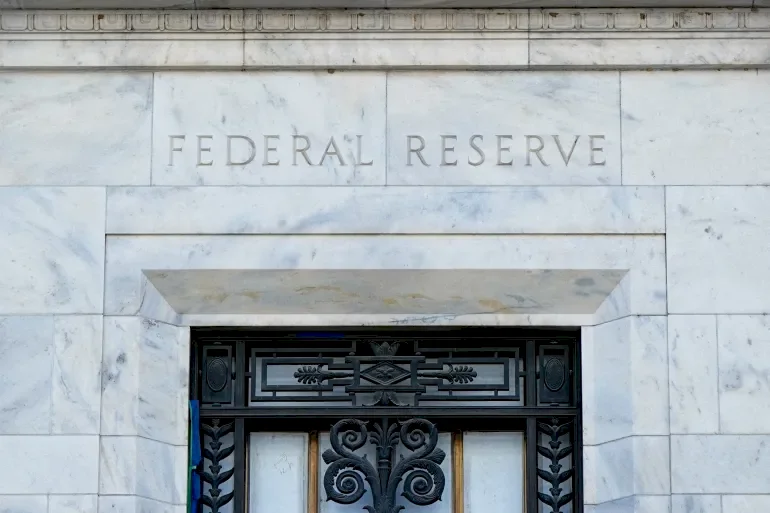
Central banks in advanced markets, such as the Federal Reserve (the US central bank), also face a challenging task of balancing growth and inflation amid increasing political pressures.
"Think of the Unimaginable"
This dilemma is exacerbated for the Bank of Japan. Nomura Research Institute states that if crude oil prices remain at $110 for a year, it could lead to a 0.39 percentage point drop in growth, which would be a significant blow to an economy facing potential weak growth between 0.5% and 1%.
However, unlike in the past, when it could stop raising interest rates, the Bank of Japan now has less leeway to overlook price pressures with inflation exceeding its 2% target for nearly four years.
Analysts say this means the Bank of Japan will have no choice but to reiterate the need to continue raising interest rates while remaining silent about the timing of such a move, which could anger the government that opposes rising borrowing costs.
IMF Managing Director Kristalina Georgieva warned on Monday that every 10% increase in oil prices, if sustained for most of the year, would be met with a 40 basis points rise in global inflation.
During a seminar in Tokyo, she stated, "We are witnessing a new test of the economy’s ability to withstand the new conflict in the Middle East."
She added, "My advice to policymakers in this new global climate is to think of what is unimaginable and prepare for it."
Source: Reuters
 Follow the latest Sada News via Google News
London Stock Exchange Enters the Era of 24/7 Trading

Shamaran Petroleum: Suspension of Oil Production in Duhok Fields in the Kurdistan Region o...

Dollar Steadies Near One-Week High Amid War Developments

Trump Imposes Tariffs on Canadian Imports... Ottawa Vows to Respond

Oil Prices Drop After Reports of Mediation Efforts Between the U.S. and Iran

Gold Price Rises Supported by Increased Buying Amid Lower Prices

Due to "Hazardous and Counterfeit Products".. Europe Fines "AliExpress" $627 Million
