

Report: Tel Aviv Stock Exchange Shares Decline Despite High Profits... Questions Raised About Overvaluation
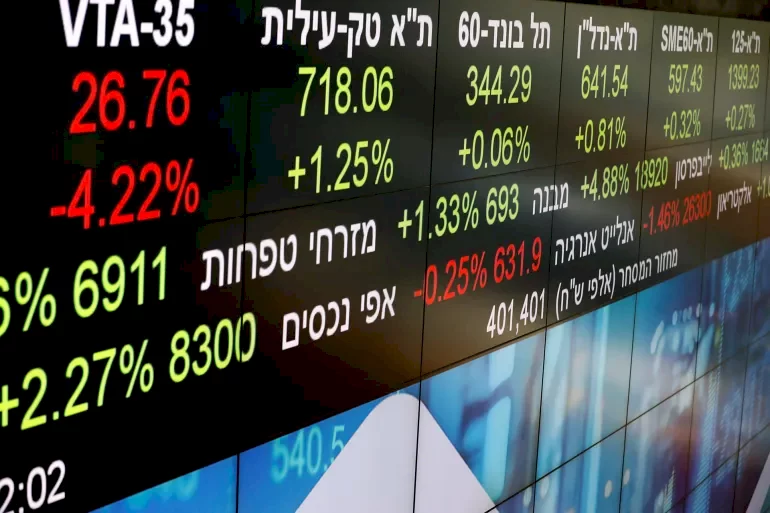
SadaNews - The Tel Aviv Stock Exchange shares experienced a notable decline of about 6% during the shortened trading session on Friday, despite the release of an annual report showing strong growth in revenues and profits. This drop follows an exceptional rise in the stock over the past three years, raising questions among investors about whether the current market value of the exchange is justified.
According to the Hebrew newspaper Calcalist and translated by Sada's Economy, the Tel Aviv Stock Exchange shares witnessed a significant jump of about 1000% over the past three years, and more than 2000% since its public offering in the summer of 2019, bringing the market value of the exchange to about 15 billion shekels.
Despite the positive financial results showing a sharp increase in profits, the decline in the stock has reignited the discussion among investors about the exchange's high valuation, especially since the price-to-earnings (P/E) ratio reached about 83, down from nearly 100 before the annual report was published, which is considered high and approaches the P/E ratios of advanced technology companies and giants linked to the artificial intelligence sector, as translated by Sada's Economy.
In comparison with global exchanges, the P/E ratio of the Tel Aviv Stock Exchange is significantly higher than its counterparts; the P/E ratio in the New York and Chicago exchanges is about 28, while in the London exchange, it is around 47, and in the German exchange, it is about 22.
The average P/E ratio of the TA-125 index, which is the main index in the market, is about 17. To reach this level, the exchange would either have to increase its profits more than threefold in a short period to reach about 630 million shekels annually, or its market value would have to drop to around 4.3 billion shekels.
Analysts believe that the high valuation reflects investors' expectations for significant growth in the exchange’s profits in the coming years, driven by increased trading volumes and the entry of new investors into the market, in addition to the expansion of investment funds and the rising number of public offerings of companies, as translated by Sada's Economy.
Notable Increase in Activity
Data from 2025 indicates a clear increase in trading activity within the exchange, with the average daily trading volume reaching about 3.4 billion shekels, compared to about 2.2 billion shekels in 2024. The average daily trading in shares during the last three months of the year approached 4 billion shekels.
Trading and clearing fees are the main source of the exchange's revenues. In the last quarter of 2025, revenues from these fees amounted to about 58 million shekels, compared to 43 million shekels in the same period of 2024, reflecting an increase of almost 35%.
Year on year, the exchange’s revenues rose to 563.5 million shekels in 2025, compared to 437.9 million shekels in 2024, an increase of about 28%. Annual net profit also rose to 180.1 million shekels compared to 101.3 million shekels in the previous year, an increase of nearly 80%, according to Sada News translation.
Doubts About Current Valuation
Despite these results, some investment managers question whether the current market value of the exchange is justified. The newspaper quoted one investment manager from a financial institution stating that the high valuation partially reflects a large influx of funds into the market, noting that some stocks are now trading according to "media hype" more than their actual economic value.
Conversely, others believe that the increased trading volume and the entry of new companies into the market may support continued growth in the exchange's profits in the coming years.
The CEO of the exchange, Itay Ben Ze'ev, is among the most significant beneficiaries of the company's rising value, owning about 3.7% of its shares, currently valued at approximately 590 million shekels, while his employment cost in 2025 was about 5.4 million shekels.
 Follow the latest Sada News via Google News
Soaring Oil Prices Burn the Pockets of the Palestinian Citizen "The Poor"

Millions of Dollars in Losses.. "SadaNews" Reveals Shocking Figures for Traders from Pales...

The Problem of Shekel Overcrowding Worsens.. Fuel Station Owners Threatened with Closure o...

The Palestinian Economy at a Crossroads: 4 Files Awaiting Resolution

Watermelon Season in Danger: Virus Affects About 20% of Agricultural Areas in Israel

How Does Israel Strangle the Economy of the West Bank?

Palestinian Deposit Insurance Corporation Board Holds Its Third Meeting, Confirms Strength...
