

How Does the Iranian Conflict Disrupt Global Trade?
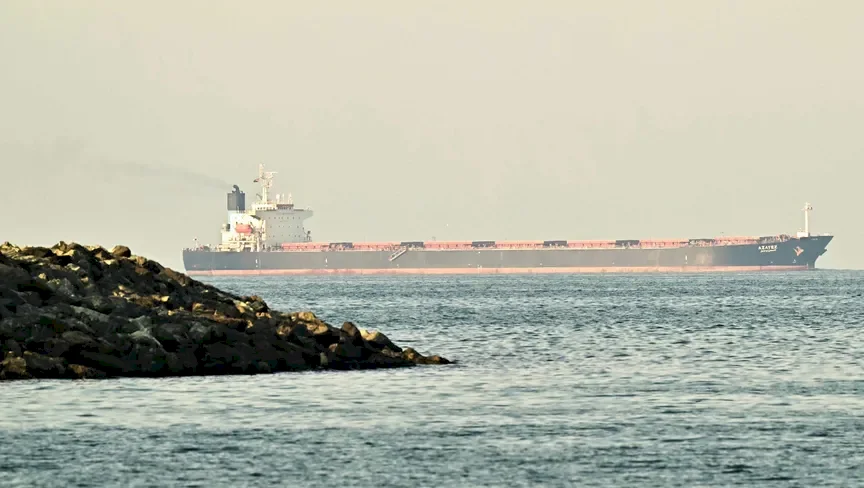
SadaNews - On the evening of March 1, an oil tanker shut off its transponder about 25 kilometers (15 miles) east of the Emirate of Sharjah before disappearing amid heavy signal interference over the Strait of Hormuz, the narrow waterway connecting the Arabian Gulf to the open ocean. After ten hours, its device started broadcasting again directly north of Abu Dhabi, as it continued its voyage towards Bahrain.
Since the Saturday before last, when airstrikes carried out by the United States and Israel against Iran began, only a limited number of vessels have managed to cross the strait. Tehran responded by launching drones and missiles that targeted sites across the Gulf.
An analysis prepared by Bloomberg of shipping data from March 1 to 6 indicates that commercial shipping traffic through the Strait of Hormuz has decreased by more than 85% compared to the same period last year; it appears that about one-fifth of these trips occurred under the automatic identification system being turned off.
A week after the outbreak of the conflict, its repercussions began to clearly manifest on global trade, with acute disruptions in maritime and air shipping that shook markets and contributed to rising prices for gasoline and fertilizers. These disruptions are expected to worsen as the effects of the attacks extend and some of the world’s busiest logistics centers within the international trade network become incapacitated.
The UAE and Qatar represent two major hubs in the shipping and air transport network, handling massive flows of goods reshipped between Asia, Europe, and Africa through ports, free zones, and warehouse complexes surrounding airports. Near Dubai International Airport, which typically receives more than 1,000 flights daily, is the Global Humanitarian Services City, a free zone dedicated to international relief supplies, along with housing centers belonging to the World Health Organization and other agencies.
Disruption of Air Freight
Sarah Schifeling, an assistant professor of Supply Chain Management and Social Responsibility at Hanken School of Economics in Finland, stated: "The situation is exceptional because it targets a vital maritime corridor while affecting a multimodal transport center. The problem with the hub-and-spoke system is that any disruption to the hub immediately reflects on the entire network."
By Wednesday, more than 27,000 scheduled flights across the region had been canceled, leaving travelers and goods stranded, although some airlines, including Emirates Airline, had begun to resume operations.
A large portion of air freight occurs in designated spaces in passenger aircraft. Although its total volume is significantly less than maritime shipping, planes typically transport high-value and perishable goods that cannot afford delays, such as food, flowers, and medicines, as well as other time-sensitive products. The collapse of air traffic during the COVID-19 pandemic reduced available capacity, leading to significant spikes in air freight costs.
Rising Energy Prices
Energy prices have emerged as the most affected by the repercussions of the Iranian conflict, with about 20% of the world’s supplies of oil and liquefied natural gas passing through the Strait of Hormuz. Drone and missile strikes have also targeted production facilities across the region.
In light of this situation, energy exporters are seeking alternative routes to export crude and gas away from the Gulf, while some have halted operations at refineries due to overflowing storage facilities.
Brent crude hit $90 per barrel for the first time in two years on March 6, while liquefied natural gas prices surpassed their highest levels in three years during the week. Should the conflict persist, and as U.S. President Donald Trump declared on Friday, he would accept nothing less than "unconditional surrender," many analysts predict prices could exceed $100.
Fears of the implications of rising energy prices on the global economy have unsettled markets, pushing fuel prices in the United States upward, prompting the administration to explore ways to address domestic repercussions.
Escalating Fertilizer Risks
Rising energy prices will translate into greater burdens on consumers and industrial sectors, especially agriculture. Nearly a third of global fertilizer trade crosses the Strait of Hormuz, while natural gas is a key component in producing the inputs that farmers rely on worldwide.
In this context, fertilizer producers worldwide have scaled back their production capacities, and prices have already risen. Farmers have rushed to secure their needs before the main planting seasons commence.
If the conflict continues, it could have dire repercussions, compelling producers to cut back on fertilizer usage, which threatens to decrease crop yields. This impact will be felt most acutely in poorer nations, where supply shortages could turn into humanitarian crises, according to Tim Benton, a professor at the University of Leeds in the UK and food security expert.
Benton explained that if supply shortages lead farmers to avoid using fertilizers before the next planting season, "we may find ourselves facing a significant decline in crop yields during next year’s southern growing season in six months."
The War's Implications Are Deep
Analysts for Bloomberg reported that the implications of the war will remain deep and far-reaching regardless of its duration, with consequences that are difficult to predict. Rising energy costs in Asia, the primary destination for Gulf energy exports, could later reflect on consumer goods prices in Europe, while shipping delays could increase storage costs or disrupt manufacturing operations.
Schifeling added: "Your company may not be directly impacted, but the supplier supplying your supplier may be affected. Disruptions will ripple globally because supply chains are inherently global."
 Follow the latest Sada News via Google News
The World Bank Warns: "The Worst-Case Scenario" for Global Growth is Approaching

Trump Prepares to Impose New Tariffs on Dozens of Economies

Gold Surpasses $4,100 as Selling Pressure Eases

Oil Rises for the Fourth Day as Supply Risks Escalate

An Additional $8 Billion.. A New Account from the Pentagon on the Cost of the War with Ira...

London Stock Exchange Enters the Era of 24/7 Trading

Shamaran Petroleum: Suspension of Oil Production in Duhok Fields in the Kurdistan Region o...
