

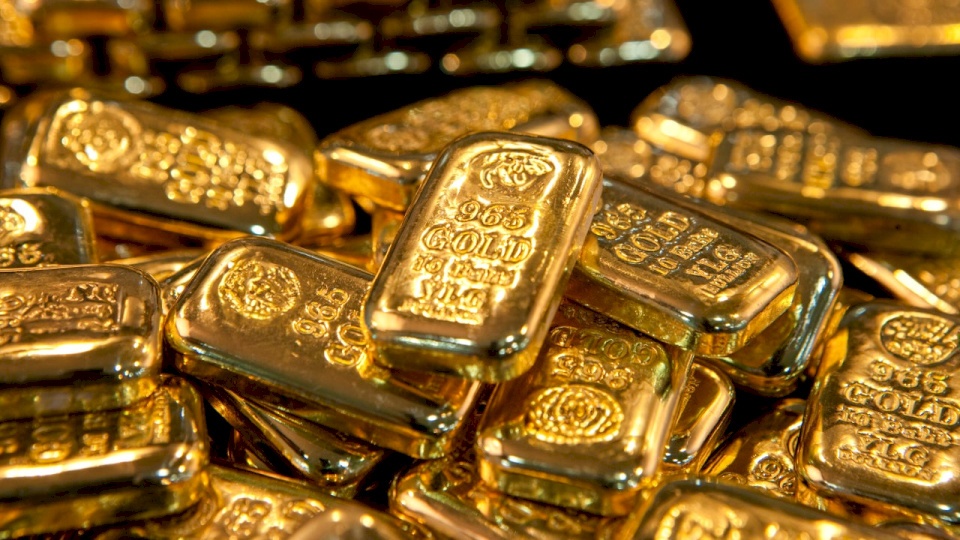
Gold Prices Continue to Decline Amid Inflation Fears Due to Iran War
SadaNews - The price of gold has sharply decreased, influenced by the rise of the US dollar and inflation risks, as oil prices approached 120 dollars per barrel, amidst the ongoing war in the Middle East entering its second week.
Gold prices dropped by as much as 3% to around 5015 dollars per ounce, after recording its first weekly decline in over a month, before trimming some of its losses.
Major producers have cut oil production due to the US-Israeli war against Iran, which continues with no signs of resolution, while an index measuring the strength of the dollar rose by 0.7%.
Rising Oil Pressures Gold Prices
Gold faced pressure as crude oil prices rose, reinforcing inflation concerns in the United States and increasing the likelihood that the Federal Reserve will keep interest rates unchanged for a longer period, or even raise them.
High borrowing costs, along with the strength of the dollar, are typically negative factors for precious metals. Gold has also been used as a source of liquidity during the deep downturn in global stocks.
Despite the volatile trading and the halt of upward momentum, gold is still up about a fifth since the beginning of the year. The disruptions caused by US President Donald Trump in global trade and geopolitical issues, along with threats to the independence of the Federal Reserve, have supported safe-haven assets.
Increased purchases by central banks have also supported this trend, as the People's Bank of China bought more gold in February, continuing a streak of purchases for the sixteenth consecutive month.
The Iran War Enters Its Tenth Day
Ed Meir, a metals analyst at Marex, wrote in a note issued on March 7 that a relatively quick end to the conflict could lead to a decline in the dollar and a rise in gold, while an extended war could boost the US currency and Treasury yields with expectations of rising inflation, which in turn would reduce the likelihood of interest rate cuts.
He added: "There is a time to buy, a time to sell, and a time to simply wait," noting that "the latter option is the preferred course for now."
The war in the Middle East has entered its tenth day. Over the weekend, Tehran elected a new leader and continued its attacks in the Gulf region, while Israel bombed fuel depots in the Iranian capital and threatened the country's electricity grid.
In addition, attacks on energy infrastructure and the disruption of shipping traffic through the Strait of Hormuz, which typically handles one-fifth of the world's oil, have pushed oil and natural gas prices higher.
Gold fell in spot transactions by 1.6% to 5091.06 dollars per ounce at 11:59 AM in Singapore.
Silver declined by 1.7% to 83.11 dollars, platinum fell 2.2%, while palladium lost 0.8%. The Bloomberg Dollar Spot Index rose by 0.6% after adding 1.3% last week.
 Follow the latest Sada News via Google News
The World Bank Warns: "The Worst-Case Scenario" for Global Growth is Approaching

Trump Prepares to Impose New Tariffs on Dozens of Economies

Gold Surpasses $4,100 as Selling Pressure Eases

Oil Rises for the Fourth Day as Supply Risks Escalate

An Additional $8 Billion.. A New Account from the Pentagon on the Cost of the War with Ira...

London Stock Exchange Enters the Era of 24/7 Trading

Shamaran Petroleum: Suspension of Oil Production in Duhok Fields in the Kurdistan Region o...
