

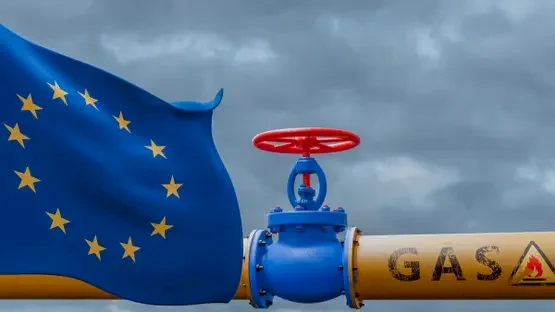
European Gas Jumps 30% as Supplies Disrupt
SadaNews - Gas prices in Europe rose by nearly 30% on Monday amid the war in the Middle East, which has shaken energy markets and raised fears of prolonged supply disruptions.
The price of the Dutch TTF natural gas contract, which is a benchmark in Europe, increased to 69.50 euros before slipping slightly.
Despite the increase, prices are still lower than the levels reached in 2022 when the Ukraine war broke out.
This rise follows an increase in oil prices to over $110 a barrel, as major producers in the Middle East cut production further, and the Strait of Hormuz remains effectively closed. Natural gas futures in the United States have also surged to their highest level in a month.
Day Ten of the Conflict: No Signs of Easing
The conflict has now entered its tenth day with no signs of abating, increasing uncertainty in energy markets and amplifying inflationary pressures.
Specifically for gas markets, Europe is in a vulnerable position, emerging from winter with empty storage. This means it will need to purchase more LNG shipments this summer to refill its storage, competing with buyers in Asia for a limited stock of supplies if Middle Eastern flows are unable to reach global markets.
Florence Schmitt, energy strategy expert at Rabobank, told Bloomberg News: "The market is slowly beginning to absorb the reality of prolonged disruptions in supply across the entire energy value chain." She added: "We see these supply disruptions potentially lasting for about three months."
Prices remain significantly lower than the record levels registered during the energy crisis, currently at around 64 euros per MWh, compared to a historical peak exceeding 300 euros per MWh.
However, the impact of the conflict may alter global gas market dynamics. A halt in LNG production in Qatar, one of the world's largest exporters, could eliminate most of the supply surplus predicted by some analysts this year, according to a note issued by researchers at Morgan Stanley, including Devin McDermott. They pointed out that any extension of the LNG production disruption in Qatar for more than a month "would quickly lead to a market deficit."
The Ras Laffan LNG project in Qatar, the largest in the world, seems largely intact following its unprecedented shutdown last week.
However, resuming operations and returning supplies may take weeks or even months, according to Qatar's energy minister in an interview with the Financial Times.
QatarEnergy had declared force majeure for affected customers last week after halting LNG production and related products, impacting European buyers such as Italy's Edison and Poland's Orlen.
For their part, analysts at Goldman Sachs raised their price forecasts for gas in Europe for the second quarter to 63 euros per MWh, compared to 45 euros previously, based on the expectation that disruptions in Qatari exports will continue. This estimate assumes that Qatari LNG shipments will remain at zero until late March, for longer than initially expected, followed by a gradual recovery in supplies through most of April.
Dutch futures contracts for the nearest expiration - the European gas price benchmark - rose by 17% to 62.56 euros per MWh by 8:31 AM in Amsterdam.
 Follow the latest Sada News via Google News
London Stock Exchange Enters the Era of 24/7 Trading

Shamaran Petroleum: Suspension of Oil Production in Duhok Fields in the Kurdistan Region o...

Dollar Steadies Near One-Week High Amid War Developments

Trump Imposes Tariffs on Canadian Imports... Ottawa Vows to Respond

Oil Prices Drop After Reports of Mediation Efforts Between the U.S. and Iran

Gold Price Rises Supported by Increased Buying Amid Lower Prices

Due to "Hazardous and Counterfeit Products".. Europe Fines "AliExpress" $627 Million
