

Decrease in Weapon Stockpiles... How Does It Affect the Course of the Iranian War?
SadaNews - In modern wars, battles are not only decided by military strategies and combat capabilities, but logistical resources and weapon stockpiles also play a crucial role in determining the course and duration of the conflict. The longer the confrontation lasts, the question of the warring sides' ability to maintain the pace of military operations and provide munitions and equipment becomes a central issue that can directly affect the outcomes of the war.
In this context, US President Donald Trump revealed that his country possesses "almost unlimited supplies" of major weapons. In contrast, the Iranian Ministry of Defense asserts that it has "the capability to resist the enemy" for longer than the United States has planned.
However, weapon stockpiles and supplies alone cannot determine the outcome of the conflict; modern history shows that superiority in equipment does not necessarily guarantee victory, as seen in the war between Russia and Ukraine, where Moscow had a clear advantage in numbers and equipment, yet the conflict continued for a long time without a swift resolution. Nevertheless, military resources remain an important factor in sustaining combat operations, according to a report from the British Broadcasting Corporation (BBC).
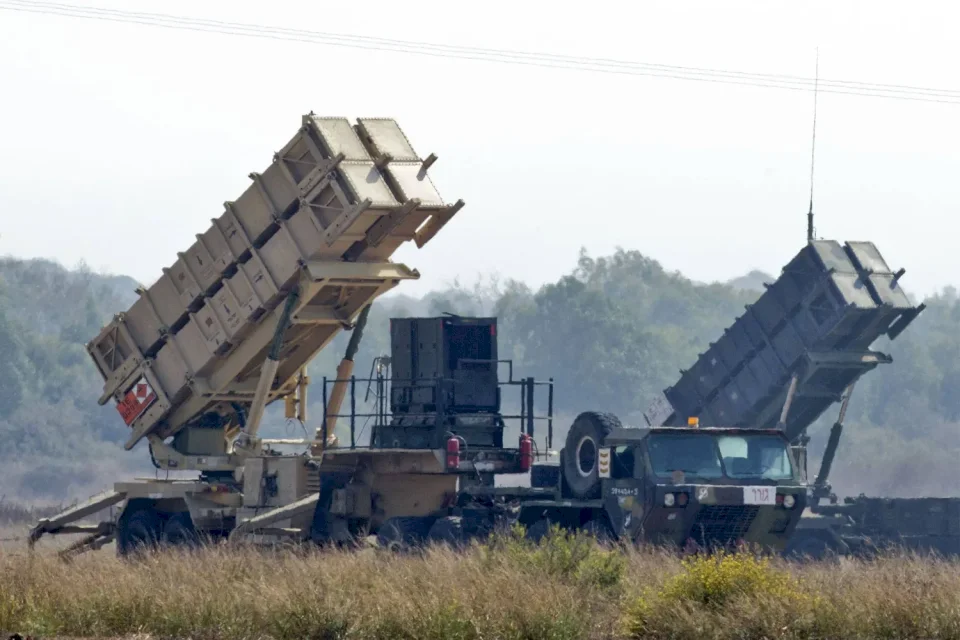
Since the onset of the current Iranian war, the pace of military operations has been extremely high, meaning both sides are consuming weapons and munitions faster than they can produce them.
The Institute for National Security Studies (INSS) in Tel Aviv estimates that the United States and Israel have already conducted over two thousand military strikes, using several types of munitions in each.
In contrast, the institute points out that Iran has launched 571 missiles and 1,391 drones, many of which were intercepted. For both sides, maintaining this high level of combat operations will become increasingly difficult as the war prolongs, according to the BBC.
The Iranian Situation
Western officials say they have noticed a decrease in the number of missiles launched by Iran; the rate has dropped from hundreds of missiles on the first day of the war to only dozens now.
Before the outbreak of the war, it was estimated that Iran had a stockpile of over two thousand short-range ballistic missiles. However, armies do not usually publish accurate figures about the number of weapons they possess; they keep this information confidential to avoid revealing their true capabilities to adversaries.
In this context, the senior US military commander, General Dan Keen, stated yesterday (Wednesday) that Iran's ballistic missile launches have decreased by 86 percent compared to the first day of fighting on Saturday. The US Central Command (CENTCOM) also notes a 23 percent drop in the last twenty-four hours alone.
It is believed that Iran produced tens of thousands of its one-way attack drones, "Shahid," in large quantities before the outbreak of the war. This technology was exported to Russia, which effectively uses its own version of "Shahid" destructively in Ukraine. Even the United States has copied this design.
However, Keen stated that launches of Iranian drones have also decreased by 73 percent since the first day of the conflict, indicating that Iran may struggle to maintain a high operational tempo for an extended period.
Nevertheless, it cannot be ruled out that this sharp decline is a deliberate attempt to conserve military stockpiles. However, continued production will become more challenging over time.
Currently, US and Israeli aircraft enjoy a clear air superiority over Iran.
The US Central Command indicates that the next phase of the war focuses on pursuing Iranian missile and drone launch platforms, in addition to targeting weapon stockpiles and destroying the factories that produce them.
Although air superiority may facilitate the United States and Israel in weakening Iran's combat capabilities, destroying all of its weapon stockpiles will remain an extremely difficult task, according to a BBC report.
The United States... The Strongest Army
The United States still possesses the strongest military in the world, with its stockpile of conventional weapons surpassing that of any other country.
However, the US military relies heavily on expensive precision-guided weapons, which are typically produced in limited quantities. Reports indicate that Trump has called for a meeting with defense contractors later this week to pressure them to accelerate production, which may suggest that the United States' own resources could come under strain if the conflict continues for a long time.
Some of this pressure has eased recently, as the US has enjoyed relative freedom in conducting short-range strikes.
Keen clarified that Washington has already foregone the use of "long-range weapons" at this stage of operations, which are more expensive and sophisticated, such as "Tomahawk cruise missiles."
Instead, the US Air Force is now using "alternative" lower-cost munitions like JDAM bombs that can be dropped directly onto targets.
Mark Cancian, a former US Marine Corps colonel working at the Center for Strategic and International Studies (CSIS) in Washington, argues that after the initial strike from a distance, "the United States can now use less expensive missiles and bombs."
He adds that Washington can continue this level of fighting "for an almost indefinite period." However, as the war drags on, the list of potential military targets shrinks, which usually leads to a gradual slowdown in the pace of operations.
The military strikes Iran has faced from the United States and Israel represent a significant and impactful development, not just for the reality in Tehran, but their repercussions could manifest in various aspects across the region.
In recent days, the United States and Israel have carried out a series of powerful strikes that resulted in the deaths of prominent leaders in Iran, including Supreme Leader Ali Khamenei. In response, Iran launched a series of missiles and drones towards Israel, but many of them reached several Arab countries, causing fires and creating casualties amidst a wave of condemnations against the Iranian regime.
 Follow the latest Sada News via Google News
High-level sources reveal to SadaNews: Washington seeks to hold a Gaza Reconstruction Conf...

Will the election of Khalil al-Hayya change Hamas's approach and path?!

Iraqji Reveals Details of the Attack on the Iranian Supreme Leader's Headquarters

صراع على إرث خامنئي وسط غياب مجتبى.. والمتشددون يتهمون قادة إيران بـ«الانقلاب»

The European Union Reiterates Its Call for Israel to Refrain from Expanding Settlements in...

"Mamdani Berlin".. The German Left Bets on a Politician of Turkish Descent to Lead the Cap...

Hebrew Channel: Kushner Pushing to Enhance Communication Between the United States and the...
