

What Makes Venezuelan Oil Enticing to Trump?
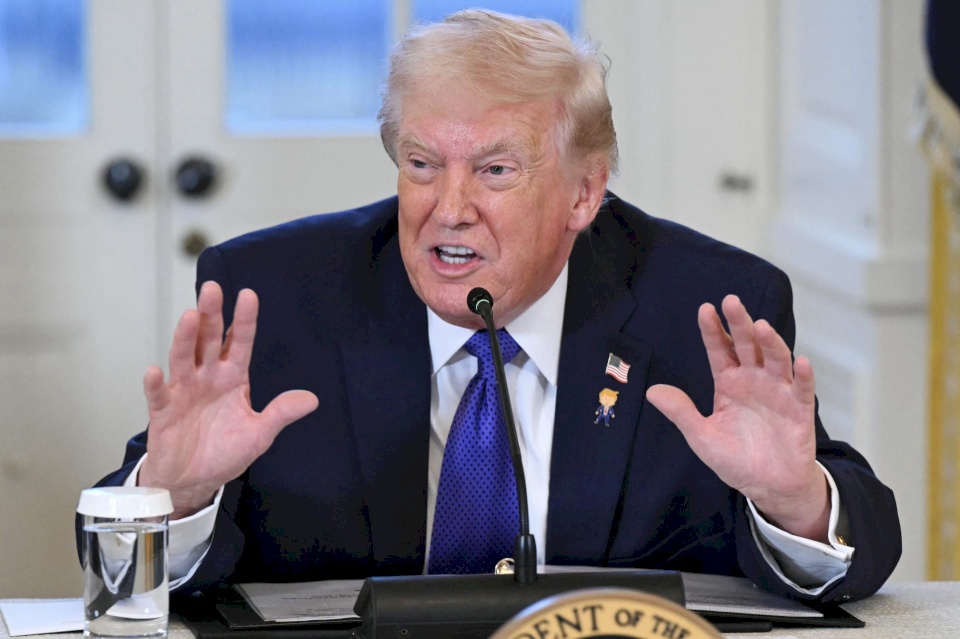
SadaNews - In his first meeting with the press following the bombing of Venezuela and the kidnapping of President Maduro and his wife, U.S. President Donald Trump mentioned "oil" 22 times, and did not mention "democracy" even once, which has been the argument that successive U.S. administrations have used to invade other countries. After that, Trump and his team walked out with arrogance, stating that his country would take over Venezuelan oil without regard for any logic.
Although this dream has been tempting Trump's imagination since his first term, many details confirm that the man is fully aware that this is not possible, but he would settle for any loot in exchange for the risk he recently took.
What makes Venezuelan oil enticing to President Trump?
The argument that Trump is incapable of fulfilling his dream of getting around Venezuelan oil is reinforced by the fact that the experience in Iraq will not be repeated in the Venezuelan case; because the Venezuelan system is simply cohesive and resistant to U.S. machinations, despite its internal factions.
This might explain the adequacy of the kidnapping of President Maduro and his wife from their resting place that night, followed by some showy strikes, only to wake up later to find that Maduro's entire team continued to operate. Trump even stated that his administration was in communication with them as the official representatives of the country, in a humiliating sidelining of the Venezuelan opposition.
Before presenting some data that helps us understand President Trump’s need for an alliance with the current Venezuelan regime, to secure the import or acquisition of as much Venezuelan oil as possible at this time, it is very important to point out that the state of agitation in the Middle East, and its impact on navigation in the Arabian Sea and the Red Sea, which does not suggest any imminent easing, is pushing Trump to hasten finding a solution with Venezuela, as a sort of contingency plan in case the flow of Gulf oil is disrupted or ceases.
For example, a shipment from Saudi Arabia to the United States usually takes between 35 to 40 days, while vessels leaving Venezuela bound for a refinery in Florida take no more than a week. In light of the rising tension in the Strait of Hormuz, the Arabian Sea, Bab el Mandeb, and the Gulf of Aden in general, the Caribbean remains the safest area for maritime navigation, under the control of U.S. forces.
The United States has owned, since the 1950s, refineries equipped with high-quality technologies capable of processing Venezuelan oil, known for its heaviness, located around the Gulf of Mexico in Texas, Florida, and Louisiana. However, as the U.S.-Venezuelan political crisis reached its peak, and the flow of Venezuelan oil to those refineries stopped in 2019, significant losses were recorded at the latter.
Despite Trump's insistence since his first presidency on his oil companies to increase drilling operations, the companies confirmed that the problem with the oil obtained through hydraulic fracturing techniques is that the lifespan of its wells is shorter (sometimes five years) compared to conventional oil wells, and that they have reached the maximum level of investment in such fields currently.
According to Venezuelan economic expert Carlos Mendoza Poutia, who served as an advisor to the Venezuelan oil minister in the 1960s and is the author of several works in the oil field, President Trump no longer has the patience to reach the heavy Venezuelan oil wells ready for refining, which number 18,000 wells with a production capacity ranging between 20,000 and 30,000 barrels per day, over 60 years.
This is seen as the optimal compensation for the wasted operational capacity of U.S. refineries, and it decisively cuts off the path for the Chinese rival who owns heavy Venezuelan oil refineries as well, thwarting any attempt to strengthen the BRICS group if transactions were conducted between the allies using their currencies instead of the U.S. dollar.
In addition to this is the greater interest in refocusing the operations of the American oil company Chevron in the Boscan field, which is considered the golden goose in Venezuela, with some reports stating that its oil reserves are around 30 billion barrels.
It entered production in 1945, and Chevron (Richmond at the time) was one of the pioneering foreign companies to discover it. Chevron continued to explore it until 1970 with the government’s decision to nationalize the oil sector, but its return was delayed from 1980 until around 1996, then resumed its operations in the Boscan field as part of a joint venture PetroBoscan, holding 39.2% with the Venezuelan national company owning 60%, and this was done under a special U.S. license.
However, with the recent escalation of the U.S.-Venezuelan crisis, the Venezuelan treasury decided to cancel that license in March 2025, giving the company a final deadline to stop its operations, but Chevron procrastinated in leaving definitively.
It is amusing to recall at this level the moment that was circulated by international media from Trump's press conference with several of his ministers and representatives of the oil sector in the U.S., when he elaborated on a topic, and Secretary of State Marco Rubio subtly handed him a note that read "Chevron" to hurry him to bring up the company, and Trump read the message aloud, which amused those present.
Beyond the magnitude of the oil reserves that Venezuela holds, approximately 18% of the world’s reserves, the American dream of obtaining any share of it to ensure the continuity of its industries remains an urgent goal for President Trump and his supporters in oil companies, especially since the United States owns only about 2.3%, a percentage unbefitting an "empire" that seeks to exert its influence over the Americas.
In general, in light of President Trump’s obstinacy, we can say that reaching a solution to the oil file between the U.S. and Venezuela has become an urgent necessity, as the dependency of Venezuelan production on U.S. refineries, which alone possess the largest capacity to refine it, not to mention their geographical proximity compared to the Chinese ally, has become "a necessary evil", yet the biggest gamble remains the price that the Venezuelan side might obtain from this agreement.
 Follow the latest Sada News via Google News
After Deschamps' Departure... Zinedine Zidane Tops the Candidates to Lead France

Mbappe Surpasses Messi and Becomes the All-Time Top Scorer in the World Cup

England Defeats France and Achieves Largest World Cup Achievement Since 1966

Messi Refused to Play for Spain and Missed 3 World Cups

Publishers Sue Google for Allegedly Using Books to Train Artificial Intelligence

Google Expands Capabilities of Google Search Console to Support Social Media Accounts

The Mediterranean Table... An Ancient Diet Revealing Its New Secrets for Health and Longev...
