

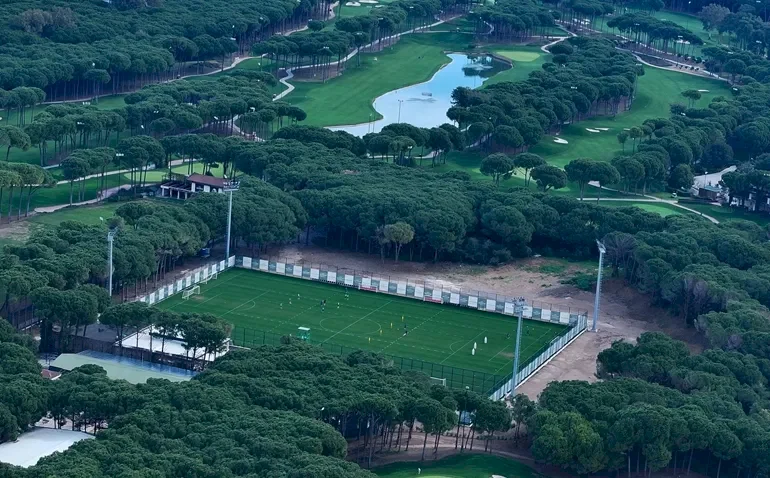
From Football to Cycling and Skiing.. Turkey's Plan to Expand Sports Tourism
SadaNews - Sports tourism in Turkey is no longer limited to winter football camps on the beaches of Antalya. Ankara is now moving to redraw the map of this sector through an expansion plan that includes a wide range of sports, from cycling and skiing to golf and multi-sport events, in an attempt to transform the country into a year-round global sports destination rather than one dictated by traditional seasons.
Turkey is betting on this transformation by leveraging a rare mix of modern infrastructure and geographical diversity. From indoor cycling tracks in Konya to snowy slopes in Erzurum, and extending to golf courses along the Mediterranean coast, a new vision is taking shape that sees sport as a gateway to enhance tourism presence and deepen economic returns beyond the summer and beaches.
The 12 Sports Plan
The Turkish Sports Tourism Association has launched an unprecedented initiative aimed at reshaping the tourism landscape in the country, by integrating 12 sports into a national program for expanding this promising sector.
From the usual football pitches to cycling and skiing arenas, as well as golf, swimming, tennis, basketball, and volleyball, Turkey is opening a wide gateway to attract athletes, amateurs, and tourists from various backgrounds, in an effort to forge a new identity for the country as a multi-season and multi-experience sports platform.
This step is described by the association as a "structural transformation," stemming from the conviction that relying solely on football is no longer sufficient in a world moving toward diversifying sports interests and tourism destinations.
Nida Kiraz, president of the association, stated in press remarks that the goal is for Turkey to become the land of championships and elite camps across various sports, stressing that the strategy targets not only the summer seasons but also aims to fill the dormant seasons with continuous sports and tourism activity.
This transformation is supported by numbers; while sports tourism accounts for around 10% of total tourism activity globally, its share in Turkey is still limited to just 1.5%.
Kiraz believes that reaching the global average requires a genuine partnership between the public and private sectors, which includes investing in infrastructure, enhancing external promotion, and attracting international events and championships.
If this ambition is realized, sports tourism will become one of the pillars of the Turkish tourism economy, generating foreign currency, creating thousands of jobs, and giving Turkey a new status on the global tourism map that is not only linked to beach resorts but also to facilities, stadiums, and tracks open year-round.
Antalya.. The Capital of Winter Camps
Antalya is carving out a new position for itself on the global football map. While snow covers fields in Eastern and Central Europe, Antalya is filled with friendly matches and training sessions, becoming the largest winter workshop for sports clubs in the region.
Every winter, the province located in southwestern Turkey welcomes more than 1500 local and international teams that hold closed camps during the seasonal break. Sports delegations from about 20 countries.
The months of December and January, which were previously classified as "dead season" for tourism, have transformed into a bustling football peak, filling stadiums, hotels, and airports.
Experts attribute this transformation to factors such as climate, ease of access, and infrastructure. Unlike other destinations, Antalya does not require long flight hours and receives flights from Europe and Asia daily.
On the ground, it features first-class training pitches and five-star fully serviced resorts, making it an attractive option for clubs seeking high quality at moderate cost.
This influx has not gone without a tangible economic effect. According to the Sports Tourism Association, winter football camps last year generated around 100 million euros (about 108 million dollars) in revenue, and it is expected to surpass 150 million euros (about 162 million dollars) this season.
In a notable development this year, major clubs have returned to Antalya after a hiatus. The Ukrainian club Shakhtar Donetsk, despite wartime conditions, chose Antalya as its camp location, alongside prominent teams such as Borussia Mönchengladbach of Germany and Red Bull Salzburg of Austria, among others from Eastern Europe and the Balkans.
National Map
Antalya is not the only one reaping the benefits of the sports awakening in Turkey; the expansion map extends across the country, with each region leveraging its unique geographical, climatic, and sports characteristics to become an active destination within a national project that reshapes tourism.
In the far northeastern corner, Erzurum shines as an excellent winter destination, hosting modern ski resorts and ice channels at the peaks of Palandöken, attracting regional and international championships, making the city a magnet for snow enthusiasts from within and outside Turkey. The same scene is repeated in Kayseri at Mount Erciyes and in Bursa at Uludağ.
In the heart of Anatolia, Konya stands out with its opening of Turkey's first indoor cycling track (Velodrome), qualified to host world championships, attracting teams and national selections seeking top-quality training facilities.
Samsun on the Black Sea coast has bolstered its position as a center for multi-Olympic sports, thanks to its infrastructure developed by hosting major events such as the Islamic Solidarity Games.
To central Turkey, Cappadocia adds a different touch to the sports scene, where the enchanting geological formations become a natural track for mountain running races. The annual "Salomon Ultra Trail" attracts thousands of runners from more than 75 countries, turning valleys and highlands into a cultural sports celebration that activates hotels and facilities throughout the autumn season.
The coastal regions of Muğla on the Mediterranean and Aegean seas open up to a parallel marine sports scene, with sailing and rowing camps and sailing boat races attracting teams from various countries, especially in the cities of Bodrum, Marmaris, and Fethiye.
Reviving Dead Seasons
Sports tourism also represents a tool for redistributing tourist movement throughout the year, specifically to revive seasons that were described as "dead." For example, cycling is witnessing global prosperity, and Turkey found an opportunity to fill the gap between the end of winter and the start of summer.
Antalya alone is preparing for three major events in 2026, including an international tour and races for amateurs, while Konya has become a key stop for teams seeking high-quality indoor facilities.
As for golf, it has turned into a winter gem in Belek, Antalya, where courses are crowded with European players escaping the frost of their countries to the warmth of the Mediterranean.
Winter has also been redefined in Turkey thanks to skiing, as ski resorts scattered across various provinces are no longer just for snow enthusiasts but now host international and local championships in speed skiing, alpine skiing, and ice marathons, enhancing hotel occupancy, transportation, and services in the height of cold.
Source: Al Jazeera
 Follow the latest Sada News via Google News
After Deschamps' Departure... Zinedine Zidane Tops the Candidates to Lead France

Mbappe Surpasses Messi and Becomes the All-Time Top Scorer in the World Cup

England Defeats France and Achieves Largest World Cup Achievement Since 1966

Messi Refused to Play for Spain and Missed 3 World Cups

Publishers Sue Google for Allegedly Using Books to Train Artificial Intelligence

Google Expands Capabilities of Google Search Console to Support Social Media Accounts

The Mediterranean Table... An Ancient Diet Revealing Its New Secrets for Health and Longev...
