

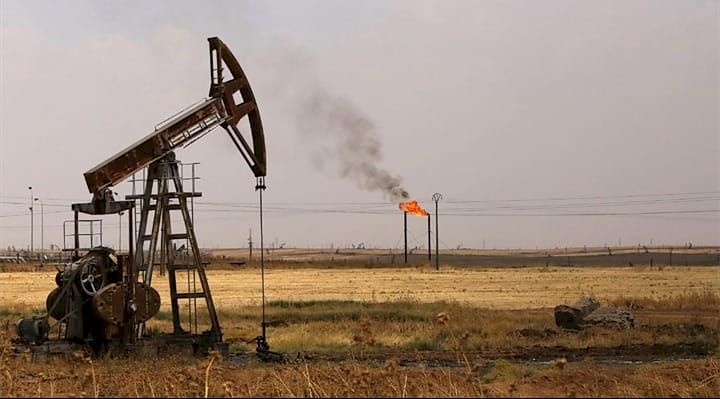
Oil Prices Continue to Rise Amid Heightened Tensions Over the Strait of Hormuz
SadaNews - Oil prices continued to rise as the United States and Israel escalated their war against Iran, while the latter threatened a complete closure of the vital Strait of Hormuz.
Brent crude rose to around $79 a barrel, after jumping about 7% on Monday, while West Texas Intermediate was near $72.
President Donald Trump stated that the United States would do "whatever it takes," and told Secretary of State Marco Rubio that the campaign would intensify. The State Department urged all Americans to leave the Middle East due to "serious security risks."
The United States is preparing for a significant increase in attacks on Iran in the next 24 hours, according to CNN, citing a senior official. The official added that the first round of attacks had weakened Iranian defenses, and the next phase would focus on targeting missile production, drone capabilities, and naval capacities.
Ibrahim Jabari, one of the advisors to the Iranian Revolutionary Guard commander, told state television that the military body "will burn any ship that attempts to pass" through the strait. Jabari is described by local media as a senior advisor to the Revolutionary Guard commander, not a field commander.
The Impact of War on Global Energy Markets
Global energy markets have been shaken by the war that erupted on Saturday and spread across the oil-rich Middle East, as Iran sought to retaliate against Israel and launched attacks on countries in the region, under the pretext of targeting U.S. forces. Oil prices surged, along with natural gas and petroleum products like diesel, which could fuel a wave of inflation worldwide.
Energy infrastructure came under fire. On Monday, Saudi Aramco suspended operations at the Ras Tanura refinery after a drone attack in the area. Qatar also closed its liquefied natural gas production at the world's largest export facility after it was targeted in an Iranian attack.
Tankers' movement across the Strait of Hormuz has nearly stopped due to the risks. This narrow passage off the coast of Iran handles one-fifth of global oil and a similar portion of liquefied natural gas.
Shipments passing through the waterway typically come from Iran, as well as from other producers in the region, including Saudi Arabia, to global markets.
The Repercussions of the Conflict on Shipping Markets
The repercussions of the conflict have also affected shipping markets, with the cost of transporting crude oil from the Middle East to China reaching an all-time high on Monday, as profits on the industry benchmark route surged to $424,000 per day, according to data from the Baltic Exchange.
Saudi Arabia, Iraq, Kuwait, and the UAE had already begun increasing oil exports last month, while OPEC+ agreed over the weekend to resume production increases in April. However, the continuation of exports will depend on passage through Hormuz.
Robert Renni, head of commodity research at Westpac Banking Corp, noted, "We tend to see the oil price between $82 to $85 as the maximum over the next few days" as Iran targets energy and shipping infrastructure. He added that previous increases in OPEC supplies acted as a barrier against sharp rises.
Iran Targets Regional Countries
In a statement on national television, Iranian Foreign Minister Abbas Araghchi said Tehran has no dispute with neighboring countries, but is "confronting the American soldiers stationed there." The U.S. stated it would welcome a regime change in Tehran, encouraging the people to overthrow the government.
Israeli forces also continued their attacks against Tehran, having carried out airstrikes in Lebanon on Monday targeting its proxy Hezbollah. In the energy infrastructure, Israel halted production from the Leviathan natural gas project.
For his part, Secretary of State Rubio stated that the focus is on destroying the Iranian navy and drones, as well as the ballistic missile program, which had been used as a shield to fuel its nuclear ambitions. He added that an American plan to ease energy costs would come into effect on Tuesday.
Emergency Oil Reserves
Separately, a source familiar with the situation indicated that the U.S. administration currently has no immediate plan to tap into the country’s emergency oil reserves. Any step to draw oil from the strategic reserve is likely to be coordinated with member countries of the International Energy Agency.
The Trump administration is monitoring oil prices and is not planning to withdraw from the reserve at this time.
Diplomatically, Gulf countries like the UAE and Qatar are seeking to pressure for a reduction in the duration of the U.S. military escalation against Iran, according to informed sources.
Analysts at ANZ Group Holdings Ltd., including Daniel Hynes, wrote in a note that "the war is now entering a dangerous phase," adding, "The longer the conflict lasts, the greater its impact on the oil market."
 Follow the latest Sada News via Google News
London Stock Exchange Enters the Era of 24/7 Trading

Shamaran Petroleum: Suspension of Oil Production in Duhok Fields in the Kurdistan Region o...

Dollar Steadies Near One-Week High Amid War Developments

Trump Imposes Tariffs on Canadian Imports... Ottawa Vows to Respond

Oil Prices Drop After Reports of Mediation Efforts Between the U.S. and Iran

Gold Price Rises Supported by Increased Buying Amid Lower Prices

Due to "Hazardous and Counterfeit Products".. Europe Fines "AliExpress" $627 Million
