

Satellite Images Capture Damage at Iran's Natanz Nuclear Complex
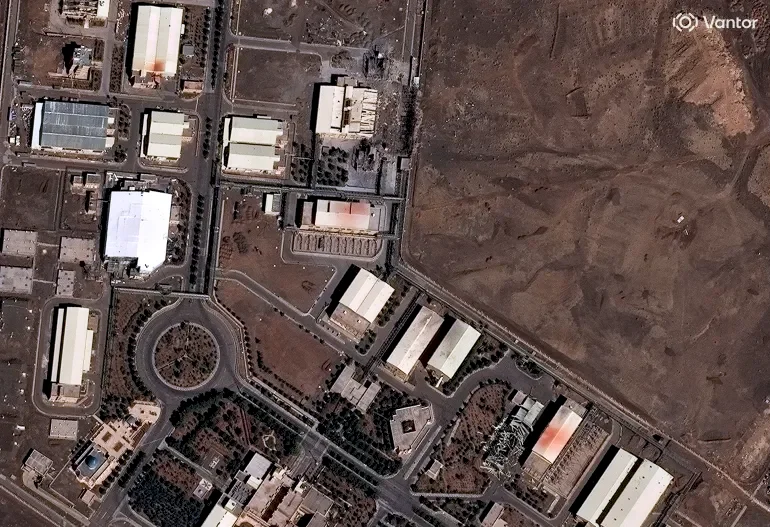
SadaNews - Satellite images taken by the "Vantour" company on March 2, 2026, revealed signs of destruction at the Natanz nuclear facility complex in central Iran, following airstrikes amid rising regional tensions.
According to the analysis of the images, damage occurred to several surface buildings covering the entrances for personnel and vehicles leading to the underground enrichment complex within the facility.
Some structures appear to have sustained partial destruction, with signs of excavations and collapses around the access points.
Comparisons between images taken on March 1 and March 2, alongside an archival image from 2002 during the site's construction phase, indicate clear changes in the area surrounding the vehicle slopes and personnel entrances.
These changes suggest direct impacts targeting access points to the underground infrastructure, although the nature of the damage within the enrichment facilities themselves remains unclear.
The Natanz complex is one of the most significant uranium enrichment centers in Iran, housing underground facilities designed to safeguard sensitive nuclear activities.
Space images show signs of destruction in the buildings of the Natanz nuclear reactor (American company Vantour)
Airstrikes often focus on tunnel entrances and logistical support systems when targeting such sites, as these are considered relative weaknesses compared to the fortified infrastructure deeper within.
So far, there have been no official details regarding the extent of the technical losses or the impact of the damage on the enrichment operations within the complex, while initial estimates rely on the analysis of satellite images and temporal comparisons.
Iran's representative on the Board of Governors of the International Atomic Energy Agency, Reza Najafi, stated that the ongoing U.S.-Israeli airstrikes on his country targeted the Natanz nuclear facility.
The head of the Iranian Atomic Energy Organization documented the attacks in a message to the Director General of the International Atomic Energy Agency, Rafael Grossi, clarifying that the shelling resumed yesterday afternoon, in two waves, describing the attacks as "brutal."
 Follow the latest Sada News via Google News
A Citizen Martyred by Occupation Forces in Khan Younis

Government Media in Gaza: The Occupation Controls 65% of the Gaza Strip Area

Unusual... The US Embassy Warns Its Citizens About Organized Crime in Israel

Palestinian and Islamic Welcome to the Decisions of the Netherlands and Belgium to Ban Set...

Tehran Warns Against Targeting 'Mount Afs' as US Strikes Intensify

Rubio: We Want to Reach a Diplomatic Solution with Iran

Finance: Salaries Tomorrow at No Less Than 50% and a Minimum of 2000 Shekels
