
In Issue 84 of the Economic Observer: The Year 2025.. Nothing New to Report and Nothing Old to Recall
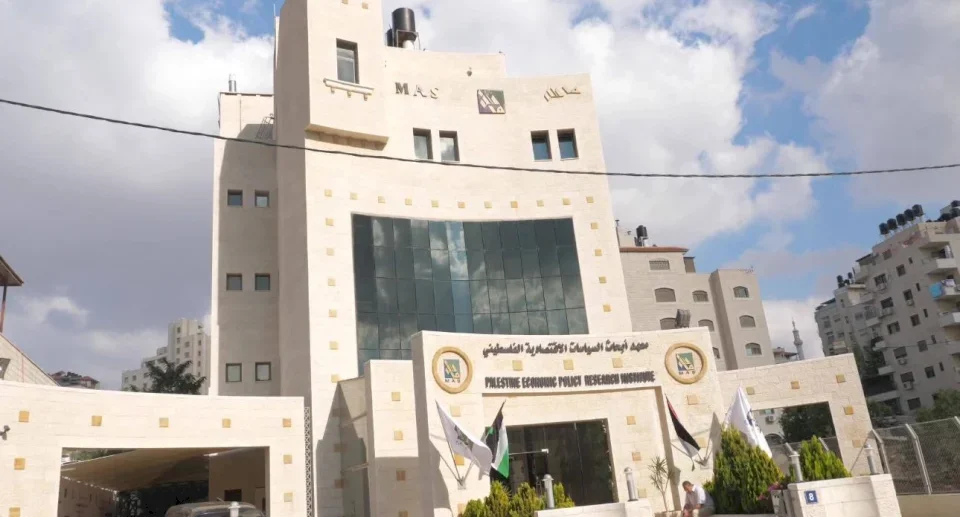
SadaNews - The Palestinian Economic Policy Research Institute (MAS) has issued issue 84 of the Economic Observer, which reviews developments in the fourth quarter and the entire year of 2025, within an extremely difficult political, economic, and social context in the occupied Palestinian territories. The Observer includes a comprehensive and periodic coverage of the performance of various economic sectors in its first section, alongside significant issues in social development and economic policies, while the second section is dedicated to economic follow-ups that address several relevant topics.
Although the last quarter of 2025 witnessed the announcement of a ceasefire, the year 2025 did not promise anything new compared to its predecessor, marked by the same bleakness in the political, economic, and social landscape in the occupied Palestinian territories; the destruction of human life, economy, and material assets that occurred in the Gaza Strip throughout the year exceeded bounds of reporting and monitoring. In the West Bank, restrictions on movement and mobility between governorates intensified with the spread of hundreds of checkpoints and the expansion of settlements. The situation was further complicated by the ongoing financial crisis crippling the Palestinian government due to the cessation of receiving clearance funds since the middle of the year. In light of these data, only further shackling of economic activity, deepening of structural imbalances in the local economy, and diminished income not aligning with the cost of living are expected.
This issue indicates that the economic developments during the fourth quarter and throughout the year 2025 highlight the ongoing negative repercussions of the war on the Palestinian economy. Although there have been signs of partial recovery in levels of demand and production during the year compared to 2024, they remain below levels recorded before the war. The main economic developments can be summarized as follows:
Gross Domestic Product (GDP): The GDP in 2025 recorded a growth of 4.3% compared to 2024, reaching 12,462.9 million dollars. This growth was distributed as 3.4% in the West Bank and an increase of 34.2% in the Gaza Strip.
Employment and Unemployment: The unemployment rate in the West Bank reached about 28.7% in 2025, down by 2.8 percentage points from 2024, but higher by 10.3 percentage points compared to 2023. The average daily wage for workers in the West Bank was about 136.5 shekels. The percentage of wage earners whose salaries fall below the minimum wage in the private sector reached 16%.
Public Finances: The net public revenues and grants collected in 2025 were approximately 11.2 billion shekels, compared to about 11.7 billion shekels in the previous year. On the other hand, public expenditures decreased by 10.2% during the same comparison period to approximately 12.9 billion shekels (on a cash basis). The deficit in the total balance before grants and aid (on an accrual basis) was about 3.6 billion shekels during the same year. However, this balance does not fully reflect the true financial situation faced by the Palestinian government, under cuts and Israeli seizures from clearance funds, as data indicates that outstanding financial obligations reached about 18.8 billion shekels, and the public debt, expressed in dollars, increased by 13.9% compared to the previous year, reaching approximately 4.8 billion dollars.
Banking Sector: Credit facilities in 2025 rose by about 5.4% compared to the previous year, reaching about 12.6 billion dollars, 26.6% of which was allocated to the public sector. Customer deposits witnessed a notable increase of 16.4% in 2025 compared to the previous year, reaching nearly 21.9 billion dollars. Profits of banks in this year totaled 132.8 million dollars, compared to 43.1 million dollars in the previous year.
Palestine Stock Exchange: The market capitalization of shares listed on the Palestine Stock Exchange reached 4.9 billion dollars by the end of 2025, up by 21% from the previous year. The Al-Quds Index closed at 619.66 points, marking a significant rise of 24.4% compared to the previous year.
Inflation and Prices: The inflation rate in the Palestinian territories rose by 10.5% in 2025 compared to 2024. Thus, the purchasing power declined between the two years at the same inflation rate for those receiving and spending their income in shekels. As for those receiving their income in dollars and dinars and spending their entire expenses in shekels, their purchasing power dropped by about 17.3% compared to the previous year, due to the decrease in the dollar's exchange rate against the shekel (a retreat of 6.8%) and rising inflation rates.
The second section addressed, in five boxes, the most significant developments in the economic and local arena. The first box referred to a study published in the "Omran" magazine issued by the Arab Center for Research and Policy Studies, titled "The Structure of Israeli Settlement in the West Bank: Phases of the Project, Components, and Institutions." The box was divided into three main axes, the first of which provided a historical narrative of the development of settlement in the West Bank, while the second reviewed the components of the settlement project, addressing the third the bureaucratic structure of the project and the Israeli entities managing it.
As for the second box, it discussed the issue of increasing women's participation in the labor market in Palestine, illustrating how female participation rates have taken a gradually upward trend in recent decades, despite this improvement, participation rates in Palestine still lag behind regional and global levels. The third box summarized the key points from a roundtable session held by the institute on the topic of economic and social rights in the draft constitution for the State of Palestine.
The fourth box addressed the impact of the decline in the value of the US dollar on the Palestinian economy, including the impact of the decline, accompanied by the appreciation of the shekel, on the Israeli economy. The box also touched on the increasing threat that the US dollar could lose its status as the world's primary hard currency, and the repercussions of the rise of other currencies competing with the dollar in financing international trade and global financial transactions and accumulating reserves with central banks.
 Follow the latest Sada News via Google News
Mutual Honor Between Bethlehem Governorate and Jerusalem Electricity Company and Confirmat...

Ooredoo Palestine Allows Activation of VoLTE Service with Local Roaming Packages in Jerusa...

Quds Bank, the Diamond Sponsor of the Student Company Competition 2026 Organized by the In...

"Education" and Ingez Palestine Conclude the 18th Edition of the Student Company Program a...

The National Bank Supports the Launch of the First Specialized Program in Economic and Ban...

The Governor of the Monetary Authority Calls for Urgent International Action to Address th...

Al-Baraka Islamic Insurance Opens New Branch in Bedia
