

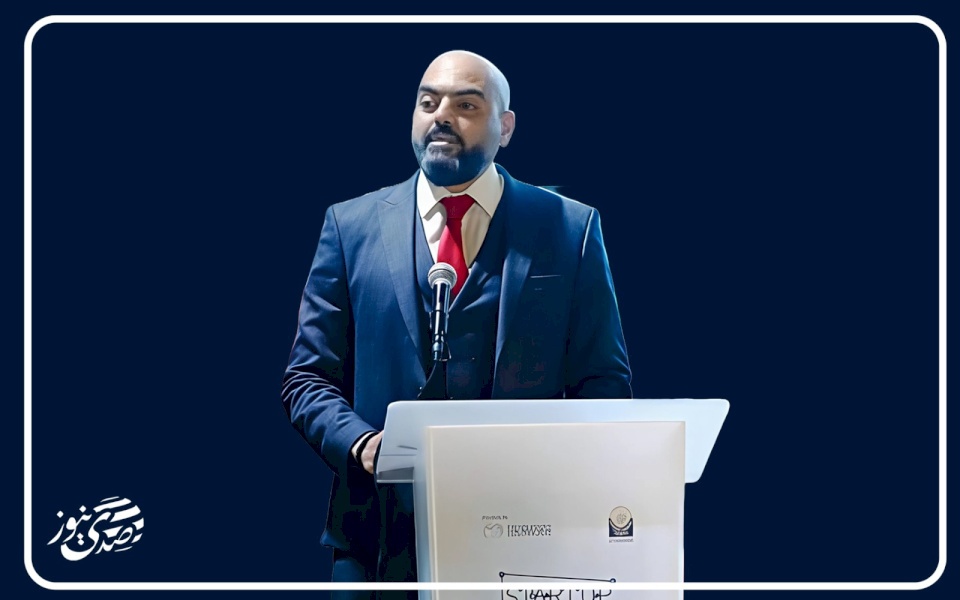
Peace Be Upon You, Mayor
Majid Hikmat Dheeb Abu Ghosh, known among his friends as "the mayor", was not just a poet, novelist, or children's storyteller; he was a living memory of the Palestinian cultural scene and an active member of the Palestinian Writers and Authors Association. Born in the displaced village of Imwas, in the Jerusalem district, he lived through the tragedy of displacement since childhood after the occupation destroyed his village and displaced its residents.
This experience left a profound impact on his soul and literary works, transforming writing and poetry into spaces of freedom, love, and hope. He resided in Ramallah and actively contributed to the cultural life, publishing, cooking, storytelling, and being a friend to everyone who knew him, embodying a voice that carried the memory of his homeland in his heart.
In the quiet mornings of Ramallah, we start our usual journey to the Ramallah café, Abu Elias, where coffee is gently poured, and smoke rises as if carrying conversations to the sky. There, at the same table, we open endless discussions: about politics, poetry, the cities he loved, and even about the simple life we sometimes dream of.
Music was always with us, echoing the heavy days: Ziad Rahbani to laugh at the pain of reality, Sheikh Imam to reclaim the old anger, and Fairouz to lighten the burden of the days, as if she grants us a small window through which we can find comfort in existence. In those moments, Majid exuded a sense of tranquility and warmth, as if the entire city paused in respect for him.
After coffee, we head out to the Ramallah market, a place known to everyone. Amidst the voices of vendors and the scent of fresh vegetables and fish, we walk slowly, laughing and carefully choosing our catch. He would tell me with a calm smile: "Fish is like a poem... you have to see beyond the skin to reach the soul." His hand would gently touch the fish, as if each movement held meaning, and every fish contained a story or a complete text. He distributed his catch among neighbors and the poor, just as a poet distributes his verses among friends, without waiting for praise or gratitude, for love and generosity need no certificate; they are the language of the soul alone.
Upon returning to his small kitchen, everything transformed into a living text. The fried fish was cooked slowly, each sprinkle of salt was a word in a poem, and every movement of his hand formed a prose sentence. He cooked not just to feed the body but to satisfy the soul. For him, cooking resembled writing: patience, passion, and the belief that everything can be mended with a little salt and a lot of heart. In those moments, I felt that the whole world could be more beautiful as long as there were those who write, cook, and give with such spirit.
The nights were long and enchanting with us, where we shared tales about everything, sang and laughed, disagreed and reconciled, exploring life as we explored the books. Tulkarm was present in every conversation, the city he loved since childhood, the city that witnessed his persecution during the first Intifada, the city that held his memory and emotions. He would tell me about its streets, orchards, and houses, about the unforgettable scent of the sea, about the absence imposed by the occupation, and about the nostalgia that only grew stronger. Every time he spoke of Tulkarm, I felt the weight of losing the homeland pressing on my chest, yet despair never took root in his heart.
Majid lent me books as one would lend a part of their soul. He carefully selected the book, dusted it off with his hand, and handed it to me gently: "Read it... take your time." Every book was a message, and every loan was a silent trust that said: you know how to love and how to preserve beautiful things. I learned from him that reading is not just words, but a new life that seeps into your soul, and that every text read from the heart becomes a part of you.
Today, as I attempt to write about him, I recall all the small details that made him who he was: his morning greeting, the coffee at Abu Elias café, the Friday market, the long nights, the music that crafted pure moments for us, the books he gave me, and the fish that carried the spirit of the sea entirely within him. These moments created a complete, sincere, and inspiring life, a life known to those who lived it beside him.
Peace be upon you, Mayor...
Peace upon the cities you passed through, upon the alleys that embraced your steps, and upon the rituals that made life heavier, more beautiful, and clearer.
Peace upon the nights, upon the music, upon the books, and upon the fish that carried the soul of the sea just as it carries your spirit within our hands.
Peace be upon you because you were a friend resembling a small homeland... and a homeland that is unforgettable.
 Follow the latest Sada News via Google News
What Does the Supreme National Interest Mean for Palestinians? And How Can It Be Achieved?

The Wronged Ramallah

Between Pragmatism and Survival Management: Where Does Hamas Go After the Election of Khal...

Khalil Al-Hayya as President of Hamas.. Continuation of the Founders' Approach

The Annihilation of Sportsmanship

Until When Will the Palestinian Citizen Pay the Price of an Endless Phase?

7-10 Billion Shekels.. The Bill for the Absent Worker from Brussels
