

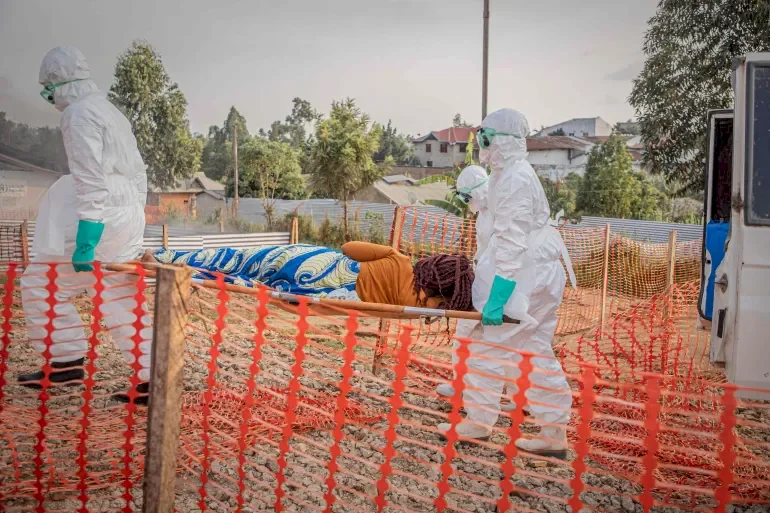
The Fast Death Virus: How Ebola Forced the World to Change Its Thinking?
SadaNews - Before the world experienced the shock of the Corona pandemic, there was another virus that forced health systems to rethink how to tackle epidemics; the "Ebola" virus, which transformed from localized outbreaks in limited areas to a global test of countries' ability to detect and contain infectious diseases.
A report prepared by Asma Ali for Al Jazeera indicates that the name Ebola has returned to the forefront with the ongoing outbreak in the Democratic Republic of Congo, amidst warnings that the epidemic has not yet peaked, and that controlling it may require long months and possibly extend to a whole year.
Ebola was not just a highly dangerous virus but one of the most complex challenges for public health, due to its historically high mortality rates, averaging about 50%, with significant variation between 25% and 90% depending on the virus type, the speed of case detection, and the quality of care provided.
The complexity of the virus comes from the fact that it belongs to a family that includes several types, the most notable being the "Zaire" virus, against which the most important approved vaccines have been developed, alongside other types such as "Sudan" and "Bundibugyo," which do not provide specialized vaccines for the Zaire virus with guaranteed protection against them.
A Pivotal Moment
However, the pivotal moment in Ebola's history came during the West African outbreak between 2014 and 2016, when the world witnessed the largest wave of the virus since its discovery, with more than 28 thousand infected and over 11 thousand deaths.
This outbreak revealed that the danger of epidemics lies not only in the virulence of the virus but also in the capacity of health systems to detect and respond to it. The weakness of early warning systems, the difficulty in tracking chains of infection, and the lack of trust between communities and health authorities contributed to the broadening of the outbreak.
From the ashes of this crisis, significant transformations began in the way the world deals with epidemics.
The first of these transformations was the enhancement of epidemiological surveillance and early detection systems, after Ebola demonstrated that delays in tracking initial cases could turn a limited outbreak into a widespread crisis. The speed of discovering and reporting cases became an essential part of the first line of defense.
The second transformation was the development of the concept of contact tracing, as experience proved that isolating the infected alone was insufficient, and controlling the epidemic needed to know the individuals who were exposed to the infection and monitor its transmission accurately. Over time, these processes shifted from traditional methods to faster and more effective digital tools.
The third lesson imposed by Ebola was the importance of community trust. Health response teams in some areas faced resistance due to fear of the disease or social stigma, reinforcing that the success of any health intervention does not only depend on medicine and vaccines but also on engaging communities and respecting their cultures.
Ebola also contributed to changing the way vaccines and treatments are developed, as recurring outbreaks prompted scientists to expedite clinical trials during crises rather than waiting for the disease's spread to end. These experiences contributed to the approval of the "Ervebo" vaccine against the Zaire strain, while also providing lessons that benefited vaccine development efforts during subsequent epidemics, including the Corona pandemic.
Although Ebola was not the sole factor reshaping the global health system, it was a crucial juncture that revealed vulnerabilities in pandemic preparedness and pushed countries to invest in health surveillance, rapid response, and international cooperation.
While the virus continues to emerge from time to time, the question that Ebola has imposed on the world remains: Has humanity become better prepared to face the next pandemic, or do the lessons still need to be more broadly applied in practice?
Source: Al Jazeera
 Follow the latest Sada News via Google News
The Fast Death Virus: How Ebola Forced the World to Change Its Thinking?

Hakimi's Goal Gives PSG a Unique Record in the World Cup

What Changed Our Immune System? A Journey into the Causes of Allergy Spread

Why Did Simba Believe He Killed His Father? The Psychological Secret Behind Your Children'...

What Should You Know Before Stopping Cholesterol Medications?

When Risk Becomes a Necessity.. Yemeni Youth Engage in Dangerous Jobs Leading to the Abyss

From Muscle Building to Cancer Fighting.. A New Discovery About Creatine
