

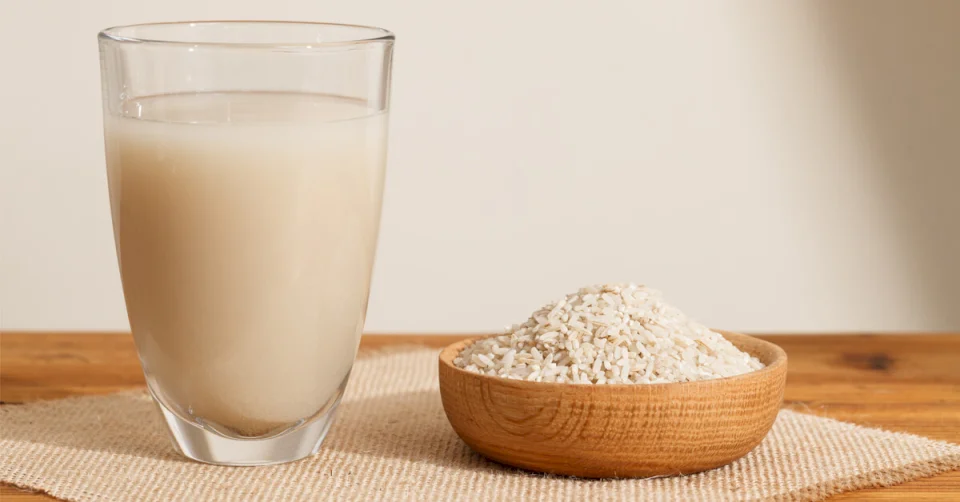
Rice Water for Hair: Between Korean Trends and Scientific Truth
SadaNews - A new natural ingredient emerges periodically, promising to solve hair problems from the roots, but few of these trends have managed to maintain their presence for years as rice water has.
From social media platforms to hair care products, this simple liquid has turned into one of the most famous beauty secrets in Asia, especially with the widespread popularity of the Korean skincare routine that has revived traditional recipes hundreds of years old. Amid videos showcasing long and shiny hair, and testimonials from users affirming its effects, a controversial question arises: Does rice water truly have the ability to enhance hair growth, or does its fame exceed what scientific evidence shows?
From a Traditional Recipe to a Global Trend
The use of rice water for hair traces back to ancient Asian traditions. Its fame is particularly associated with women from rural areas in China and Japan, known for their long and thick hair. With the boom of the Korean beauty industry and the rise of social media, this traditional practice has reached a global audience continuously searching for natural hair care solutions.
The ease of preparing rice water and its low cost have boosted its popularity, as soaking rice in water or boiling it is enough to obtain a liquid that can be used as a rinse or hair mask. Over time, this simple home recipe turned into a beauty phenomenon that transcends borders and cultures.
What Are Its Properties?
The significance of rice water lies in its containing a range of nutrients that transfer from the rice grains to the water during soaking or boiling. This liquid includes varying amounts of amino acids, some vitamins and minerals, antioxidants, as well as a compound known as "inositol," which has drawn the interest of researchers in hair care.
These components are believed to help improve the hair's condition from the outside, granting it greater elasticity and the ability to resist damaging factors, such as the repeated heat caused by styling tools or continuous exposure to sun and pollution.
What Does Science Say?
When it comes to hair growth, scientific evidence becomes more reserved than social media suggests. So far, there are no extensive clinical studies confirming that rice water directly stimulates hair follicles or increases the natural growth rate.
Conversely, some research has indicated that inositol may contribute to repairing damaged hair and penetrate its fibers, helping to enhance its strength and reduce its vulnerability to breakage. This detail is crucial, as many people confuse actual hair growth with retaining length due to a decrease in breakage rates.
When hair becomes more resistant to breakage, it retains its length longer, giving the impression that it grows faster, even though the actual growth rate of the follicles may not necessarily have changed.
Why Does Hair Appear Longer?
The most likely reason behind this perception is the improvement in the hair’s quality itself. Hair that is subjected to continuous breakage loses part of its length before it gets a chance to grow fully. When the breakage rate decreases, the length gain becomes more evident over time.
For this reason, some users notice positive results after weeks of using rice water. They do not necessarily witness an increase in hair growth speed, but an improvement in its ability to retain length and overall health. Hence, the gap between personal experiences circulating online and what scientific studies confirm.
Benefits Beyond Growth
Even if rice water is not a direct remedy for increasing hair growth, it does not mean it is without benefits. Many experts point to its potential role in improving hair texture and overall appearance. It may help increase smoothness, reduce tangles, and give strands a more noticeable shine.
It can also contribute to enhancing the hair’s elasticity, which is an important factor in reducing breakage resulting from daily combing or styling. For this reason, some people include it in their weekly hair care routine, especially if their hair suffers from dryness or stress from chemical treatments.
Is It Suitable for Everyone?
Despite its simple nature, rice water is not equally suitable for all hair types. Some individuals may benefit from it significantly, while others might notice increased dryness or a coarse feeling in their hair if overused.
This is linked to the different hair nature and porosity levels. For instance, low-porosity hair may suffer negatively if some of the starchy components in rice water accumulate on it. Therefore, experts advise using it in moderation and monitoring hair response rather than applying it daily or excessively.
How Can It Be Used?
To achieve the best results, it is preferable to use rice water as a complementary step within a comprehensive hair care routine, not as a standalone solution for all problems. Hair health is related to many factors including proper nutrition, stress levels, overall health conditions, genetic factors, and scalp care.
Moreover, choosing a suitable shampoo, avoiding excessive heat, and obtaining adequate amounts of protein, iron, and certain essential vitamins remain more influential factors for hair growth than any single home remedy.
Between Reality and Exaggeration
A scientific perspective reveals that rice water occupies a middle ground between reality and exaggeration. It is neither just a baseless beauty myth nor a magical cure that guarantees longer hair within a few weeks. What the available evidence confirms so far is its potential ability to improve hair quality and reduce breakage, which may reflect on the appearance and length of hair over time.
Therefore, rice water can be considered a beneficial addition to a hair care routine, provided it is approached with realistic expectations. Healthy hair does not rely on a single ingredient or a transient trend, but is the result of a combination of habits and factors working together over a long period. Amid the buzz created by the Korean trend and what scientific research indicates, the truth remains simpler than it appears: rice water may help hair look better, but it does not have a magical effect on its natural growth laws.
 Follow the latest Sada News via Google News
Rice Water for Hair: Between Korean Trends and Scientific Truth

Brain Hemorrhage and Multiple Fractures.. The First 48 Hours Determine the Fate of Mohamed...

World Cup: America Secures a Big Win, Canada Snatches an Exciting Draw

The England Stars' Shoes and Equipment Robbed in Major Heist in America

Smart Eyes Give Autonomous Cars a Human-like Vision

Watermelon is Not Just for Hydration... An Unexpected Benefit for Heart Health

Surprising Study: Changing Your Diet May Make You Younger in Just One Month
