

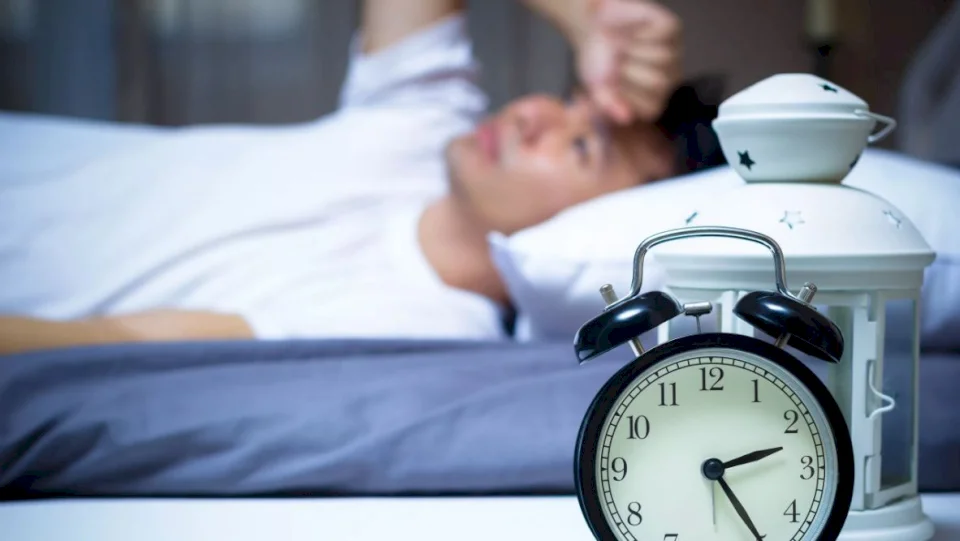
Why Does Poor Sleep Make You Feel Older?
SadaNews - It may seem like just a fleeting complaint that repeats at the end of a long day: "I feel like I’m getting older." However, a recent study reveals that this feeling may not just be a transient psychological impression, but a direct indicator linked to sleep quality and body health.
The study, which involved more than 3,100 adults, examined what is known as "subjective age," meaning the age a person feels compared to their actual age, and its relationship to several indicators of sleep health. The findings revealed that the gap between the two ages could carry deeper implications than previously thought, reflecting on sleep quality, wakefulness, and daily performance, according to the "MindBodyGreen" website.
Between Actual Age and Perceived Age
Researchers relied on the concept of "subjective age" as one of the metrics used in health studies alongside chronological age, due to its potential link to overall health and longevity.
The study included 3,177 participants with an average age of approximately 42.8 years, with a balanced ratio of women and men. Participants were asked to answer a simple question: "How old do you feel?" along with a series of scientific measures related to sleep, such as insomnia severity index, sleep regularity, and the impact of its disturbances on daily performance.
Cases of anxiety, depression, and self-reported physical health were also evaluated before calculating the difference between actual age and perceived age, where a positive number indicates a feeling that someone is older than their actual age.
Feeling Older is Linked to Poorer Sleep Quality
The results showed that individuals who feel older than their actual age suffer from higher levels of insomnia, greater sleep disturbances, decreased sleep quality, and irregular sleep patterns.
Notably, these results remained consistent even after adjusting for factors such as actual age, gender, and mental state, including anxiety and depression.
Analyses suggest a potential intermediary pathway involving sleep, where sleep disturbances contribute to a heightened sense of aging, which in turn is linked to physical health decline.
A Reciprocal Relationship That Shouldn't Be Overlooked
Although the study indicates that feeling older may negatively affect sleep, it does not rule out the reverse direction. Poor sleep, according to researchers, may make a person more susceptible to feelings of fatigue, energy decline, and increased pain perception, which may psychologically translate to aging.
Thus, the relationship between the two appears reciprocal, with each feeding into the other in a cycle that may be hard to break unless one is intervened to improve.
How Can the Cycle Be Broken?
The results suggest that improving sleep quality may be one of the most effective ways to modify this feeling.
One of the key findings of the study is that regular sleep and wake times play a crucial role in improving sleep quality and the feeling of age, even more than the number of hours of sleep itself.
It also warns against the common notion that reduced sleep is a natural part of aging, as findings confirm that insomnia and sleep disorders are amenable to improvement and treatment, and should not be treated as inevitable.
The study also recommends several sleep-supportive behaviors, including regular exercise, stress management, and exposure to morning light, as they have a direct impact on sleep quality and daily energy.
Conclusion
What seems like a fleeting feeling upon waking tired may actually be a deeper signal than we think. The age we feel does not only reflect psychological state but is also related to sleep quality and physical health.
The study concludes that improving sleep might not only provide better nightly rest but may also change the way we perceive our ages... and perhaps ourselves.
 Follow the latest Sada News via Google News
World Cup: America Secures a Big Win, Canada Snatches an Exciting Draw

The England Stars' Shoes and Equipment Robbed in Major Heist in America

Smart Eyes Give Autonomous Cars a Human-like Vision

Watermelon is Not Just for Hydration... An Unexpected Benefit for Heart Health

Surprising Study: Changing Your Diet May Make You Younger in Just One Month

Why Does Poor Sleep Make You Feel Older?

Study: Dietary Supplement for Joint Pain Linked to Worsening Dementia
