

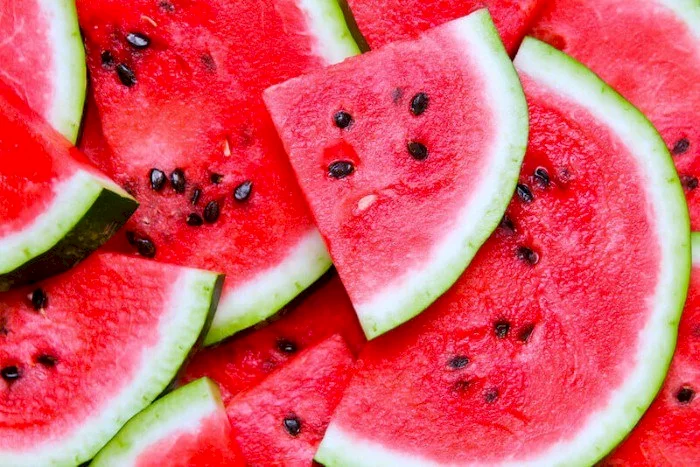
Watermelon is Not Just for Hydration... An Unexpected Benefit for Heart Health
SadaNews - Watermelon is known for its ability to hydrate the body during hot weather, but its benefits may extend beyond that. Recent studies indicate that watermelon contains compounds and nutrients that may help improve blood flow, support vascular health, and reduce certain risk factors associated with heart disease.
A report from "Verywell Health" explains how watermelon can contribute to heart health and what research says about its benefits.
The secret lies in a compound that enhances blood flow.
Many of the heart health benefits of watermelon are linked to a natural compound that many may not know about, which is the amino acid L-citrulline.
Nutritionist Joanna Katz stated that watermelon is one of the richest natural sources of this compound, explaining that the body uses it to increase levels of another amino acid known as L-arginine, which in turn helps produce nitric oxide.
Nitric oxide plays an important role in relaxing blood vessels and improving circulation, which can positively affect heart health and blood pressure.
Studies link watermelon to improved vascular function.
In a small study involving 17 participants, those who consumed 500 milliliters of watermelon juice daily for two weeks showed significant improvement in vascular dilation and some indicators of microvascular function, especially after a rise in blood sugar levels.
Other research has supported these findings, with a scientific review of 17 clinical trials finding that regular long-term consumption of watermelon contributed to improvements in arterial stiffness indicators.
This is important because arterial stiffness is associated with high blood pressure and an increased risk of cardiovascular diseases, such as strokes and heart attacks.
Not a magical cure.
Despite the encouraging results, Katz warns against overestimating the benefits of watermelon.
She said: "The scientific evidence is still limited, and some studies have not found clear benefits of watermelon on vascular health."
She added: "Watermelon can be considered a heart-healthy food, but it is not a magical cure for hypertension or heart diseases."
Other nutrients beneficial for the heart.
In addition to L-citrulline, watermelon contains a variety of nutrients that support heart health.
Among the most notable are:
Lyocopen
Watermelon contains lycopene, a powerful antioxidant with anti-inflammatory properties.
This property is particularly important because chronic inflammation is linked to increased risks of heart disease.
Important vitamins and minerals.
Watermelon also provides:
- Vitamin C
- Potassium
- Magnesium
All of which play an important role in maintaining cardiovascular health.
Is eating watermelon linked to a healthier diet?
Some studies suggest that people who regularly consume watermelon tend to have overall healthier dietary patterns.
In a large US study involving adults and children, it was found that watermelon consumers scored higher in diet quality compared to non-consumers.
The results also showed that they obtained larger amounts of:
- Dietary fiber
- Potassium
- Magnesium
- Vitamin A
- Carotenoids and lycopene
Conversely, they consumed less added sugar and saturated fat.
Is watermelon the reason?
However, researchers emphasize that these results do not prove that watermelon alone is responsible for improving dietary quality.
It may be that those who eat watermelon are more inclined to consume fruits in general, or perhaps they use it as a substitute for sugary candies and processed snacks.
But the bottom line remains positive; watermelon is still an easy and delicious way to help many increase their fruit intake as part of a healthy, balanced diet.
 Follow the latest Sada News via Google News
World Cup: America Secures a Big Win, Canada Snatches an Exciting Draw

The England Stars' Shoes and Equipment Robbed in Major Heist in America

Smart Eyes Give Autonomous Cars a Human-like Vision

Watermelon is Not Just for Hydration... An Unexpected Benefit for Heart Health

Surprising Study: Changing Your Diet May Make You Younger in Just One Month

Why Does Poor Sleep Make You Feel Older?

Study: Dietary Supplement for Joint Pain Linked to Worsening Dementia
