

Washington-Tehran Agreement: Israel Between Tension and Rejection
Follow-up from SadaNews: From the very first moment the announcement of a peace agreement between the United States and Iran was made, there emerged in Israel a clear state of tension and rejection of this path. The political and security establishment there sees any rapprochement between Washington and Tehran as a direct threat to its national security, especially if the agreement does not include explicit clauses concerning the Iranian nuclear program, ballistic missiles, Tehran's regional influence, or the status of Hezbollah in Lebanon. This concern was reflected in the statements of Israeli officials and media members who argued that the agreement ignores core issues for them and gives Iran the opportunity to strengthen its power without imposing real obligations on it.
The announcement of a peace agreement between the United States and Iran has concluded one of the most tense crises in the region in recent months, with the announcement made on Sunday evening by Pakistani Prime Minister Shahbaz Sharif, who confirmed the success of intense mediation that led to an agreement between the two sides.
This agreement includes an immediate and permanent halt to military operations, the ending of the maritime blockade imposed on Iran, and the reopening of the Strait of Hormuz to international navigation, in addition to launching a series of preparatory meetings this week in preparation for political and technical talks culminating in an official signing ceremony in Switzerland on June 19, with final negotiations expected to last for 60 days. Despite this step, the agreement faced a tough test just hours before its announcement, as an Israeli strike on the southern suburbs of Beirut raised concerns within the U.S. administration about the understanding collapsing and a return to military escalation.
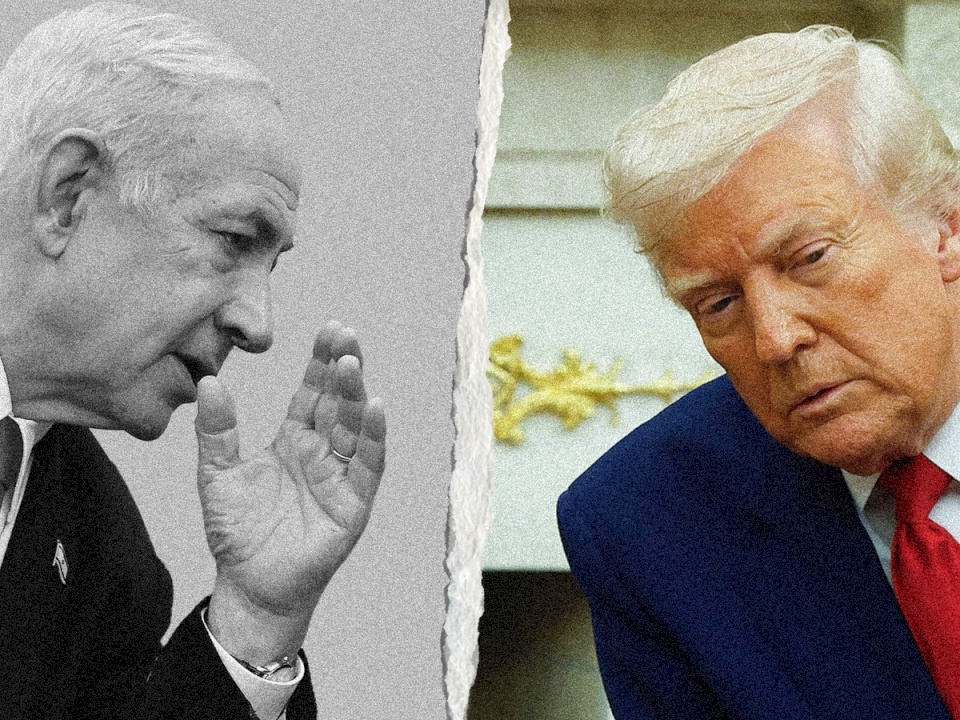
In Israel, the agreement was not welcomed, but rather prompted a wave of concern and rejection among the political, military, and media leadership. The newspaper Yedioth Ahronoth reported from Israeli sources that Prime Minister Benjamin Netanyahu informed U.S. President Donald Trump that Israel would not withdraw from Lebanon and that it was not bound by the agreement, confirming that the Israeli army would remain in its current positions within Lebanese territory. This position reflects Israel's desire to maintain its military presence and not tie it to any international understandings it considers a threat to its security interests.
For his part, Eidan Koller, reporter for the Hebrew site "Walla" in the United States, noted that Trump wanted to finalize the agreement on his birthday, but ignored fundamental issues like Iranian ballistic missiles and Lebanon, which means that Israel could find itself at any moment facing the possibility of an Iranian attack if Netanyahu decides to continue military operations in the southern suburbs. This perspective reflects a feeling that the agreement did not address the core issues that concern Israel.
Israeli Minister Miki Zohar emphasized that Israel will not stand idly by if Iran possesses nuclear weapons, in a clear indication that the agreement did not directly address the Iranian nuclear program, which Israel considers an existential threat.
In the same context, Colonel Reserve Matan Kahana expressed his outright rejection of the agreement, asserting that he sees no positive point in it, as it did not include any mention of the nuclear program, missiles, or allied organizations that Iran continues to fund. He concluded that the agreement is very bad for Israel because it gives Iran benefits without imposing real obligations on the issues that raise Israeli concerns.
Amid these positions, the Hebrew channel "Kan" reported U.S. President Donald Trump's remark that Netanyahu is a "very difficult person," referring to the disagreements between them over the agreement and the difficulty of persuading Israel to engage in a political track it does not see as guaranteeing its national security.
In conclusion, the Israeli reactions to the agreement between Iran and the United States have been characterized by rejection and concern, as Israel sees the agreement as ignoring the most sensitive issues for them, such as the Iranian nuclear program, ballistic missiles, and Tehran's regional influence. These positions reflect Israel's fear that the agreement may enhance Iran's regional power at the expense of its security interests, affirming that Tel Aviv will remain apprehensive of any international understandings that do not place its security at the core of considerations.
 Follow the latest Sada News via Google News
High-level sources reveal to SadaNews: Washington seeks to hold a Gaza Reconstruction Conf...

Washington-Tehran Agreement: Israel Between Tension and Rejection

Yedioth Ahronoth Reveals New Details from the Tense Call Between Netanyahu and Trump

2025.. More than half of the victims of explosive weapons attributed to Israel

Kharj... A Strategic Island for Iran Trump Threatened Again to Take Control of

Sources to "SadaNews": Under Pressure from Mediators, Israel Temporarily Halts Attacks in...

Details of the Border Attack Attempt.. Israeli Doubts on Establishing the Equation of 'Nor...
